
ExxonMobil Just Posted $14.5 Billion In Profit As Guyana Is Still Burying Its Dead And Protesting In The Streets
 06 August 2026
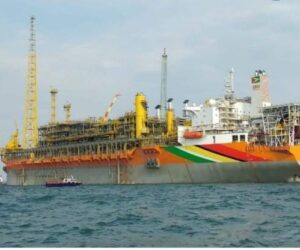


News Americas, GEORGETOWN, Guyana, Thurs. Aug. 6, 2026: ExxonMobil announced second-quarter 2026 earnings of $14.5 billion on July 31, more than doubling its profit from a year earlier, as the war-driven closure of the Strait of Hormuz, China’s export halt, and Russian refinery outages compressed global oil supply and pushed margins to what CEO Darren Woods called levels that make Exxon “truly in a league of our own.” Guyana’s Stabroek Block, now producing roughly 900,000 barrels a day, a quarterly record, was central to that result.
The announcement landed in the same week Guyanese protesters were back in the streets, this time over allegations of conflict of interest involving two members of the Commission of Inquiry investigating the MV Barima disaster, the same investigation the government initially wanted to close by turning the wreck site into a memorial rather than salvaging the vessel families are still waiting to see recovered. “The second quarter was shaped by disruption, but defined by execution,” said Woods, ExxonMobil chairman and chief executive officer. “Markets were supportive, but our performance reflected the strength of the portfolio and operating model we have built over many years. “As conditions changed, we moved products where they were needed, optimized assets, and supported customers, leveraging our global integrated portfolio. We delivered strong earnings and cash flow, continued investing in advantaged opportunities, returned cash to shareholders, and strengthened the balance sheet. Importantly, we remain committed to further growing advantaged production to help meet the world’s need for reliable energy.”
Exxon does not break out a clean quarterly profit figure for Guyana specifically, but its full-year 2025 disclosures offer a stark comparison: ExxonMobil’s Guyana operations earned $4.67 billion in profit that year, alone representing over 16% of the company’s entire global earnings of $28.8 billion. That $4.67 billion nearly doubled what Guyana’s own government earned from its own oil in the same year, roughly $2.4 to $2.5 billion, despite a profit-sharing arrangement often described publicly as a 50-50 split. The gap exists because Guyana’s government share remains capped at 12.5% until Exxon finishes recovering its development costs under the production-sharing agreement, a threshold the company now expects to cross sometime in the second half of this year.
Meanwhile, Guyana’s own lowest-paid workers, the people building the roads and driving the vehicles funded by that oil wealth, earn a statutory minimum wage of $1.66 an hour, one of the lowest in the entire Caribbean. And separately, an unresolved IHS Markit audit has already identified $214.4 million in Exxon-claimed costs from 1999 to 2017 that auditors determined were either ineligible for cost recovery or lacked adequate documentation, a dispute the IMF has publicly urged Guyana to resolve “in a timely manner.” A second audit remains under review entirely.
None of this means Exxon’s Guyana investment hasn’t transformed the country’s economy, it plainly has, fueling the fastest GDP growth on earth and financing highways, bridges, and infrastructure that didn’t exist a decade ago. But the same government riding that windfall couldn’t get a $12.7 million replacement ferry into service for three years, ran the vessel that eventually killed at least 73 people without insurance, and is now facing street protests over whether its own investigation into that disaster can be trusted.
Exxon posted $14.5 billion in three months. Guyana is still identifying bodies, still fighting over who sits on the commission investigating why they died, and still paying its lowest earners $1.66 an hour to build the country that oil money is supposed to be transforming.
NewsAmericasNow will continue tracking both Exxon’s Guyana earnings and the fallout from the MV Barima disaster.
RELATED:
Related News
The Caribbean AI Moment? – Trinidad Got There First. Who’s Next And Who Pays For It?

Guyana – US Pushes To Lead Guyana’s Energy Future As Country’s Aging Ferry Flee...

For Women in Science 2026 Call for Applications Opens, Offering Two $15,000 Awards to Cari...