

The administration of United States President Donald Trump is facing criticism over how it has handled billions of dollars in oil revenue collected from Venezuela.
Since January 3, Trump’s government has controlled Venezuela’s oil exports, gathering the revenue in an account overseen exclusively by the US Treasury.
- list 1 of 3Trump touts Venezuelan oil at Texas rally ahead of US midterms
- list 2 of 3Venezuela’s Machado lauds Trump for ‘freedom’, urges 2027 elections
- list 3 of 3US releases report on $12bn from Venezuelan oil, mineral resources
end of list
Last week, the Department of State released a 53-page report aimed at shedding light on the account’s activities. It revealed that at least $12.11bn have passed through the account since the start of the year.
But critics say the report lacks key details about where the money came from and who it is going to.
“There’s been zero transparency on all of the financial engineering associated with how $12bn of Venezuelan oil was changing hands and being utilised,” said Tyson Slocum, the director of the energy programme at Public Citizen, a US-based consumer advocacy nonprofit.
“All we have now is a very barebones narrative of how the funds were used, but not details on what entities were involved.”
Questions of sovereignty
Concerns about Trump’s plans for Venezuela’s oil sector began late last year, when his government began seizing oil tankers leaving the South American country.
Any oil on board, Trump said, would be kept or sold by the US. He and members of his administration framed the confiscated fuel as compensation for the losses incurred when Venezuela nationalised its oil industry decades ago.
“American sweat, ingenuity and toil created the oil industry in Venezuela,” White House aide Stephen Miller said at the time. “Its tyrannical expropriation was the largest recorded theft of American wealth and property.”
Advertisement
Tensions between the US and Venezuela reached a tipping point on January 3, when Trump authorised a military operation to abduct Venezuelan President Nicolas Maduro.
In a speech that morning, Trump highlighted the role oil had played in his decision. “We’re going to be taking out a tremendous amount of wealth out of the ground,” Trump said.
He proceeded to explain that some of the Venezuelan oil proceeds would go “to the United States of America in the form of reimbursement for the damages caused us by that country”.
Days later, Trump revealed he had spoken to oil companies “before and after” the operation. He also held a meeting with oil industry executives at the White House to discuss plans for Venezuela.
Legal experts have raised concerns that the January 3 operation was an attack on Venezuela’s sovereignty, in violation of international law.
They have also questioned the legality of seizing another country’s natural resources, given that a 1962 United Nations resolution grants nations “permanent sovereignty” over their own natural resources.
But supporters of Trump’s actions have pointed to Maduro’s history of violent repression and anti-democratic actions in Venezuela as justification for the operation.
Maduro has since been replaced by his former vice president, Delcy Rodriguez, who has largely cooperated with Trump’s demands.
But the focus on Venezuela’s oil revenue has left some critics questioning whether Trump plans to address the human rights issues in the South American country.
Trump has repeatedly downplayed the importance of democratic elections in Venezuela, said John Feeley, a former US ambassador and senior diplomat in Latin America.
“Trump has made patently clear that he has no interest in the democratic future of Venezuela,” said Feeley, calling the US-Venezuela relationship “protectorate neocolonialism”.
‘The biggest oil deal in history’
More recent manoeuvres have also raised speculation about the Trump administration’s commitment to transparency in its management of Venezuelan oil.
In late August, for instance, Trump announced his government would have a direct stake in extracting nearly a fifth of Venezuela’s oil.
Under the terms of the agreement, the US gained “majority control” in a 100-year deal for 17 Venezuelan oilfields, with proven reserves of 65 billion barrels.
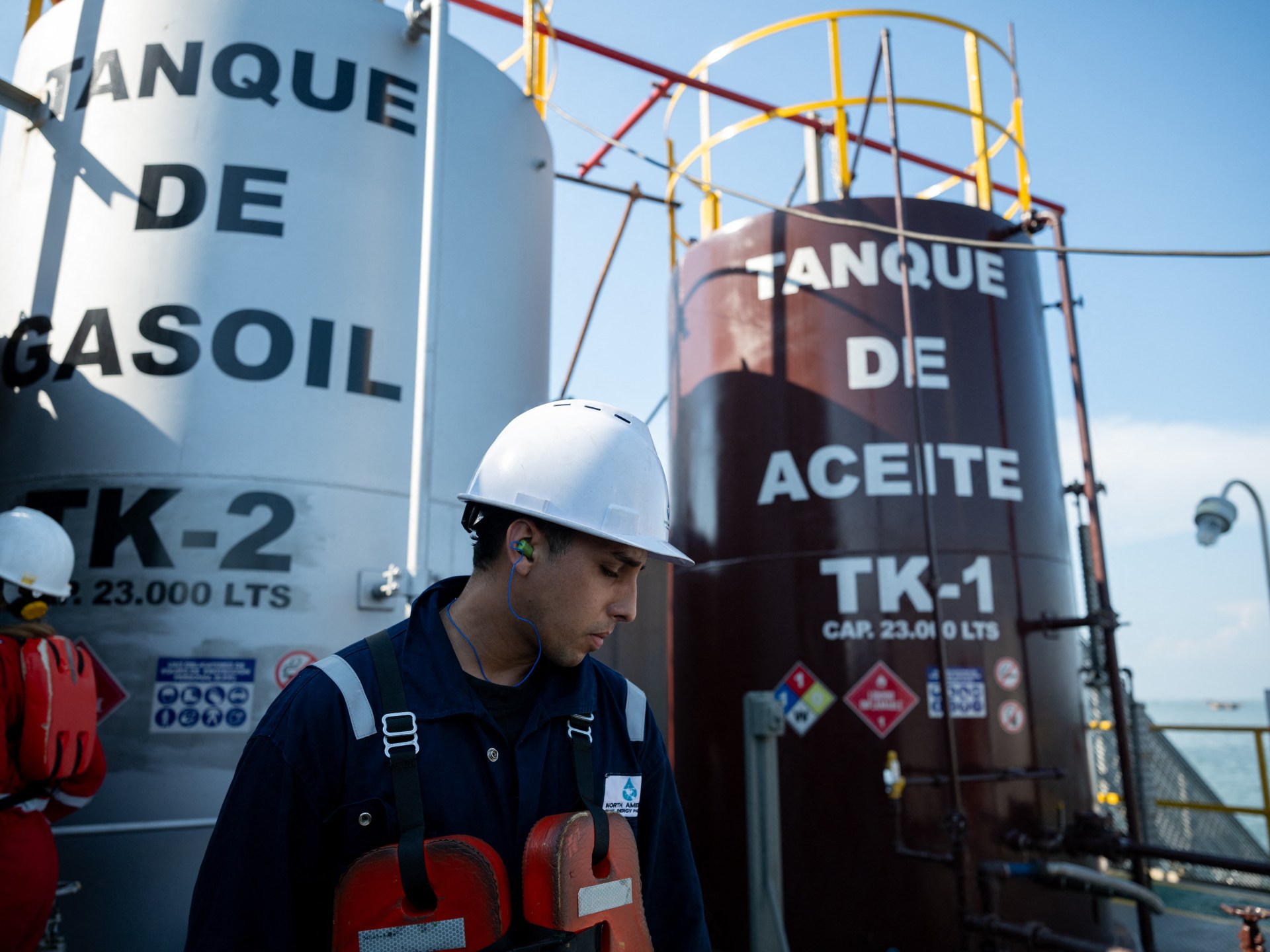
North American Blue Energy Partners (NABEP), a company owned by Venezuelan businessman Alejandro Betancourt, was given the rights to operate the fields.
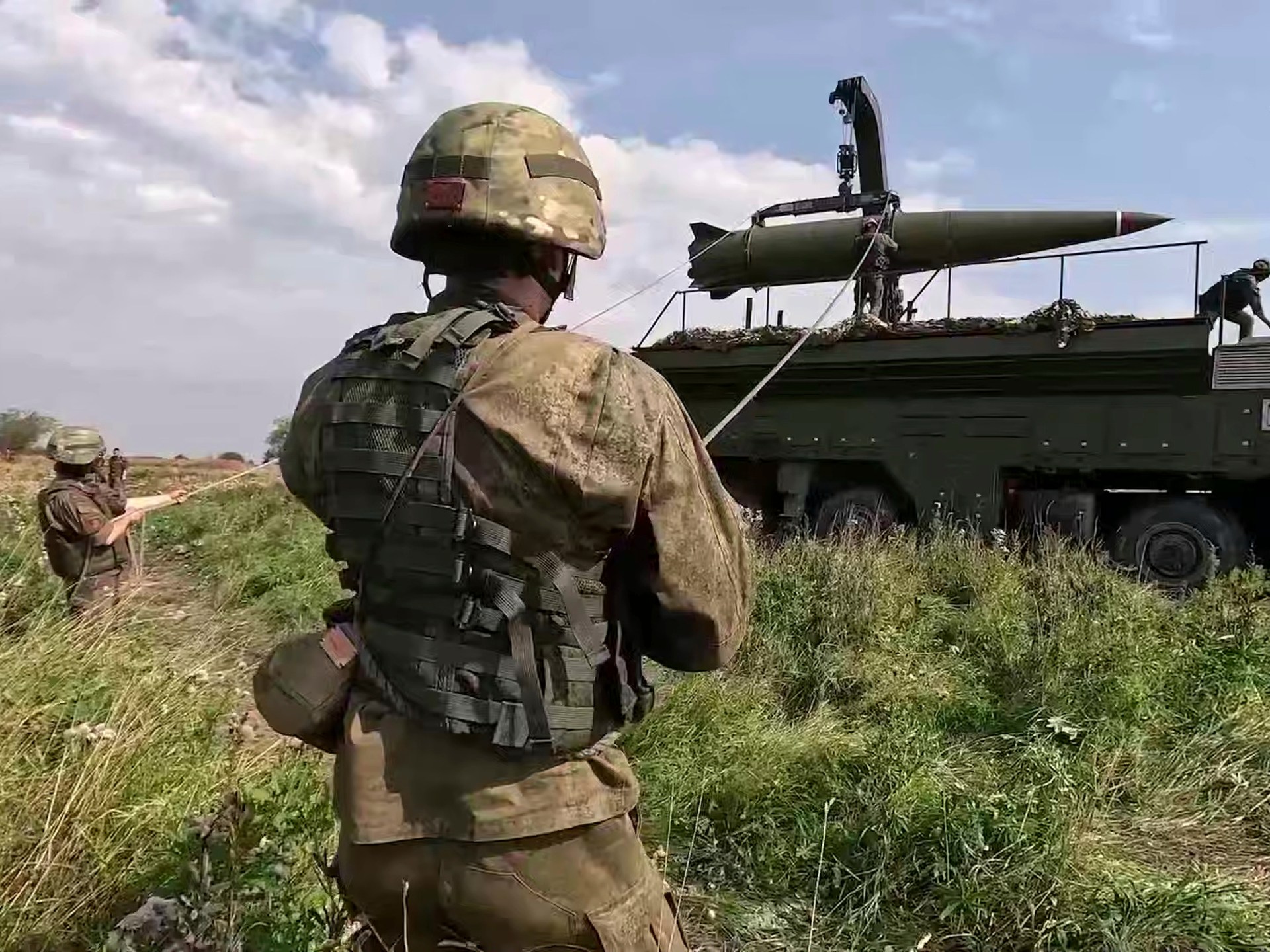
The Pentagon, meanwhile, took a 35 percent stake in the company, and the US was guaranteed 20 percent of the oil output at cost. Trump called it “the biggest oil deal in history”.
Advertisement
But Betancourt has faced investigations in the US, Spain and Switzerland over accusations of money laundering.
Venezuelan opposition leader Maria Corina Machado also said the contract with NABEP “evidently does not reflect the levels of transparency that Venezuelan society wants”.
Venezuela has long struggled to export its oil, so the fact that it will now be sold on the open market is beneficial to the country’s economy, said Luis A Pacheco, a former executive with Venezuela’s state oil company and nonresident fellow at the Baker Institute Center for Energy Studies at Rice University.
But Pacheco is sceptical of Trump’s deal with NABEP.
“This is an obscure outfit with no known financial sources, with very little tech wherewithal,” he said. “This so-called mega-deal, without doubt, will certainly yield very little of what’s expected of it.”

Little transparency over billions of dollars
The shroud of secrecy surrounding the Venezuelan oil deals has spurred some Democrats in the US Congress to press for greater accountability.
In September, Democrats in the House of Representatives (PDF) and Senate asked the administration to disclose what had been uncovered by KPMG, an outside accounting firm hired to audit transactions involving Venezuelan oil exports.
The State Department did issue its report last week. But key portions were redacted, including who deposited money into the accounts and who the final recipients of the funds were.
Feeley, the diplomat, said there are also questions about the total sum of the proceeds. Only $12bn is accounted for in the report.
“We have no idea how that money was used, and we have no idea what percent of the total amount of money deposited in the US Treasury that $12bn represents,” said Feeley. “But most experts allege that it is only a fraction.”
In a statement to Al Jazeera, a State Department spokesperson said its report “provides a comprehensive account, down to the cent, of the Venezuelan natural resource revenues deposited in, held by, and disbursed” from the account.
Venezuela’s requests for disbursement are checked against a “list of approved and prohibited expenditure categories”, the spokesperson added.
The funds are then used for “essential public services, macroeconomic stability, and the rebuilding of key sectors such as energy, healthcare and infrastructure”.
But who receives those funds remains unclear. Pacheco said there is no reason the US could not disclose details of the monetary flow.
“Even though this report gives you some information, it still doesn’t give you light into the most important thing, which is what is the Venezuelan regime is doing with the money,” Pacheco said.
“You can affirm with very good certainty, when you talk about billions of dollars, something is draining away.”
Pacheco also questioned the supervisory role the Trump administration has claimed over the Venezuelan government. At one point, Trump even claimed he would “run” the South American country.
Advertisement
“The discourse of the White House is that they exert some sort of tutelage over the Venezuelan regime,” Pacheco said. “But apparently that tutelage doesn’t go as far as to tell the Venezuelans where is the money going to.”
New Congress, new oversight?
But this year’s midterm elections could usher in a wave of oversight into the Venezuelan oil money.
Democrats won majority control in both the House and Senate in the November 3 midterm elections, and lawmakers have already floated the possibility of opening investigations, once the new Congress arrives in January.
“The admin is sending billions to Delcy Rodriguez’s corrupt government where the list of who benefits is kept murky,” Representative Joaquin Castro wrote on social media after the election.
“I will continue to demand answers, and use every tool we will have with the incoming Democratic majority, including congressional hearings, to uncover what the United States is doing in Venezuela.”
One area of exploration might be the role private oil trading companies play in the Trump administration’s deal. Firms like Vitol, a Dutch multinational energy company, could be put under the microscope.
A week before Trump sent troops into Caracas to abduct Maduro, John Addison, a senior trader with Vitol, held a secret meeting with Vice President JD Vance on a tarmac in Montana, according to the news agency Reuters.
Vitol was later able to buy oil from the state-owned Venezuelan oil company at a steep discount. Addison and his wife donated $6m to Trump’s election campaign in 2024.
Democrats on the House Oversight Committee have long been eager to investigate the dealings of firms like Vitol in Venezuela.
“Oversight Democrats will not stop until we know exactly what companies are profiting from these foreign policy decisions, especially in Venezuela,” Representative Robert Garcia said in January.
Garcia is expected to chair the oversight committee next year.
Related News

Election-winning student movement enters Serbia’s new parliament
GOP-led House report slams systemic failures in handling of Epstein case
Trump administration sues to block possible Democratic win in Alaska