

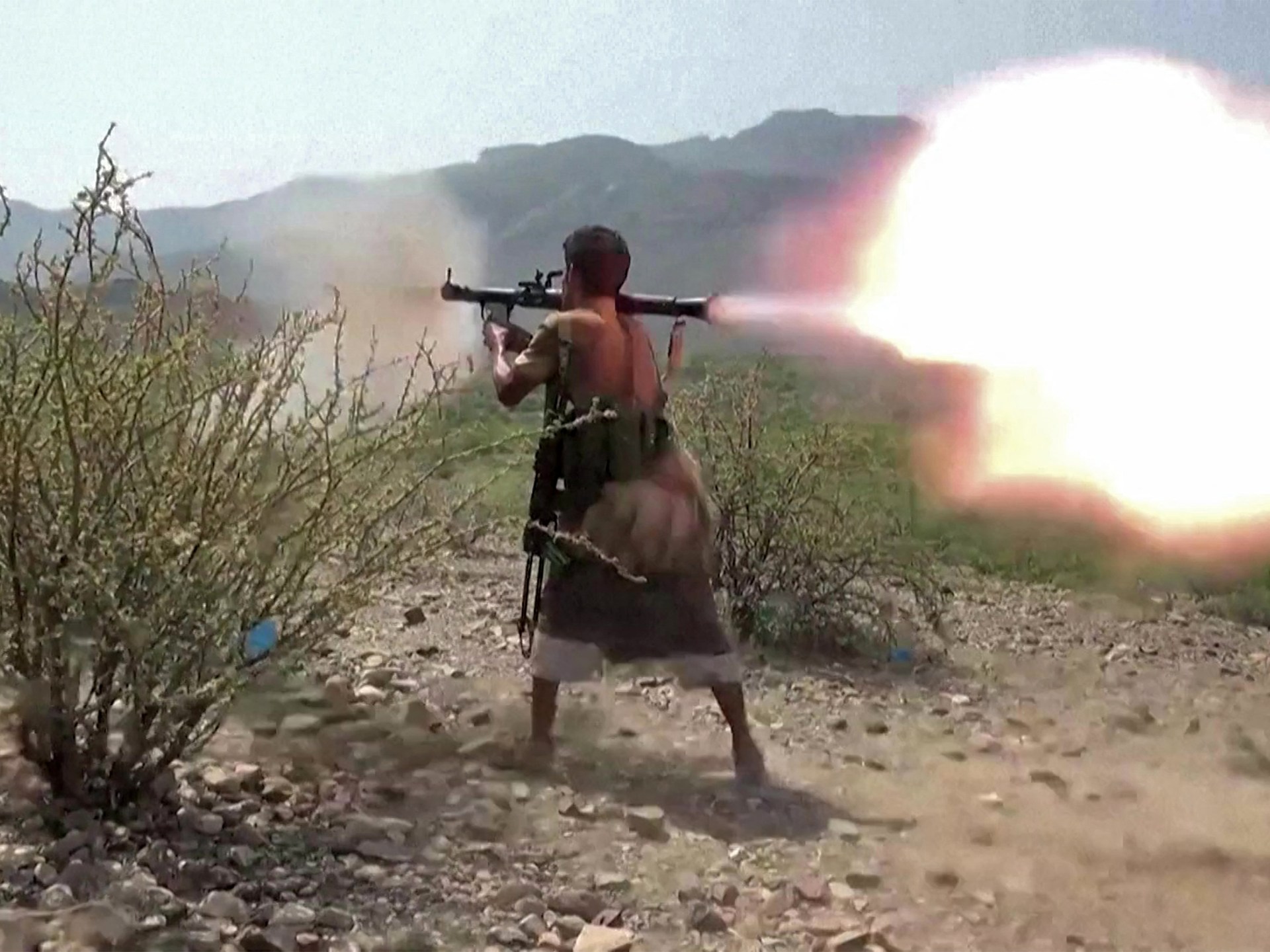

Yemen’s more than a decade-long civil war has flared up once again after the Houthi rebel group launched an offensive in several locations against Saudi Arabian-backed government forces. The conflict has already spilled over beyond the country’s borders with the Houthis launching an attack on southern Saudi Arabia, targeting oil facilities and wounding dozens of people this week.
The renewed hostilities are the most serious since a United Nations-brokered truce halted large-scale fighting in 2022, after eight years of a full-blown conflict that killed tens of thousands of people in one of the world’s poorest countries.
- list 1 of 3Yemeni forces launch counteroffensive against Houthis, vow to retake Sanaa
- list 2 of 3Saudi Arabia says 73 wounded as Houthis attack civilian and energy sites
- list 3 of 3Saudi-Houthi fighting in Yemen escalates: What happened, and what’s next?
end of list
So who is involved in this conflict? Here’s a look at the main actors:
The Houthis
The Houthis, also known as Ansar Allah (supporters of God), are an armed group controlling most parts of Yemen, including the capital, Sanaa, and some of the western and northern areas close to Saudi Arabia.
The Houthis emerged in the 1990s but rose to international prominence in 2014, when the group rebelled against Yemen’s government, forcing it to step down and causing a crippling humanitarian crisis.
The group then spent years, with Iran’s backing, fighting a military coalition led by Saudi Arabia. The two warring sides have also repeatedly tried to hold peace talks.
Seen as part of a regional alliance known as the “axis of resistance” backed by Iran, the Shia Zaidi group nevertheless has its own base, its own interests – and its own ambitions.
The Houthis have demonstrated their missile and drone capabilities during the Yemen war in attacks on Saudi Arabia and the United Arab Emirates, targeting oil installations and vital infrastructure. They have also proven resilient, defying more than 10 years of bombing by the Saudi-led coalition, as well as US and British strikes in recent years.
Advertisement
The group has gained international prominence for its attacks on Israel and shipping in the Red Sea since the start of Israel’s genocide in Gaza in October 2023.
Saudi Arabia
Riyadh entered the Yemen war when it led a military coalition against the Houthis in March 2015, seeking to restore the government of then-President Abd-Rabbu Mansour Hadi. Back then, Saudi Arabia and Iran were at the peak of a regional competition, both deeply distrusting each other. An Iran-supported group expanding control at the kingdom’s southern border was unacceptable, hence the military action.
This was before a China-brokered rapprochement between Saudi Arabia and Iran in 2023 marked the beginning of a more practical and less confrontational relationship.

Presidential Leadership Council
The PLC was established in 2022 when the former president, Abd-Rabbu Mansour Hadi, formally transferred his powers to the new eight-member body.
It represents the internationally recognised government of Yemen, with a mandate to manage the country’s political, security and military affairs, and to steer negotiations towards a permanent ceasefire. It is chaired by Rashad al-Alimi, an adviser to Hadi and former interior minister with the government of the late president, Ali Abdullah Saleh.
Its membership is drawn from a mix of northern and southern politicians and military-linked leaders in a bid to unite major anti-Houthi forces under one roof.
The PLC is backed by Saudi Arabia and the alliance that Riyadh leads.
Islah party
The Yemeni Congregation for Reform, better known as Islah, is a Sunni Islamist movement with historic ties to the Muslim Brotherhood. It is a faction within the recognised PLC-led government but has long had an independent identity. Its major stronghold has long been Marib, the country’s sole gas-producing region with one of its largest oilfields.

National Resistance Forces
The National Resistance Forces is a government-aligned military faction led by Tareq Saleh, nephew of the late former President Ali Abdullah Saleh.
The force has maintained ties to Saudi Arabia and, like the Islah party, is part of the PLC. It aims for a unified Yemen, positioning itself as a counterweight to both the Houthis and southern secessionists.
Related News
‘Tool of oppression’: Rising number of UK pro-Palestine voices debanked
Israeli air attack kills at least 10 people in southern Lebanon
Pentagon resumes paused testosterone policy amid medical experts’ concerns
