

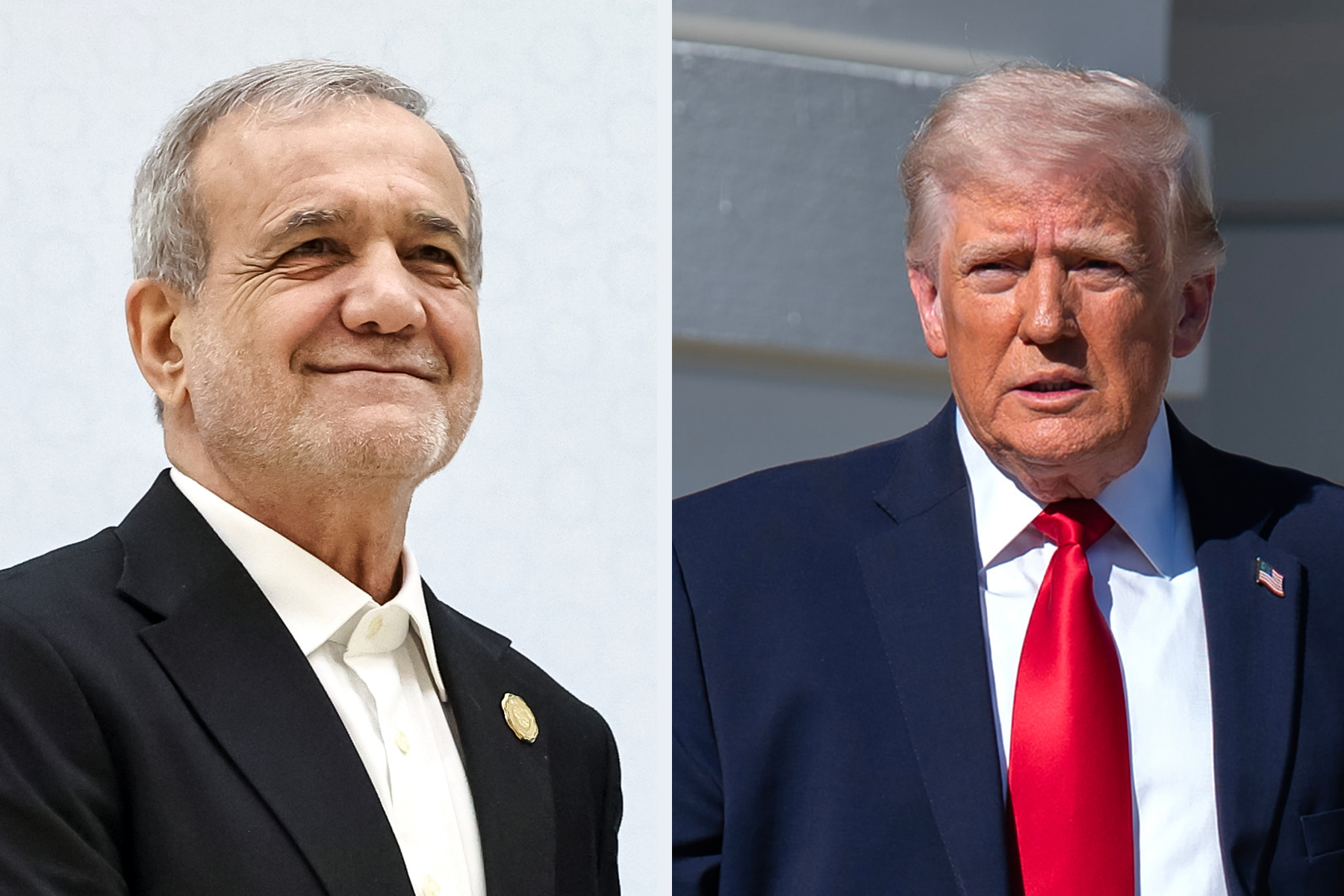

The United States is considering a new proposal from Iran to end the ongoing war amid a fragile ceasefire between the longtime adversaries.
The offer focuses on reopening the strategic Strait of Hormuz while postponing a deal on Iran’s nuclear programme, arguably the most contentious issue between Tehran and Washington.
- list 1 of 3Will the Iran war push millions back into poverty?
- list 2 of 3Who holds the cards in Iran-US talks?
- list 3 of 3Iran FM in Russia says US has offered new round of talks
end of list
According to US media outlets, the proposal has drawn scrutiny in Washington, and officials there have expressed scepticism.
Early indications from the Trump administration suggest the plan is unlikely to be accepted in its current form, potentially further delaying any prospect of permanently ending the currently paused US-Israel war on Iran, which has killed thousands and sent global energy prices soaring.
Here is what we know so far:
What’s in Iran’s latest proposal?
Iran’s latest proposal aims for de-escalation in the Gulf without immediately placing restraints on its nuclear programme, as the US has demanded. Tehran has offered to reopen the Strait of Hormuz on the condition that the US lifts its naval blockade on Iranian ports and agrees to end the war.
Iran has effectively closed the strait to shipping, creating global economic pressure by driving up energy prices and disrupting supply chains. In peacetime, one-fifth of the world’s oil and liquefied natural gas (LNG) supplies are shipped through the narrow passage, which links Gulf oil producers to the open ocean.
Days after the ceasefire began on April 8, Trump announced a blockade on Iranian ports and ships, restricting Tehran’s ability to export oil and cutting off a crucial source of its revenue.

However, a central feature of Iran’s offer to reopen the Strait to all traffic is that discussions over Iran’s nuclear activities would be postponed until after the war ends.
Advertisement
The proposal was conveyed to Washington through Pakistan, which has been acting as a mediator.
“These messages concern some of the Islamic Republic of Iran’s red lines, including nuclear issues and the Strait of Hormuz,” Iranian state media Fars News Agency reported.
“Informed sources emphasise Mr Araghchi is acting entirely within the framework of the specified red lines and the diplomatic duties of the Ministry of Foreign Affairs.”
The news agency said the messages relayed were “unrelated to negotiations” and are “considered an initiative by Iran to clarify the regional situation”.
Iranian analyst Abas Aslani said Iran’s latest proposal is based on an “altered” approach.
Aslani, a senior research fellow at the Centre for Middle East Strategic Studies, told Al Jazeera that Tehran believes its previous model – which was based on making compromises on its nuclear programme in exchange for economic sanctions relief – is no longer a “viable path towards a potential accord”.
“Iran believes this can also function as a trust-building measure to compensate for the trust-deficit issue,” he added.
On Monday, Tehran’s envoy to the United Nations, Amir Saeid Iravani, said “lasting stability and security” in the Gulf and the wider region can only be achieved through a durable and permanent cessation of aggression against Iran.
How has the US responded so far?
US President Donald Trump met with top security advisers on Monday to discuss the Iranian proposal, the White House confirmed.
However, according to media reports, the US response has been largely dismissive. According to Reuters, an unnamed US official said President Trump was unhappy with the proposal because it did not include provisions for Iran’s nuclear programme. The official noted that “he doesn’t love the proposal”.
Citing two people familiar with the matter, US media outlet CNN reported that Trump was unlikely to accept the proposal. It said Washington lifting its blockade of Iranian ports without resolving questions over Tehran’s nuclear programme “could remove a key piece of American leverage in the talks”.
Secretary of State Marco Rubio told Fox News on Monday that the proposal was “better than what we thought they were going to submit”, but questioned Tehran’s intentions.
“They’re very good negotiators,” he said. “We have to ensure that any deal that is made, any agreement that is made, is one that definitively prevents them from sprinting towards a nuclear weapon at any point.”
Al Jazeera’s Mike Hanna, reporting from Washington, said, “There’s been a complete lid over what was discussed” during the meeting between Trump and his national security team.
Advertisement
“It was so tight that we do not know exactly who in his national security team was present at that meeting,” Hanna added.
“Normally, there is some form of readout or some form of more information giving, fleshing out the details of a meeting like this.”
What has been the response from other countries?
While the “US and Iran feel that time is on their side, the longer this goes on, the more difficult it’s going to be,” Mohamed Elmasry, an analyst for the Doha Institute of Graduate Studies, said.
“I really don’t think time is on anyone’s side. I really do think the Europeans are losing patience,” he told Al Jazeera.
On Monday, German Chancellor Merz stated that the “Iranians are negotiating very skilfully”, Elmasry noted. He said this shows that Trump is coming under increasing pressure from his allies, “who believe he [Trump] got them into this big mess and isn’t able to clean it up”.
“Trump isn’t going to be happy hearing that and the chancellor is hitting Trump where it hurts.”
Related News
Magnitude 7.5 earthquake strikes northern Japan; tsunami warning issued
How China is gaining from Iran war by showing it is different from US
US House votes to extend temporary protections for Haitians in Trump rebuke