

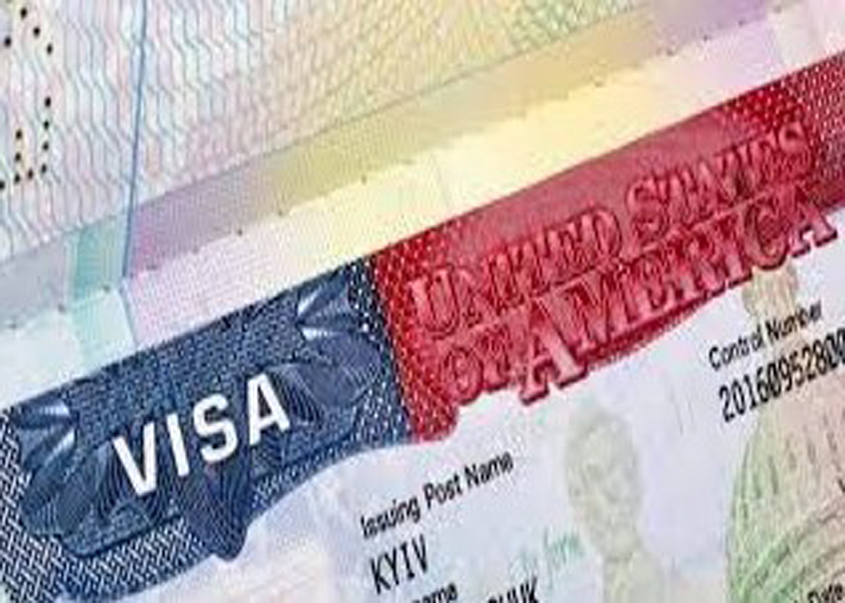

WASHINGTON – Antigua and Barbuda and Dominica are the only two Caribbean Community (CARICOM) countries named by the United States whose citizens will now have to post a bond of up to US$15 000 when applying for a visa to enter the North American country.
The US State Department said that the measure comes into effect from January 21, this year and the only other Caribbean country named is Cuba. The majority of the countries whose citizens would need to post the bond are from Africa.
“Any citizen or national travelling on a passport issued by one of these countries, who is found otherwise eligible for a B1/B2 visa, must post a bond for $5 000, $10 000, or $15 000. The amount is determined at the time of the visa interview,” the State Department said in a statement.
“The applicant must also submit a Department of Homeland Security Form I-352. Applicants must agree to the terms of the bond through the Department of the Treasury’s online payment platform Pay.gov. This requirement applies regardless of place of application,” it added.
It said that the applicants should submit Form I-352 to post a bond only after a consular officer directs them to do so.
“Applicants will receive a direct link to pay through Pay.gov. They must not use any third-party website for posting the bond. The US Government is not responsible for any money paid outside of its systems,” the State Department said, adding that “a bond does not guarantee visa issuance.
“If someone pays fees without a consular officer’s direction, the fees will not be returned,” the State Department said, adding that “as a condition of the bond, all visa holders who have posted a visa bond must enter and exit the United States through the designated ports of entry.
“Not doing this might lead to a denied entry or a departure that is not properly recorded,” it said, naming the port of entries as Boston Logan International Airport , John F. Kennedy International Airport and Washington Dulles International Airport.
The State Department said that in a case where the visa bond terms have been broken, the Department of Homeland Security will send these cases to the US Citizenship and Immigration Services (USCIS) to determine if there was a breach”.
“It includes, but is not limited to, these situations: The Department of Homeland Security records indicate that the visa holder departed from the United States after the date to which he or she is authorised to stay in the United States. The visa holder stays in the United States after the date to which he or she is authorised to do so and does not leave. The visa holder applies to adjust out of nonimmigrant status, including claiming asylum.” (CMC)


