

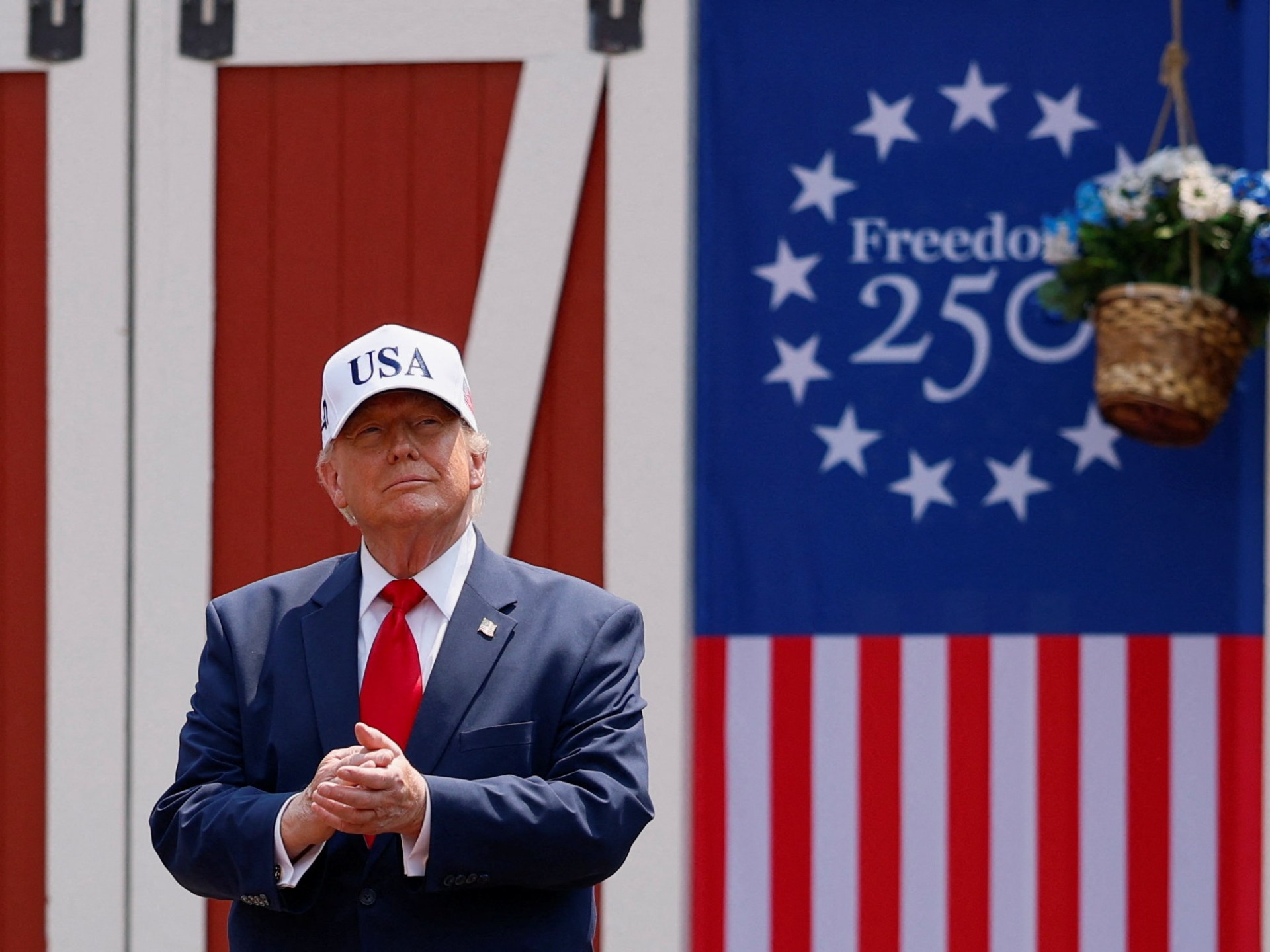

A federal judge in the United States has blocked proposed restrictions on mail-in voting that were championed by President Donald Trump.
On Wednesday in Washington, DC, District Judge Emmet Sullivan sided with the NAACP, a civil rights organisation, in its case against the US Postal Service (USPS).
- list 1 of 3Trump calls Virginia election ‘rigged’ after redistricting referendum
- list 2 of 3US judge rejects immediate block on Trump’s mail-in voting executive order
- list 3 of 3US Supreme Court hands Trump 3-1 defeat in key rulings: What we know
end of list
Sullivan found that the restrictions would likely violate a 2021 settlement requiring expedited handling for mail-in ballots.
He therefore granted the NAACP’s motion to enforce compliance with the settlement, dealing another setback to the Trump administration’s efforts to reshape the US voting landscape.
“NAACP has plausibly suggested — and the Postal Service has not disputed — that the Proposed Rule is already having a ‘real impact on present day affairs’,” Sullivan wrote in his ruling.
The case revolves around a rule the Postal Service put forward in May that would require states to provide lists of absentee and mail-in voters. Ballots that do not conform to the list would be returned.
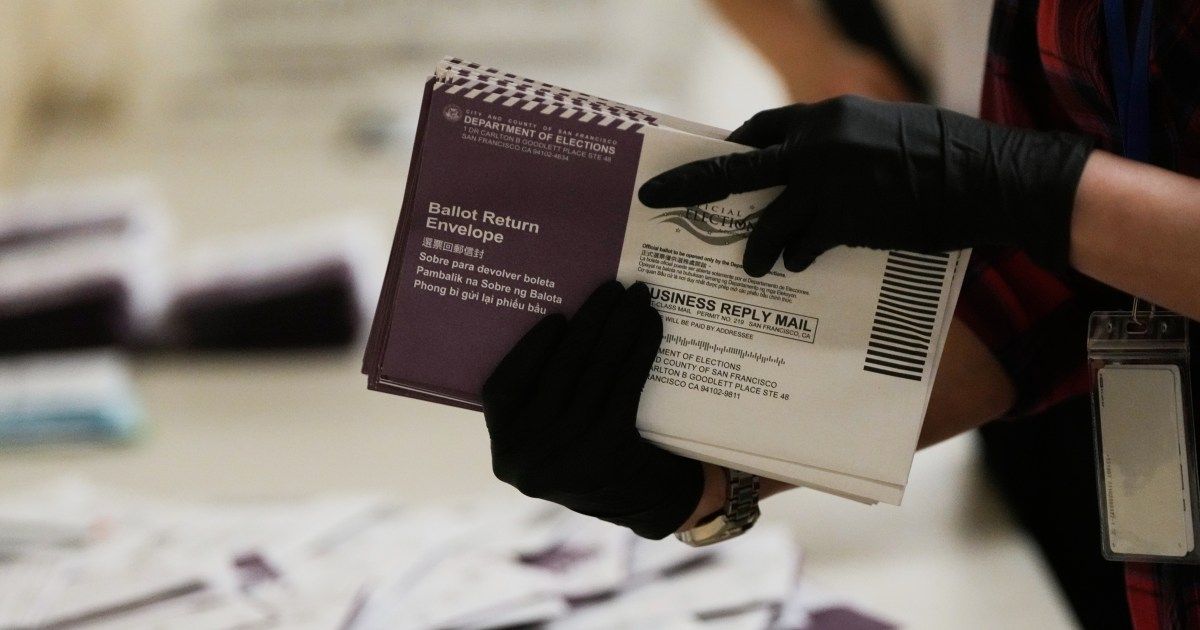
The proposed rule would also require a new envelope design for mail-in ballots, governing logos and barcode placements. Failure to comply would result in the Postal Service refusing to deliver the ballots.
The NAACP argued that the proposal would run afoul of a 2021 legal settlement that forces Postal Service officials to take “extraordinary measures” to ensure timely delivery of ballot mail.
The settlement “stipulated that the Postal Service agreed ‘to prioritize monitoring and timely delivery of election mail'”, Sullivan wrote in Wednesday’s ruling.
Advertisement
The decision comes less than five months before the November 3 midterm elections, which will decide whether Trump’s Republican Party retains control over both chambers of Congress.
Trump has expressed fears that he may be subject to a third impeachment if Democrats flip the legislature.
He has also spread unfounded theories that US elections are vulnerable to “vote rigging”, pointing to commonplace election tools like mail-in voting and electronic voting machines.
Elections are administered by state and local election officials, as established in the US Constitution. But the Postal Service’s proposed rule came as the result of efforts under the Trump administration to impose new limits on voting.
In March, Trump issued an executive order called “Preserving and Protecting the Integrity of American Elections”. In it, he directed the Department of Justice to take action against states that “fail to comply” with certain standards for mail-in ballots.
He also accused states that accepted absentee or mail-in ballots after Election Day of violating the law.
But in another blow to Trump, the Supreme Court on Monday upheld a state law that allows mail-in ballots to be counted even if they were received after Election Day, so long as they were postmarked on or before that date. The president’s executive order has also been blocked by lower courts.
Civil rights advocates applauded the court’s Wednesday decision and warned against Trump’s efforts to limit mail-in voting.
“The court today correctly recognized that USPS’s plan to create roadblocks to mail-in voting was inconsistent with its commitment to timely deliver election mail,” said Allison Zieve, director of the Public Citizen Litigation Group, which argued on behalf of the NAACP.
“USPS’s plan was unwise, unlawful, and a threat to the millions of voters who rely on mailed ballots to participate in our democracy.”
Sam Spital, the associate director-counsel of the Legal Defense Fund, which also argued for the NAACP, called the Postal Service’s proposed plan “a blatant attempt” to disenfranchise voters who rely on mailed ballots.
“Today’s decision recognizes that USPS cannot disregard its legal obligation to timely deliver mail-in ballots to all voters,” Spital said.
Related News
Donald Trump and world leaders attend Lindsey Graham’s funeral

Norway’s new king pays tribute to his late father as the country mourns
How California is preparing to fight Trump’s criticisms of the midterm vote