


The Petro administration has also continued to target criminal networks that traffic in cocaine through arrests and the seizure of shipments.
In November, Petro announced the Colombian government had made its largest drug bust in a decade, with law enforcement nabbing nearly 14 tonnes of cocaine.
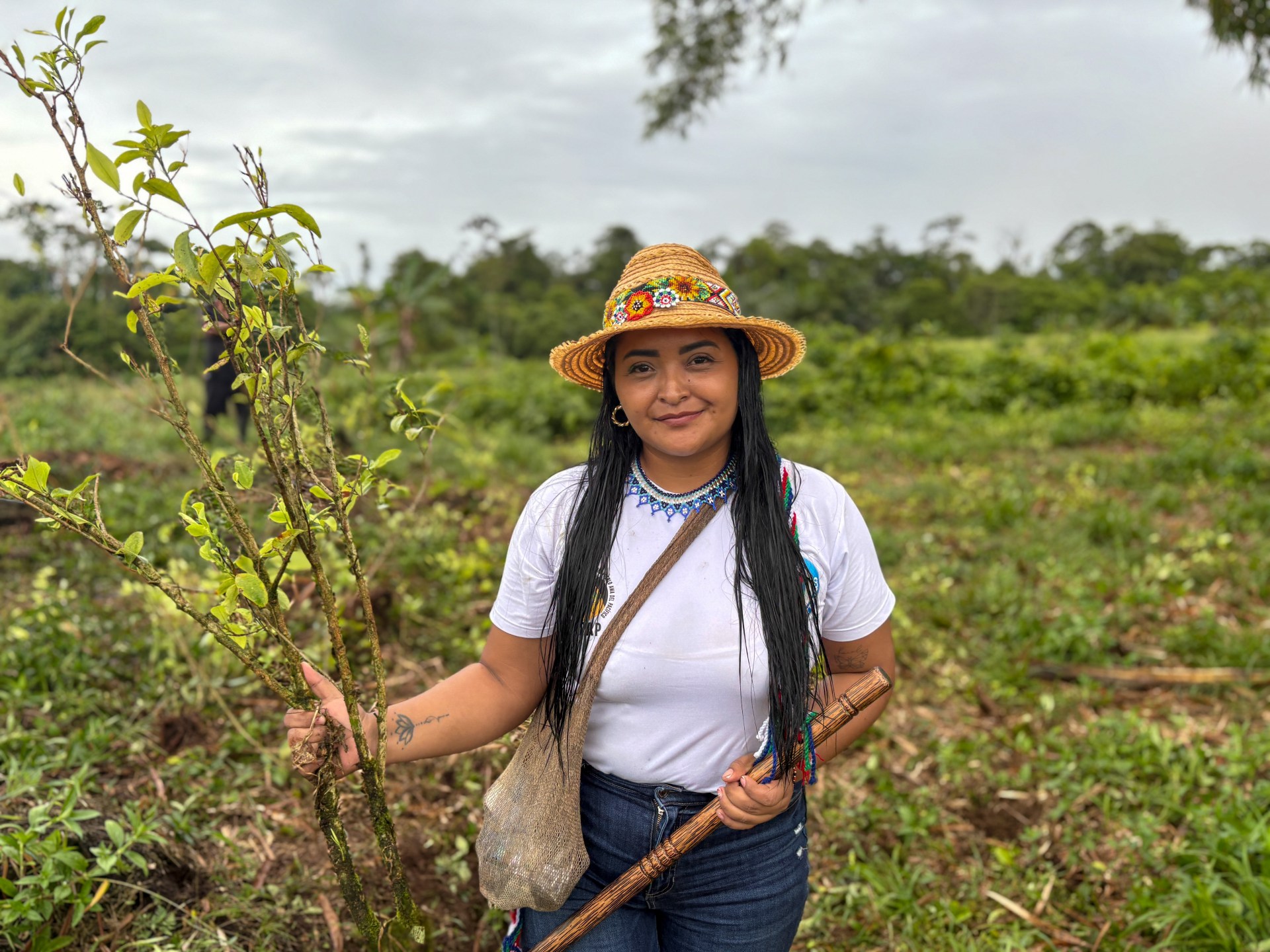
Gloria Miranda was appointed by Petro in 2022 to lead Colombia’s Directorate for the Substitution of Illicit Crops, the agency overseeing the voluntary eradication efforts.
She believes that the Petro administration's efforts have been mischaracterised as ineffective.
“There’s been a narrative that Colombia isn’t doing anything in the fight against drug trafficking,” she told Al Jazeera.
“But we’ve seized 276,000 kilogrammes [608,500 pounds] of cocaine, destroyed 18,000 laboratories, arrested 164,000 people, and are replacing more than 30,000 hectares [about 74,100 acres] of illicit crops.”
But critics — including Trump — argue Petro’s measures have yet to translate into results. Coca cultivation and cocaine production remain stubbornly at record levels.
According to the latest United Nations figures, coca cultivation rose in Colombia by about 10 percent in 2023. Potential cocaine output also jumped 53 percent to about 2,600 tonnes.

Petro has questioned the accuracy of those numbers, though. Last week, ahead of Petro's meeting with Trump, his government announced it would no longer use the United Nations figures, arguing that they rely on an “obscure statistical method".
Michael Weintraub, the director of the Center for the Study of Security and Drugs (CESED) at the University of the Andes, told Al Jazeera that some of Petro's pushback is political.
But he added that there is a genuine basis for questioning the UN's methodology.
“The ‘potential cocaine production’ measure has a lot of baked-in assumptions that make it very difficult to trust,” Weintraub said.
It predicts coca production from selected plots, but yields vary by region and season. The UN itself has admitted there are limitations in its method.
Despite these concerns, coca cultivation in Colombia has trended upward for decades.
Analysts note one overriding factor: demand. Consumption in North America and Europe remains strong, and new markets have emerged in Asia, Africa and South America.
“Coca can only grow in limited places due to climate, soil and elevation,” Weintraub said. “So Colombia is likely to remain a major producer for the foreseeable future.”
Related News

Rescue efforts under way after Spain high-speed train crash kills 39

China carries out further executions of Myanmar scam centre suspects

Syria-SDF ceasefire hangs in balance after renewed clashes, faltering talks