
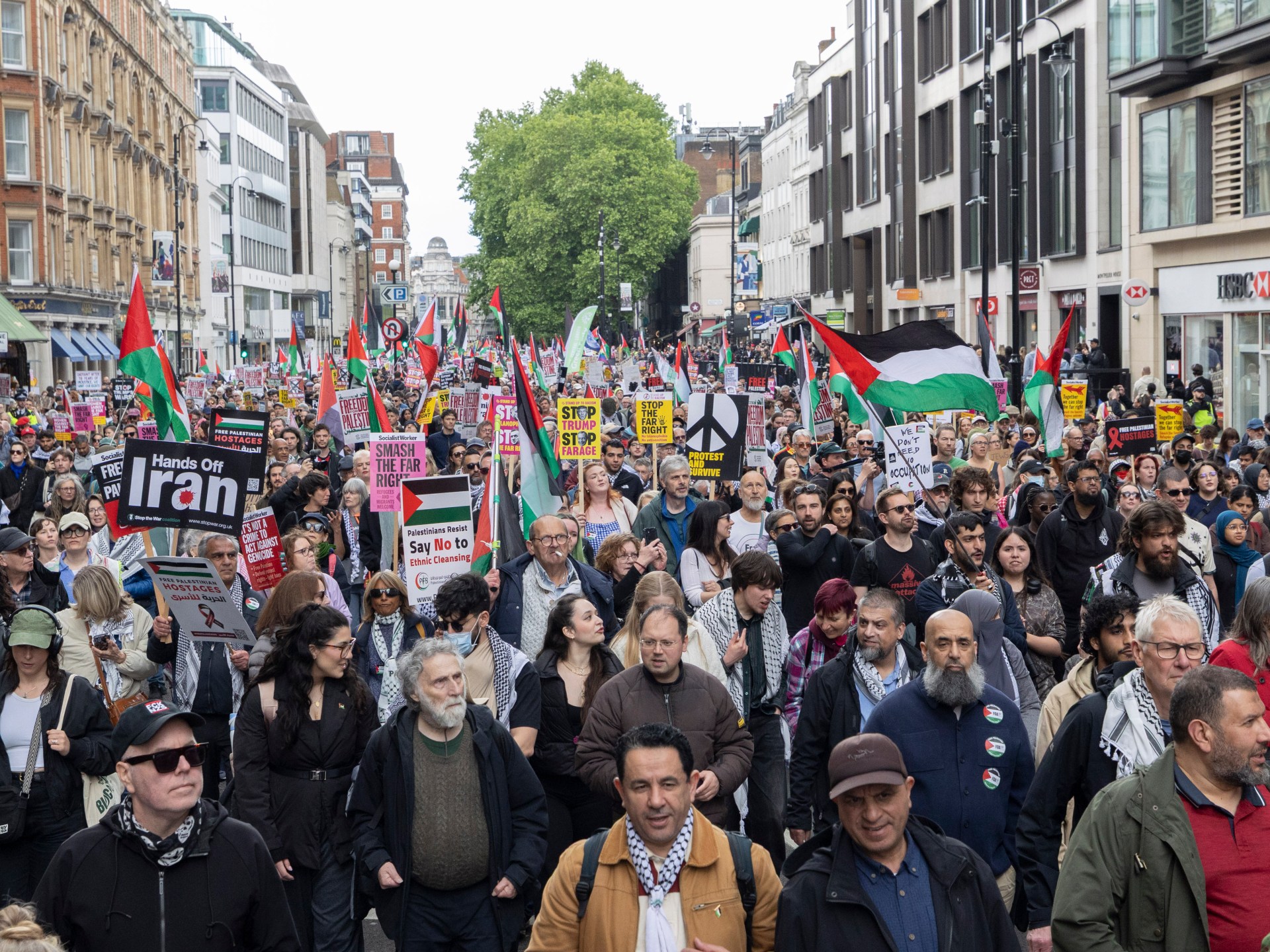

Tens of thousands of people are marching through central London in two separate protests – one pro-Palestine demonstration a day after Nakba Day, and the other, a far-right rally staged by Tommy Robinson.
Police in the British capital deployed 4,000 officers, including reinforcements from outside the city, on Saturday and pledged “the most assertive possible use of our powers” in what they called their biggest public order operation in years.
- list 1 of 3The anti-Semitism smear that ruined Corbyn’s Labour now targets the Greens
- list 2 of 3‘Potential security risk’: Unpacking the UK’s trust issues with Palantir
- list 3 of 3How the far right got its name
end of list
Armoured vehicles, horses, dogs, drones and helicopters were also deployed to manage the separate protest marches, the UK Metropolitan Police said.
By 1200 GMT, shortly after both marches started, police said they had made 11 arrests for a range of offences. They had earlier forecast turnout of at least 80,000 – about 50,000 at Robinson’s “Unite the Kingdom” march, and 30,000 more expected to go to the Nakba Day rally.
Authorities had imposed various conditions on the two rallies over their routes and timings, in a bid to keep rival attendees apart.
Prosecutors were told to consider whether certain protest placards or chants may amount to offences and stir up aggression during the rallies.
“This is not about restricting free speech,” said the Crown Prosecution Service’s director, Stephen Parkinson. “It is about preventing hate crime and protecting the public, particularly at a time of heightened tensions.”
The police force, which estimates its operation will cost 4.5 million pounds ($6m), warned in a statement that it would adopt “a zero-tolerance approach”. That includes, for the first time, making organisers legally responsible for ensuring invited speakers do not break hate speech laws.
Advertisement
The British government earlier blocked 11 foreign nationals from entering the country for the “Unite the Kingdom” rally. Right-wing figures claiming to have been barred include Polish politician Dominik Tarczynski, Belgian politician Filip Dewinter, Colombian-American anti-Islam commentator Valentina Gomez and Dutch activist Eva Vlaardingerbroek.
On the eve of demonstrations, Prime Minister Keir Starmer warned: “Anyone who sets out to wreak havoc on our streets, to intimidate or threaten anyone … can expect to face the full force of the law.”
Starmer – facing intense pressure within his ruling Labour party to quit after far-right Reform UK scored huge wins in local elections last week – accused the organisers of Saturday’s far-right rally of “peddling hatred and division”.
Last September, far-right activist Robinson – whose real name is Stephen Yaxley-Lennon – drew about 110,000 people into central London for a similar rally proclaiming “national unity, free speech and Christian values”.
X owner Elon Musk addressed that event, which shocked many in the UK for its scale, directness, and clashes between participants and police, which injured dozens of officers.
Meanwhile, the Stand Up to Racism group has combined its antifascism march with the pro-Palestine event to mark Nakba Day, held annually on March 15 to commemorate the 1948 mass expulsion of Palestinians from their land during the establishment of the state of Israel.
The Met said live facial recognition would be used for the first time to police the protests.
Related News
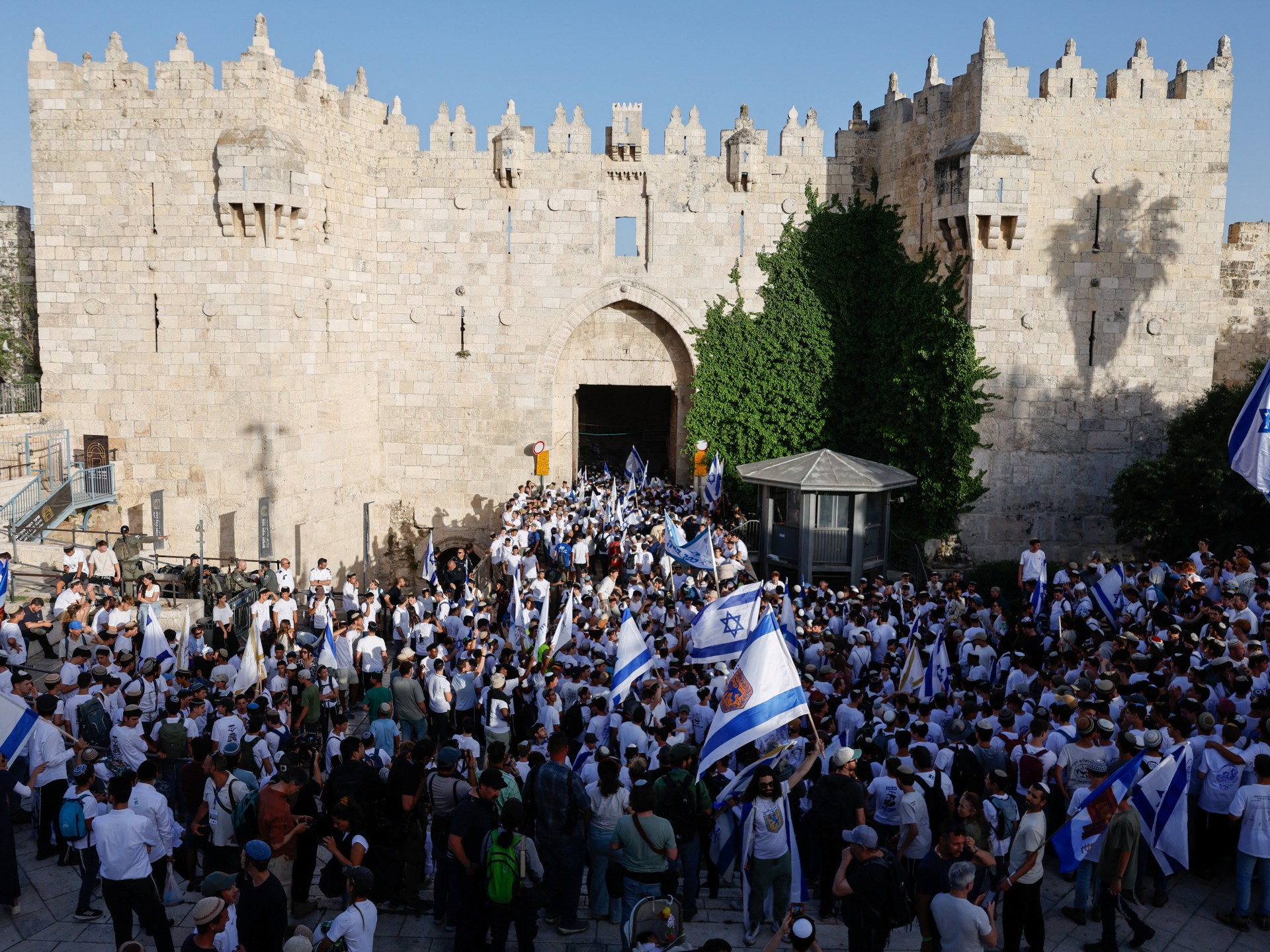
Israeli ultranationalists chant racist slogans during Jerusalem Day march
Who could challenge Keir Starmer for the UK PM’s job? Meet the candidates
Trump reviews Iranian peace proposal, warns strikes could resume