
‘Substantial evidence’ of double-tap strike in killing of Gaza’s Hind Rajab
 23 March 2026
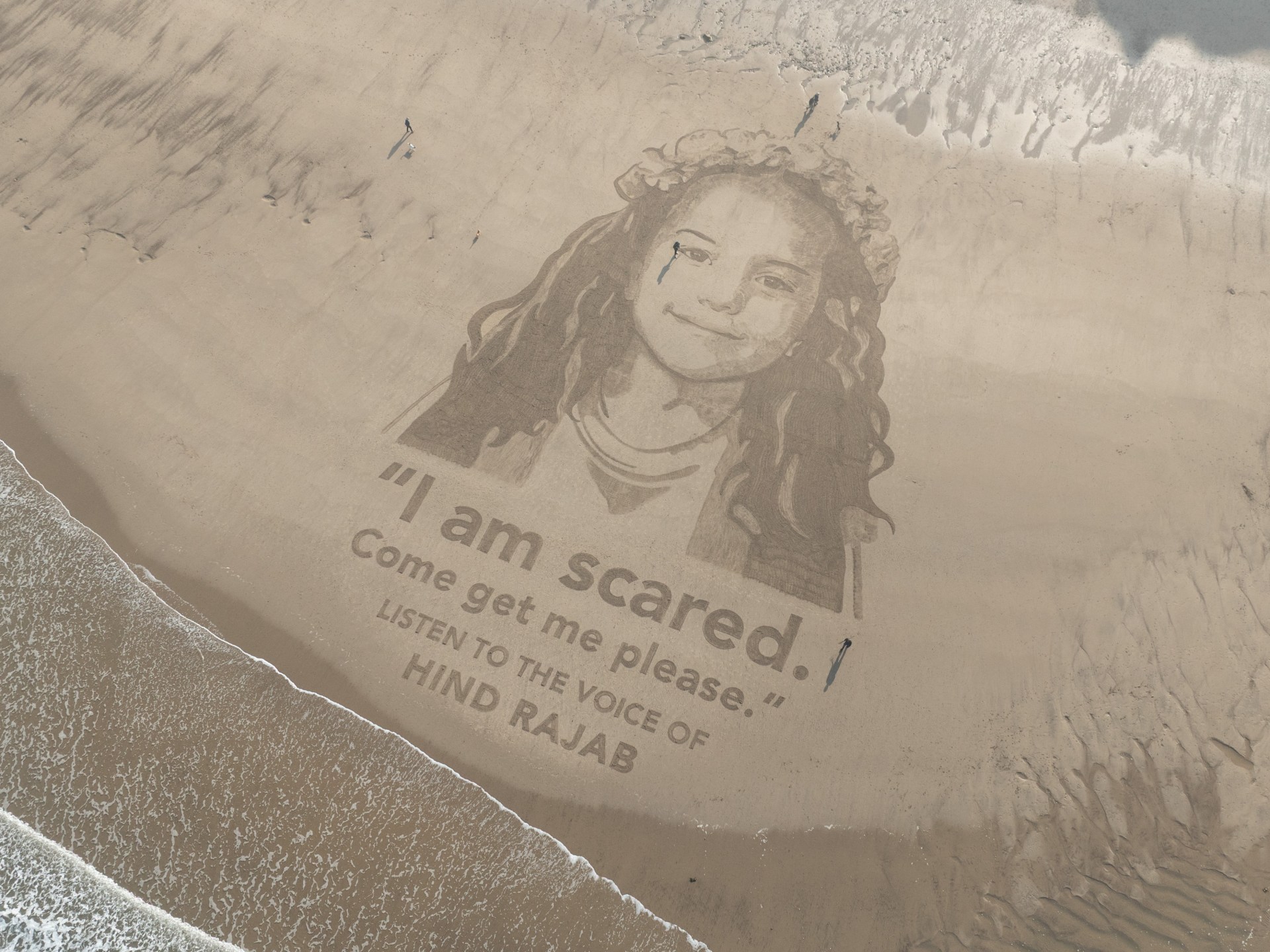

In the final hours of her life on January 29, 2024, Hind Rajab’s feeble voice could be heard desperately pleading with her mother and emergency workers for help, as she was trapped in a car surrounded by the bodies of six of her relatives.
After finally getting clearance from the Israeli military in Gaza City, a Red Crescent ambulance raced to save the five-year-old girl. But two paramedics were killed when their marked vehicle – whose sirens were blaring – came under Israeli tank fire. The remains of the nine victims were recovered 12 days later.
- list 1 of 4Israeli air strikes on Gaza kill four Palestinians
- list 2 of 4Al Jazeera documentary reveals new evidence in Hind Rajab family’s killing
- list 3 of 4Giant Hind Rajab portrait unveiled in Spain for anniversary of her killing
- list 4 of 4Hopes for justice rise as The Voice of Hind Rajab heads to Oscars
end of list
Two years after the tragedy, a report claims this was a “double tap” attack by the Israeli army. A double-tap strike essentially means carrying out two strikes on the same target, often wounding or killing medics and civilians who are coming to the aid of people harmed in the first attack.
Analysis by the legal campaign group Avaaz has found evidence that the killings contravened international combat law under the Geneva Conventions and the Rome Statute.
“By reconstructing the coordination and timing around the approved ambulance mission, it shows that there is substantial evidence of a deliberate ‘double-tap’ tactic – an initial military strike followed with a deliberately timed second strike targeting emergency responders and medical personnel who arrive to help,” Avaaz says in its report exclusively shared with Al Jazeera. “The brief brings together the timeline of events up to and beyond Hind’s death, showing what Israeli forces must have been aware of at each stage, and the frequent opportunities they had to pull back from murder.
Advertisement
“It documents over 40 human rights violations and ties together how those violations are evidence of a double-tap attack on the hospital workers. Each violation builds to an alarming possibility: Israel is not only killing Palestinians – it is systematically killing those who try to save them. The message is clear: If the medical community tries to help, it will be extinguished.”
More than 1,500 healthcare workers have been killed during Israel’s genocidal war on Gaza, including several since a so-called “ceasefire” came into effect in October.
Avaaz, building on previous investigations by Al Jazeera in partnership with the Hind Rajab Foundation and other media organisations, claims there is clear evidence that this double strike constituted a war crime. The campaign group is now urging the International Criminal Court (ICC) to bring those responsible to justice.
At the time of publishing, the Israeli military had not responded to Al Jazeera’s request for comment.
Al Jazeera, in partnership with the Hind Rajab Foundation, last year revealed evidence of deliberate killings.
The Israeli government initially claimed that none of its forces was present at the time, later asserting that the 335 bullet holes found in the family’s car were the result of an exchange of fire between Israeli soldiers and Palestinian fighters.
However, a subsequent investigation of satellite imagery and audio from that day by the multidisciplinary research group Forensic Architecture, based at Goldsmiths, the University of London, identified only the presence of several Israeli Merkava tanks in the vicinity of the family’s car and no evidence of any exchange of fire.
The Avaaz report highlights that the ambulance obtained permission from COGAT, an arm of the Israeli military, to go to Hind’s aid, so Israeli forces knew exactly when the first responders would arrive and the route they would take. About three hours passed between the initial shooting of the family vehicle and the attack on the ambulance, indicating the Israeli army had ample opportunity for “situational awareness, communication, and command decision-making”, the report adds.
Avaaz says the ambulance was attacked by a tank in a way that could not have been a warning shot if the military had any reason to believe it was not there to rescue Hind. Instead, the assault “points to lethal targeting”.
The Israeli army gave no warning before attacking the ambulance, previous investigations have found.
Advertisement
“I have taken the investigations done by a number of independent journalistic outfits. I was really struck by the evidence at the end of the whole horrendous incident,” said Sarah Andrew, legal director of Avaaz, who added that as a mother, Hind’s death made her think of her own daughter. “In particular, the kind of weaponry that was used on the ambulance, the timing and the fact that no warning was given – it immediately triggered a question in my mind, and I am absolutely convinced that this is another case of double tap.”
She told Al Jazeera: “It is something that has not had attention, and we would like to take this with [an independent legal] partner to the ICC.”
“What I have done is establish a legal framework for the previous investigation. I think it is very important that we also look at what happened to the ambulance workers as well as what happened to Hind and her family.”
The report says, “Even where an attacking force claims it suspects misuse of a medical vehicle, international humanitarian law requires warnings and an opportunity to comply before an attack can be lawful.”
Andrew said the Israeli military has yet to explain why a tank fired on an ambulance.
“We have not heard from the people responsible. I want them to appear before the ICC and hear what on earth was in their mind when they ordered 120mm tank rounds to be fired into an ambulance,” she said. “Justice is first of all bringing the light of attention into this crime and secondly seeing the persons responsible being accountable for their actions.”
Professor James Sweeney, from the University of Lancaster, who is an expert on human rights and conflict, said in double-tap attacks, the second strike is usually within five to 10 minutes.
It can also mean letting off a small explosion to induce rescuers to respond, then exploding another bomb once they are near.
“The [Avaaz] brief says that the attack on the ambulance should be considered a double tap, but usually the second attack would be within five to 20 minutes and would be considered a trick,” he told Al Jazeera. “It would seem that [in this case] the passage of time was greater, but that does not take anything away from the fact that the attack on the ambulance was so unlawful. You could see it as a form of double-tap, but it is not my normal understanding of it. But in any case, it does not take away from the fact that these were war crimes.”
The Hind Rajab Foundation said in a statement, “The double tap arguments are consistent with our analysis as well. We are continuously preparing for new filings against responsible soldiers in various jurisdictions.
“We have 24 names of responsible perpetrators. We are open to work together with Avaaz on a filing specifically regarding the attack on the ambulance.”
Related News

Ukraine, EU allies slam US decision to roll back Russia oil sanctions
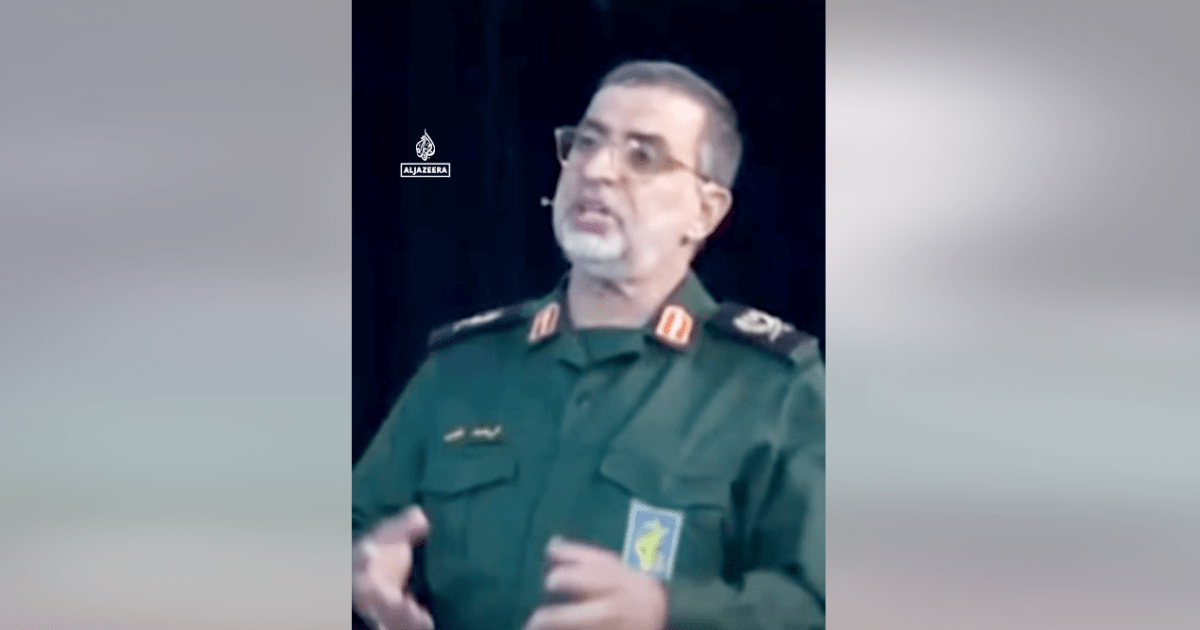
Iran’s IRGC says spokesman Ali Mohammad Naini killed in US-Israeli attack

Saudi FM warns Iran that patience in Gulf not ‘unlimited’ amid attacks