
Russian attacks kill eight people across Ukraine as US steps up diplomacy
 24 September 2026
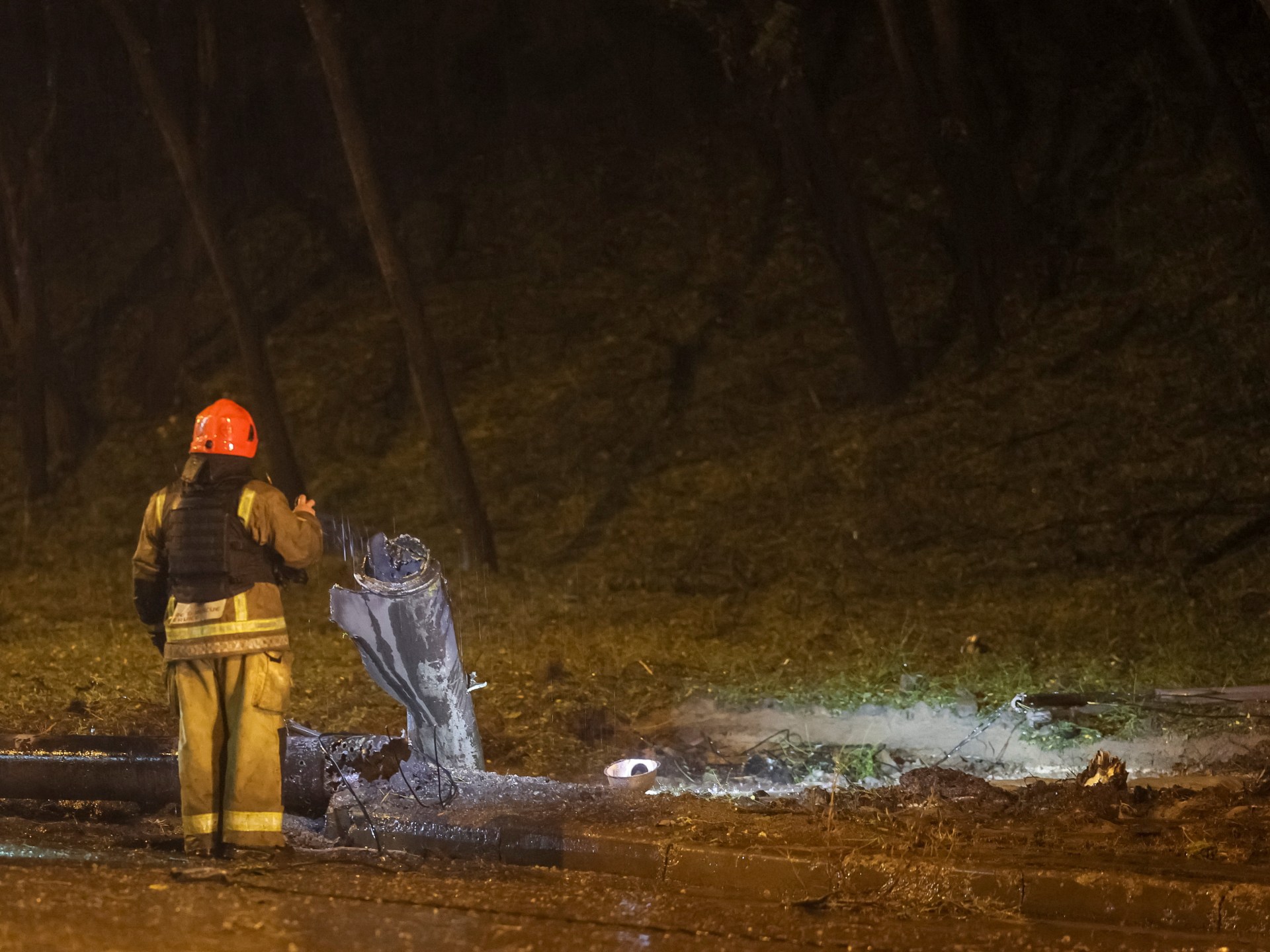

Russian attacks across Ukraine have killed at least eight people as the United States steps up diplomatic efforts to de-escalate the war.
Six people were killed and eight wounded on Thursday in a Russian attack on a farm in northern Ukraine’s Kharkiv region, Governor Oleh Syniehubov said on Telegram.
- list 1 of 3Russia’s strikes on Kyiv, Donetsk kill six after Trump-Zelenskyy talks
- list 2 of 3Ukraine’s Zelenskyy calls for sustained pressure to end ‘Putin’s crazy war’
- list 3 of 3Trump administration invites Putin to attend G20 summit in Miami
end of list
Two more people were killed in Russian attacks on Kyiv, one of them in the car park of a maternity hospital that was damaged, officials said.
The assault included an unspecified number of hypersonic and ballistic missiles, 282 drones and other weapons, Ukraine’s air force said.
Russia’s Ministry of Defence said it targeted Ukrainian defence sites, logistics and telecommunications hubs, and vessels used by the military.
The ministry also said its forces struck a Black Sea tanker bringing fuel and lubricants to Ukraine’s port of Chornomorsk.
In Russia, falling drone debris sparked a fire at an industrial facility in the southern region of Krasnodar, local authorities said, adding that no one was injured.
Poland’s military said it deployed planes to secure its airspace in response to the attacks on Ukraine. Two Czech fighters were also deployed to aid the effort.
“These measures are preventive in nature and are aimed at securing and protecting the airspace, particularly in areas adjacent to threatened regions,” it said in a post on X.
Poland also said a fire at a Starlink ground station in the centre of the country was deliberate sabotage aimed at cutting internet access for institutions, including the Ukrainian military.
Advertisement
Deputy Prime Minister Krzysztof Gawkowski called the incident “hybrid warfare” and said that while responsibility was not established, it “aligns with Russia’s new doctrine of attack”. Moscow has denied carrying out such attacks.
Polish Foreign Minister Radoslaw Sikorski told Al Jazeera that NATO had “contingency plans” for what he called Russia’s “provocations”.
The attacks came after the US had conducted a flurry of diplomacy with the two warring nations in a bid to reduce the impact of the war on the global economy.
On Wednesday, US officials met separately with Russian and Ukrainian officials on the sidelines of the United Nations General Assembly in New York to discuss the war.
Although no agreements were announced, the US invited Russian President Vladimir Putin to attend the next Group of 20 summit in Miami, Florida.
On Thursday, an international investment bank, the European Bank for Reconstruction and Development, reported that growth in developing economies was slowing, in part due to the increasing prices of energy and wheat. Ukraine is a top exporter of the grain, much of which is shipped across the Black Sea.
![Combines harvest wheat in a field, Ukraine's embattled Kharkiv region [File:Vyacheslav Madiyevskyy/Reuters]](https://www.aljazeera.com/wp-content/uploads/2026/09/2026-08-04T121001Z_1552004734_RC20RMAJW9DQ_RTRMADP_3_UKRAINE-CRISIS-GRAINS-1790240484.jpg?w=770&resize=770%2C530&quality=80)
German Foreign Minister Johann Wadephul called for a full and immediate ceasefire in Ukraine, starting in the Black Sea, to safeguard grain and food supplies.
“Ukraine had a very good grain harvest this year,” he said in a statement. “But because of the Russian attacks on Ukrainian ports, it can’t be delivered to the world. Russia is thereby exacerbating hunger and starvation worldwide.”
The office of Turkish President Recep Tayyip Erdogan said he told Ukrainian President Volodymyr Zelenskyy that attacks on commercial vessels in the Black Sea are “inexplicable” and steps must be taken on navigational safety.
Erdogan also told him that Turkiye was ready to do all it could to end the war with a lasting peace and would keep pushing to revive direct talks.
Related News

‘Orphaned’ by floods, more than 500 Nepali children face uncertain future
Israeli forces kill one, injure several in occupied West Bank
Former Kosovo President Hashim Thaci faces verdict for alleged war crimes