


As the Barbados Labour Party (BLP) moves to refresh its slate of candidates ahead of the next General Election, two political analysts are sharply divided on whether the changes reflect dominance or carry longer-term risks for the governing party’s hold on power.
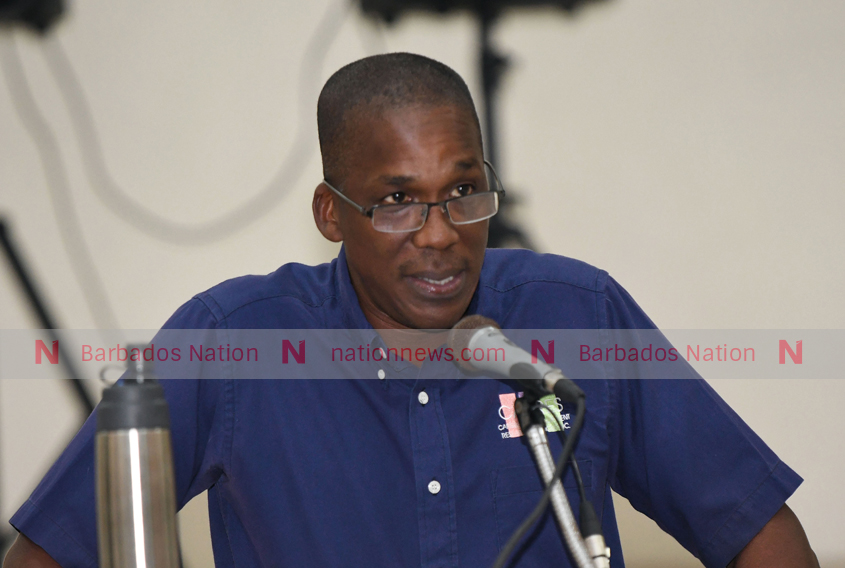
Political scientist Peter Wickham said while late-stage candidate changes would normally weaken any governing party, the BLP was operating in an “abnormal” political environment that allowed it to take risks few administrations could survive.
“Under normal circumstances, when you change a candidate, it does mean that the incoming candidate is set back somewhat because the person basically has to build familiarity and so on,” he said recently. “So, under normal circumstances, the expected outcome would be that the candidate would be set back and certainly making changes this close to the election would normally be a waste.”
However, he was quick to add that those rules no longer apply.
“The difference is that in this scenario, it’s clear that the Prime Minister obviously doesn’t see a problem,” Wickham said, suggesting that the Prime Minister had access to political intelligence that gave her confidence the party could “win notwithstanding”.
His comments come ahead of nomination meetings for St Michael Central and The City of Bridgetown yesterday and Saturday, respectively, following earlier selections in St Joseph and St Thomas, signalling that the BLP was finalising its electoral line-up.
In St Michael Central, Speaker of the House of Assembly Arthur Holder will not be returning to elective politics. This development has heightened interest in whether the constituency could become vulnerable without an incumbent candidate.
Wickham dismissed that concern, arguing that the Opposition Democratic Labour Party (DLP) lacked the strength to capitalise.
“If you look at the alternative in St Michael Central, the individual (DLP’s Senator Andre Worrell) has never run before in that constituency,” he said. “He ran before in St John and it was easily one of the worst performances in the Democratic Labour Party’s history there. So, generally speaking, I don’t know that the alternative option is any better than what is currently there in terms of familiarity with the constituency or having a long-standing basis.”
He added that only in marginal constituencies would such changes meaningfully affect outcomes.
“If that were to be done in a place like St Philip North, I would say it might make a slight difference, or maybe in St John perhaps, but none of the changes that are being anticipated are like that.”
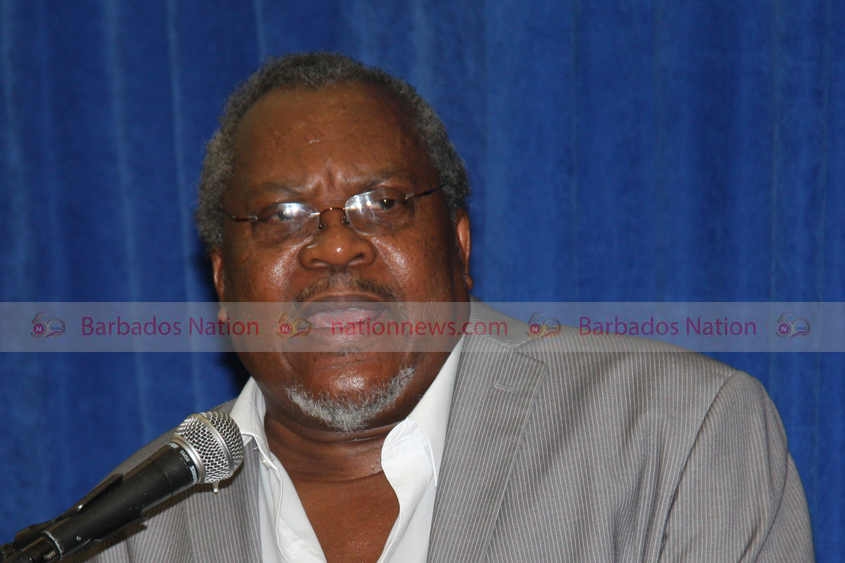
However, Dr George Belle has taken a more cautionary view, warning that dominance could breed overconfidence, and that internal changes should not be assessed solely through the lens of opposition weakness.
The retired University of the West Indies lecturer said while the BLP’s margins currently appeared secure, repeated candidate turnover risked weakening long-term constituency bonds.
“When voters grow accustomed to seeing familiar faces removed or replaced, it can dilute accountability and emotional attachment over time,” Belle said in previous commentary, cautioning that electoral politics was not only about numbers but also trust and continuity.
Wickham pushed back strongly against that line of reasoning, insisting that the historical record supported the BLP’s confidence.
“If there were a Democratic Labour Party swing, The City would be vulnerable, but I think it’s painfully obvious that that’s not happening,” he said.
He noted that the BLP only lost The City during major national upheavals.
“The Barbados Labour Party lost The City in the swing of 1986 and then again in the swing of 2008,” Wickham said. “If you’re talking about that kind of
political moment, then yes, you worry, but the conventional wisdom doesn’t apply here because
the circumstances simply don’t exist.”
However, Belle told the MIDWEEK NATION that relying too heavily on opposition weakness can distort strategic judgement.
“Political dominance is not permanent,” he warned. “Strong parties fall when they stop interrogating their own decisions and assume voters have nowhere else to go.”
The decision by Member of Parliament for The City Corey Lane to step aside after a single term was described by Wickham as principled rather than politically damaging.
“He determined less than a year in that it wasn’t going to be something that he could continue doing. He felt that if he could give 110 per cent, he would stay. I fully respect that.”
He rejected any suggestion that constituents would see Lane’s exit as suspicious.
“I don’t think that there’s a person in Bridgetown that could have a problem with that. He’s being honest and fair and saying, ‘No, I can’t help you in a way that I believe you should’.”
Wickham also highlighted the personal cost of the decision.
“He’s stepping aside at a point where he is not pensionable and would not have done enough to benefit from a pension. That must be a difficult decision to make. He’s making it notwithstanding and I do respect that.”
Belle, while acknowledging the integrity of Lane’s choice, argued that frequent exits by relatively new MPs could create perceptions of instability if repeated too often.
“Renewal is healthy, but when renewal becomes routine, voters begin to ask deeper questions about political sustainability,” he added.