

Meru County, Kenya – Every Monday, Wednesday and Saturday, Wanjiru Kamau heads out from her home in Mikumbune village in South Imenti Constituency to run five kilometres (3.2 miles).
She is 82 years old.
The red-earthed roads of Meru County, in Kenya’s central highlands, roughly 314 kilometres from Nairobi, have become something close to a second home since a friend connected her to a local athletics group in 2017.
“At first, people laughed at me, saying what I was doing was foolish,” Wanjiru says. “Since I began exercising and drinking water, my blood pressure is now normal, and I no longer get muscle spasms.”
The group’s chairman, Stephen Michubu Linguya, welcomed her personally. She has not looked back since, though she has had to contend with the laughter that followed her out the door.
Wanjiru is not alone.
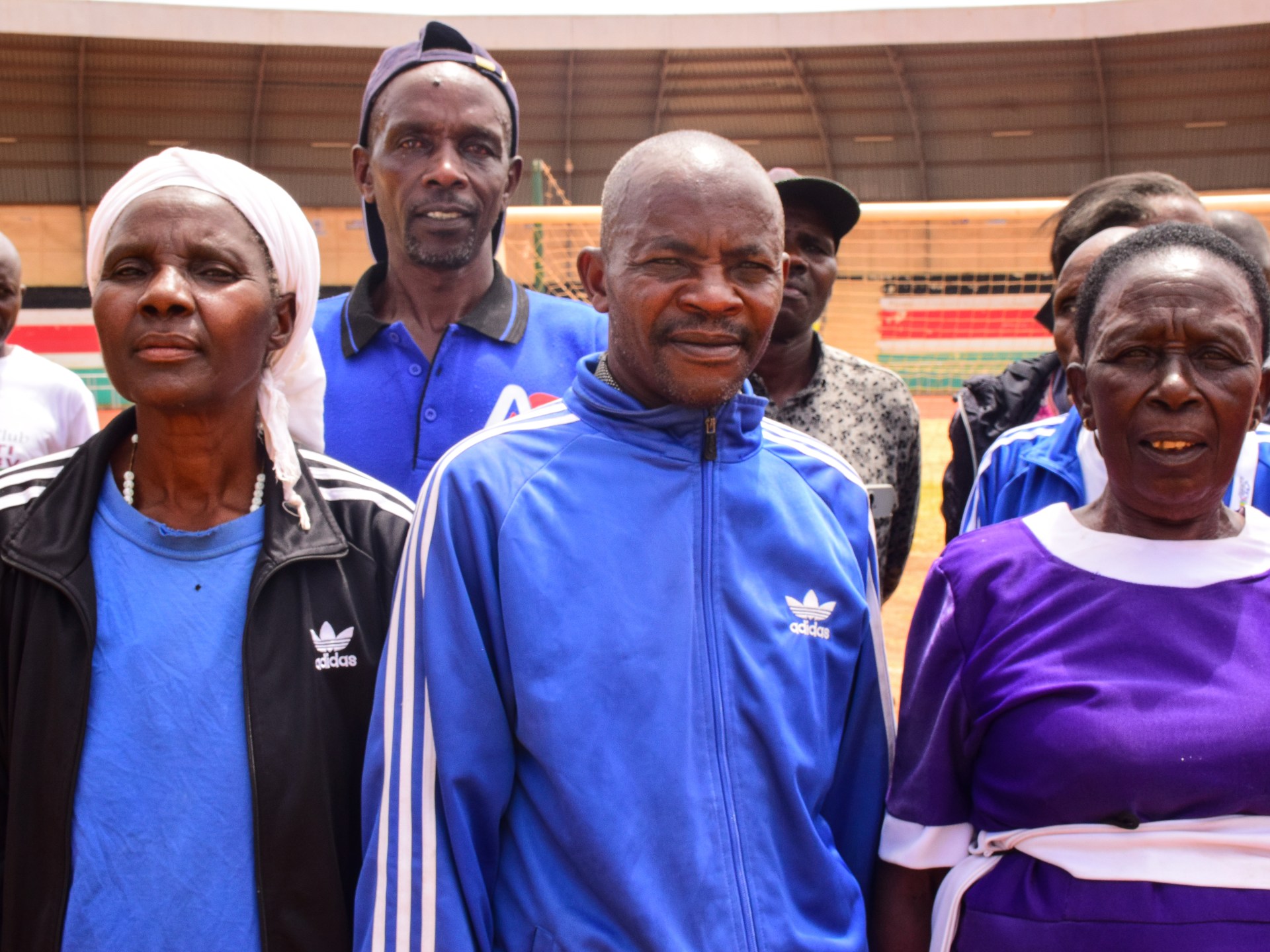
She is one of 80 members of the Meru chapter of Masters Athletics Kenya, a national network gathering athletes aged between 60 and 100. She trains alongside people younger than herself, without complaint and without fanfare, in a county increasingly associated with world-class athletic achievement.
Kenya’s Eliud Kipchoge and Faith Kipyegon, two of the greatest distance runners in history, represent the pinnacle of the country’s athletics and have made Kenya synonymous with running excellence. In Meru, a group of older men and women, none of them employed and none of them subsidised for transport, are making a case that running does not belong only to the young.
Building a movement in Meru
The Meru chapter was founded in 2015 by Stephen Michubu Linguya, a married father of two from Muriri in Tigania East Constituency. He had been watching his neighbours age badly, chronic illness settling into bodies that had stopped moving, and alcohol becoming a consolation for too many.
Advertisement
The diseases he saw were, in many cases, the predictable consequence of sedentary later life: high blood pressure, diabetes and the slow accumulation of conditions that medicine names but often cannot treat cheaply or easily.
He began looking for older people who had once loved to run.
“When we formed this group, we looked for older adults who used to love running before age became a challenge, so that even their children and younger generations could follow in their footsteps and transform their lives,” Michubu says.

The group trains three days a week. Members make their own way to the training ground, which sits anywhere between 10 and 50 kilometres (6.2 and 9.3 miles) from home, with fare paid from their own pockets. The team uses central fields where they can and walks to training when walking is the only affordable option.
There is no sponsorship, no institutional support and no salary.
What there is, members say, is each other.
Running against age and distance
James Mworia, 73, is from Uruku in South Imenti Constituency. He is married with four children. In 2019, he travelled to Tunisia to compete in the African Masters Athletics competition and came home with two silver medals.
For a man who pays his own way to training from a Meru village, the journey itself was an achievement.
“During our training days, which are three times a week, we use our means to get to the training ground, which can vary between 10 kilometres and 50 kilometres, whereby we pay the fare by ourselves. In 2019, I went to Tunisia, and I brought medals,” Mworia says. “I’m encouraging older people to come and join this group for their health and fitness.”
His health, he notes, has changed in tangible ways since joining. He does not visit hospital nearly as often as before, only occasionally now, rather than with the regularity that once marked his life.
Not all barriers in the group are about age.
Protasio Mutuma Lichoro, 52, is visually impaired. He comes from Kiguchwa in Tigania East Constituency and trains with the assistance of his son, who acts as his guide on the track.
Before finding the Meru chapter, Protasio struggled to run at all, not because of his disability, but because of the absence of infrastructure around it. Finding a guide had been an unending, demoralising problem.
“Since I joined this group, I have gained so much. Before, I could never find a guide when I needed one. Now, training with such a crowd, I even help train others to be guides,” Protasio says.
Advertisement
“I cannot run alone; I always need the assistance of a sighted guide.”
The Runners who kept going
Meru County’s executive committee member for youth, sports, gender and social development, Elias Murega, sees in the group something beyond individual health stories. He frames their effort as generational, a visible argument that older bodies can still compete, still model discipline and still demonstrate what sustained physical life looks like.
In a county that has produced international-level runners, that argument lands with particular force.
“In Meru County, we have seen many successful athletes who have gone all the way up to international level,” Murega says. “Sports is the way to go. We have seen many of these diseases, which we call lifestyle diseases, as well as other conditions, are linked to a lack of exercise.”
He adds that the county government is prepared to support the group by creating platforms for them to demonstrate their work publicly. For athletes who have been largely invisible to official sport structures, even that modest commitment registers as recognition.

Back in Mikumbune, Wanjiru Kamau’s mornings now have a shape they did not have before 2017. The laughter from neighbours has not entirely stopped, but she has long since stopped measuring her routine against their approval.
No matter what anyone thinks, her blood pressure is under control, her muscle spasms have gone, and she drinks more water; she runs five kilometres, three times a week, in a county of champions, one of 80 people who decided to keep running long after most athletes are expected to stop.
“I’m encouraging all older adults to take up regular exercise to stay fit and healthy,” she says.
Related News

US defence secretary compares Bolivia protests to government ‘overthrow’
Indonesia arrests officials in crackdown on corruption
One in 17 children is working: Here are the industries driving child labour