
Islands On The Brink: Caribbean Leaders Demand A Fairer Climate Future After COP30
 15 December 2025
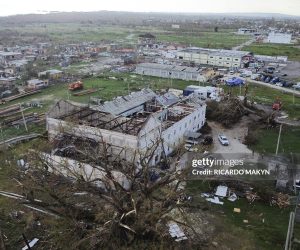

News Americas, NEW YORK, NY, Mon. Dec. 15, 2025: After COP30’s bold promises and polished declarations, the Caribbean has delivered a sobering reminder the world cannot ignore. Small island states sit on the frontlines of the climate crisis, yet remain among the last to access the resources meant to protect their Climate Future.

On November 26, 2025, Island Innovation convened a high level virtual press briefing to examine what COP30 achieved and what it failed to deliver. The message from Caribbean leaders was unmistakable climate ambition without access is meaningless.
The panel brought together leaders from across the region and beyond, including Jamaica’s Minister of Water, Environment and Climate Change, the British Virgin Islands Permanent Secretary for Environment, senior climate finance experts, and international development practitioners. Together, they painted a picture of nations rich in resilience but constrained by global systems unfit for climate reality.
COP30’s headline pledge of 1.3 trillion dollars annually by 2035 was welcomed. Still, leaders stressed that money promised is not money received. Small island states face complex application processes, restrictive eligibility rules, and delays that undermine urgent action. For Overseas Countries and Territories, many of which are excluded entirely from major climate finance mechanisms, access remains elusive.
Dr. Mohammad Rafik Nagdee of CCREEE was clear governments with limited technical capacity cannot be expected to navigate funding systems designed for far larger economies. Without simplified and predictable pathways, climate finance becomes an illusion rather than a solution.
Jamaica’s experience after Hurricane Melissa illustrates the stakes. Losses exceeded 30 percent of GDP, wiping out years of progress in a single storm. While Jamaica benefitted from catastrophe bonds, insurance instruments, and national savings, most Caribbean nations lack these financial buffers. Without fair international support, extreme weather will continue to reverse development gains across the region.
The British Virgin Islands offered a model of climate leadership through the creation of the first Climate Change Trust Fund among Overseas Countries and Territories. Capitalized at approximately 5.5 million dollars, the Fund enables faster and more direct access to climate resources. It demonstrates that regional solutions can succeed when global systems fall short.
Yet, many territories remain excluded altogether. Mr. Ahab Downer of the Green Overseas GO Program warned that vulnerability is still not the primary criterion for climate support. His program strengthens energy transition and disaster preparedness across multiple territories, but technical assistance cannot replace systemic access to finance.
Leaders also emphasized the role of nature as critical infrastructure. Jamaica’s large scale mangrove restoration project protects coastlines, sustains fisheries, and stores carbon. In the Caribbean, ecosystems are not luxuries. They are defenses.
The Caribbean is not asking for charity. It is demanding justice. Island nations bear little responsibility for global emissions, yet pay the highest price. As climate impacts accelerate, delay becomes its own form of harm.
Island Innovation continues to elevate these voices through its Island Voices at COP platform. The call from the Caribbean is simple and urgent climate finance must be fair, accessible, and grounded in reality. Anything less leaves islands on the brink, and the world on notice.
Related News
There It Is, The G-Word: An Exploration Of Gentrification, Memory, And The Unfinished Figh...

Nigeria Welcomes First Wave of St. Kitts and Nevis Delegation Following Landmark Visa-Free...

Miss Jamaica Universe Back Home As Recovery Continues
