

This content originally appeared on Al Jazeera.

EXPLAINER
The United States-Israel war on Iran, now in its third week, continues to escalate after US forces struck military targets on Kharg Island, the critical hub through which most of Iran’s crude exports pass.
US President Donald Trump said Washington deliberately spared the island’s oil infrastructure but warned that it could be attacked if Iran interferes with shipping through the Strait of Hormuz.
end of list
Tehran, meanwhile, has warned that any attack on its energy facilities would trigger retaliation against regional oil infrastructure and US-aligned assets, raising fears of a wider energy and security crisis across the Gulf.
Here is what we know:
In Iran
- Iranian supreme leader ‘wounded’: US Secretary of Defense Pete Hegseth said he believes Iran’s new supreme leader, Mojtaba Khamenei, is wounded. “We know the new so-called, not-so-supreme leader is wounded and likely disfigured.”
- $10m reward: The US Department of State offered a $10m reward for information about Khamenei and other top officials.
- US attacks on Kharg island: Trump announced that US forces have bombed Iranian military installations on Kharg island, which he described as Iran’s “crown jewel”. The island is critical to Iran’s economy, as approximately 90 percent of the country’s oil exports pass through it before travelling through the Gulf and the Strait of Hormuz.
- Casualties rise: Since February 28, at least 1,444 people have been killed and 18,551 injured in US-Israel attacks on Iran.

In Gulf countries
Advertisement
- Iranian retaliation: Iran has been launching reciprocal drone and missile attacks against US assets, military bases, and commercial sites across the Gulf region.
- Saudi Arabia intercepts drones: The Saudi Ministry of Defense said on Friday it intercepted and destroyed six drones, five in the kingdom’s eastern region and one over the “Empty Quarter” desert zone.
- Qatar: The Qatari armed forces successfully intercepted an incoming missile. Before the interception, authorities issued a heightened security alert to all mobile phones, warning of incoming missiles or drones, and temporarily evacuated certain areas, including parts of Education City.
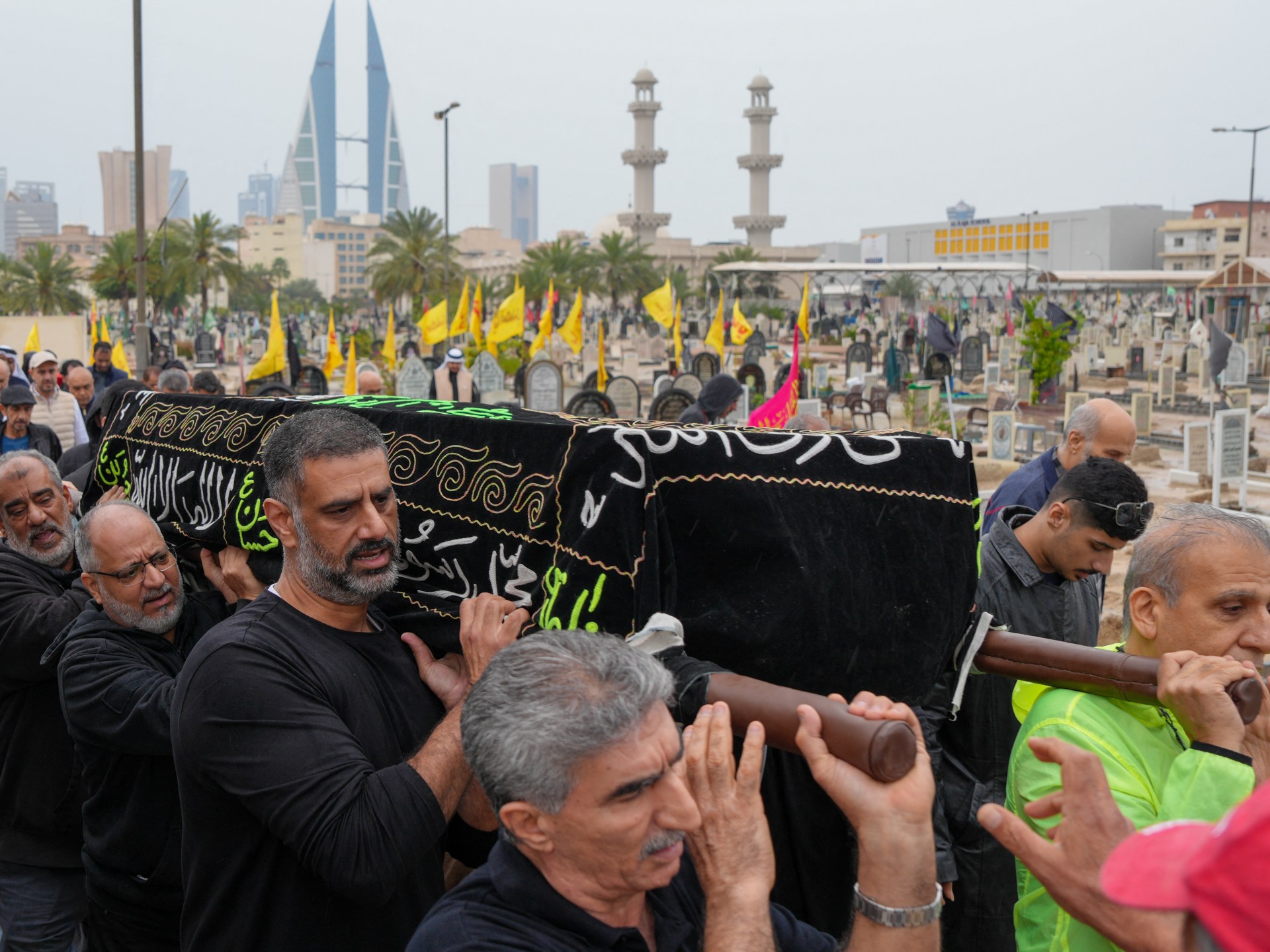
- Bahrain: Sirens sounded, and the Ministry of Interior urged all citizens and residents to remain calm and head to their nearest safe place.
- Oman: Following a recent incident where two people were killed by falling drones in Oman, Sultan Haitham bin Tariq and Qatar’s Emir Sheikh Tamim bin Hamad Al Thani held a call urging dialogue and regional de-escalation.
- F1 races cancelled: Formula One races in Bahrain and Saudi Arabia will reportedly be cancelled or rescheduled as the war engulfs the region. The Bahrain race is currently scheduled for April 10 to 12, and Saudi Arabia a week later.
In the US
- Major military deployments: To counter ongoing Iranian drone attacks and regional threats, the US is deploying 10,000 interceptor drones to the Middle East, according to US Army Secretary Dan Driscoll. Furthermore, US media reports suggest the potential deployment of the USS Tripoli, an amphibious assault ship, alongside 2,500 marines, which was reportedly approved by Hegseth.
- Aggressive rhetoric and bounties: Highlighting the aggressive US stance, Hegseth stated that the US military will show “no quarter, no mercy for our enemy”, a remark that prompted concerns from Democratic Congressman Eugene Vindman about possible illegal orders.
- Oil infrastructure spared: While the military facilities were destroyed on Kharg island, Trump said he chose not to strike the island’s oil infrastructure “for reasons of decency”. The island hosts key energy facilities linked to Iran’s oil export system, including storage tanks, loading terminals and pipelines.
- Ultimatum over the Strait of Hormuz: In a post on Truth Social, Trump warned that if Iran interferes with the free and safe passage of ships through the Strait of Hormuz, he would reconsider that decision and target the oil facilities.
- Strategic leverage: Analysts say the bombing signals that the US can cripple Iran’s ability to attack vessels in the strait while holding back the option of striking oil infrastructure – a move that could significantly disrupt Iran’s crude exports and intensify the global energy shock.
Advertisement
In Israel
- 7,600 targets: Israel’s military said it had carried out about 7,600 strikes in Iran and 1,100 in Lebanon since launching its joint operation with the US on February 28.
- Israel hit: Smoke could be seen rising from two locations around Israel’s commercial hub Tel Aviv, a journalist with the AFP news agency said, after blasts were heard following a warning that missiles were fired from Iran.
In Lebanon
- Lebanon toll climbs: Israeli attacks have killed at least 773 people in Lebanon since March 2, the Lebanese Ministry of Public Health said, as Israel pledged the country would pay an “increasing price” in damage to infrastructure.
- Attacks on medical workers: Lebanon’s Health Ministry strongly condemned an Israeli strike on a healthcare centre in Borj Qalaouiye that killed 12 medical staff, including doctors, nurses, and paramedics.
- UN base hit: Israeli shells struck the headquarters of a Nepalese peacekeeping battalion serving with UNIFIL in the southern Lebanese town of Meiss el-Jabal.
- Hezbollah’s stance: Hezbollah leader Naim Qassem stated that his group is ready for a “long confrontation” with Israel, framing the conflict as a legitimate defence against 15 months of unaddressed Israeli abuses.
In Iraq
- US embassy targeted: Iraq says a helipad at the US Embassy in Baghdad has been hit by a missile. An Iraqi security source tells Al Jazeera the attack on the embassy destroyed the air defence system. Smoke has been seen rising from the site. The sprawling embassy complex, inside Baghdad’s security Green Zone, has been repeatedly targeted by rockets and drones fired by Iran-aligned groups. There was no immediate comment from the US Embassy in Baghdad.
- Iraq PM, Macron call: Iraq’s Prime Minister Mohammed Shia al-Sudani pledged to prevent attacks after the killing of a French soldier in a drone attack in the semi-autonomous Kurdish region.
- Turkiye issues travel advisory: Turkiye has advised its citizens to avoid non-essential travel to Iraq as the country is becoming increasingly affected by the ongoing US-Israeli war on Iran.
Economic effect
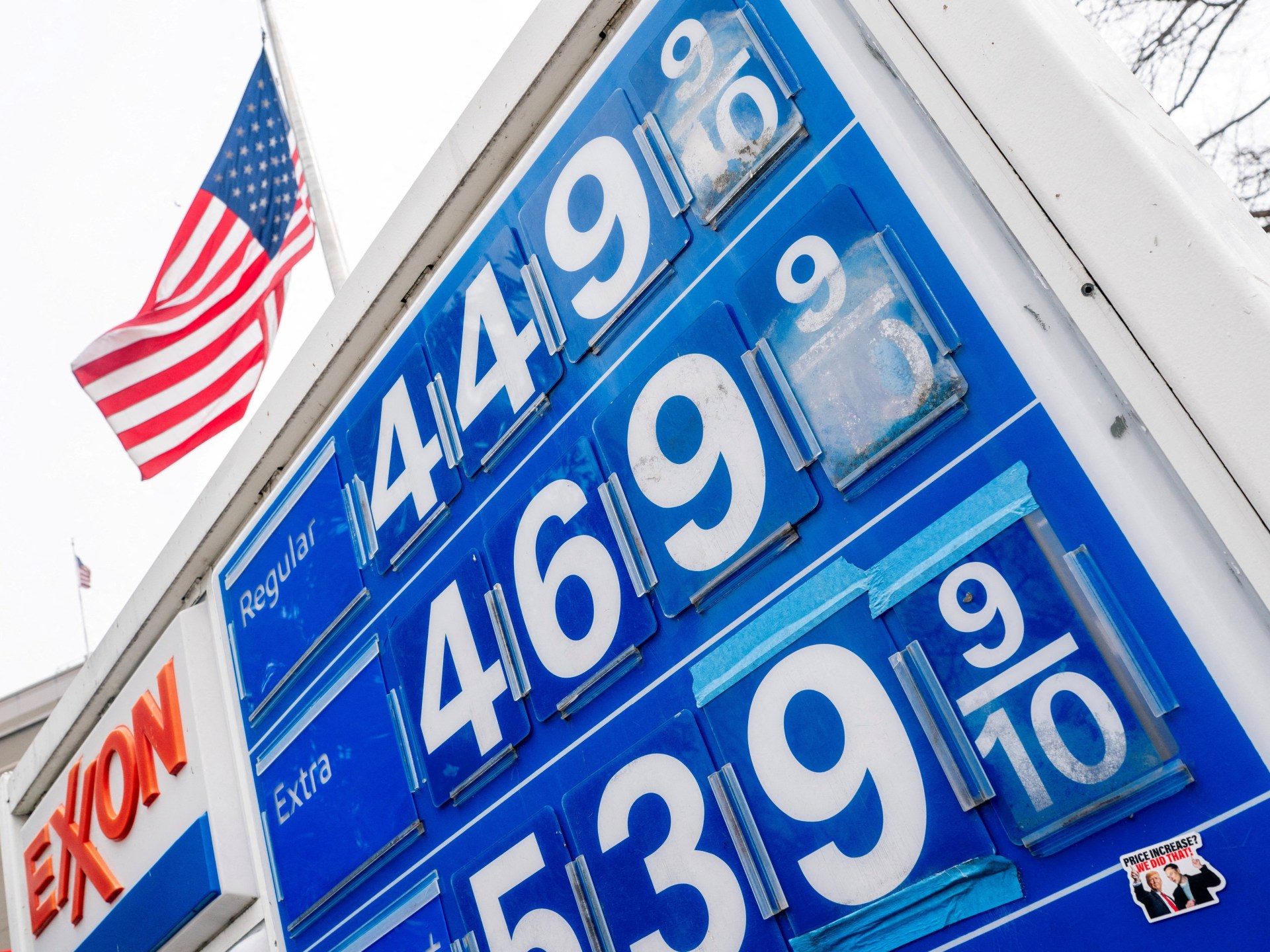
- Global economic effect: The US-Israel war on Iran has prompted a global energy crisis and a surge in oil prices. In response, Canada announced it will release 23.6 million barrels of oil as part of an emergency coordinated effort by the International Energy Agency (IEA).
- Aviation effect: Major Indian airlines, including Air India and IndiGo, have significantly increased ticket fares to cover rising aviation turbine fuel costs caused by the geopolitical instability.
- Shifting diplomatic dynamics: Despite the heavy US military presence, an analyst noted that the US is losing diplomatic leverage regarding the closure of the Strait of Hormuz. Key nations, including India, France, and Italy, are now bypassing Washington and reaching out directly to Iran to negotiate safe passage for their vessels, indicating a shift in who is controlling the immediate crisis.

Related News

14 March 2026
Israel kills 12 medics in attack in southern Lebanon as war ravages nation
28 February 2026
Iran, US, Israel officials give civilians clashing directives as bombs drop
10 March 2026
US consumers express dismay over rising gas prices after attack on Iran
13 March 2026