

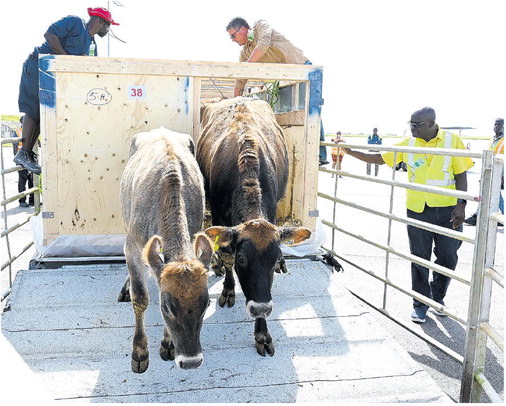

The importation of heifers to strengthen Barbados’ dairy industry has been largely successful and has significantly boosted national milk production, despite the loss of some animals during the programme, according to Barbados Agricultural Society (BAS) chief executive officer James Paul.
He said the programme had delivered tangible gains for the sector and played a critical role in stabilising milk output, even as farmers navigated challenges related to climate, animal adaptation and infrastructure.
“By and large, the importation of the animals was relatively successful. We have lost some, and I want to make that very clear, but we have also learned a lot.”
Barbados imported 180 pregnant Holstein and Jersey heifers from Canada in late 2024, a joint Government-farmer project to improve milk production and genetics.
Paul rejected suggestions that the losses had jeopardised the programme.
“Our production will not be at the level that it is in the absence of those cows. Certainly, it will not be. We have benefited handsomely from the availability of those animals.”
While he was unable to provide the exact number of animals lost, the BAS chief insisted that the losses were not significant enough to undermine the broader objectives of the initiative.
“But what it tells us is that as we go forward, there are things we must put in place to reduce any losses in future importations.”
He said one of the major lessons emerging from the project was the need to better prepare farmers and facilities for the transition of animals from one environment to another.
“That movement can be relatively traumatic, so you have to be very careful about the physical facilities the animals are housed in and how they are managed.”
Climate-related factors, particularly heat stress, were also identified as key contributors to the challenges experienced.
“When I talk about climate change, I’m talking about heat stress and the management of heat stress, especially in countries like ours,” Paul explained. “These are things that farmers have to learn to manage if we are going to continue importing animals.”
Despite those challenges, he expressed optimism about current trends.
“Right now, the temperatures are relatively good. The animals will be enjoying it and productivity levels should be able to jump back up.”
He noted that the programme underscored the importance of continued training and support for dairy farmers, particularly as Barbados sought to build a more resilient and sustainable milk industry.
“We need to train our farmers more so that they are prepared to take on the problems that they face. That is critical if we want to reduce losses and maximise the benefits of future programmes.”
He revealed that Barbados was currently producing about three million kilogrammes of milk annually (3 000 metric tonnes), a figure he expected to rise as younger animals matured and additional cows came into full production.
Paul said the BAS remained open to future importations as part of a broader strategy to strengthen the national herd.
“You may certainly have to do it again. At the end of the day, you’re trying to improve your milk herd so that you are able to produce a larger quantity of milk for the whole country.”