How UK universities briefed BAE Systems on pro-Palestine campus protests
 24 September 2026
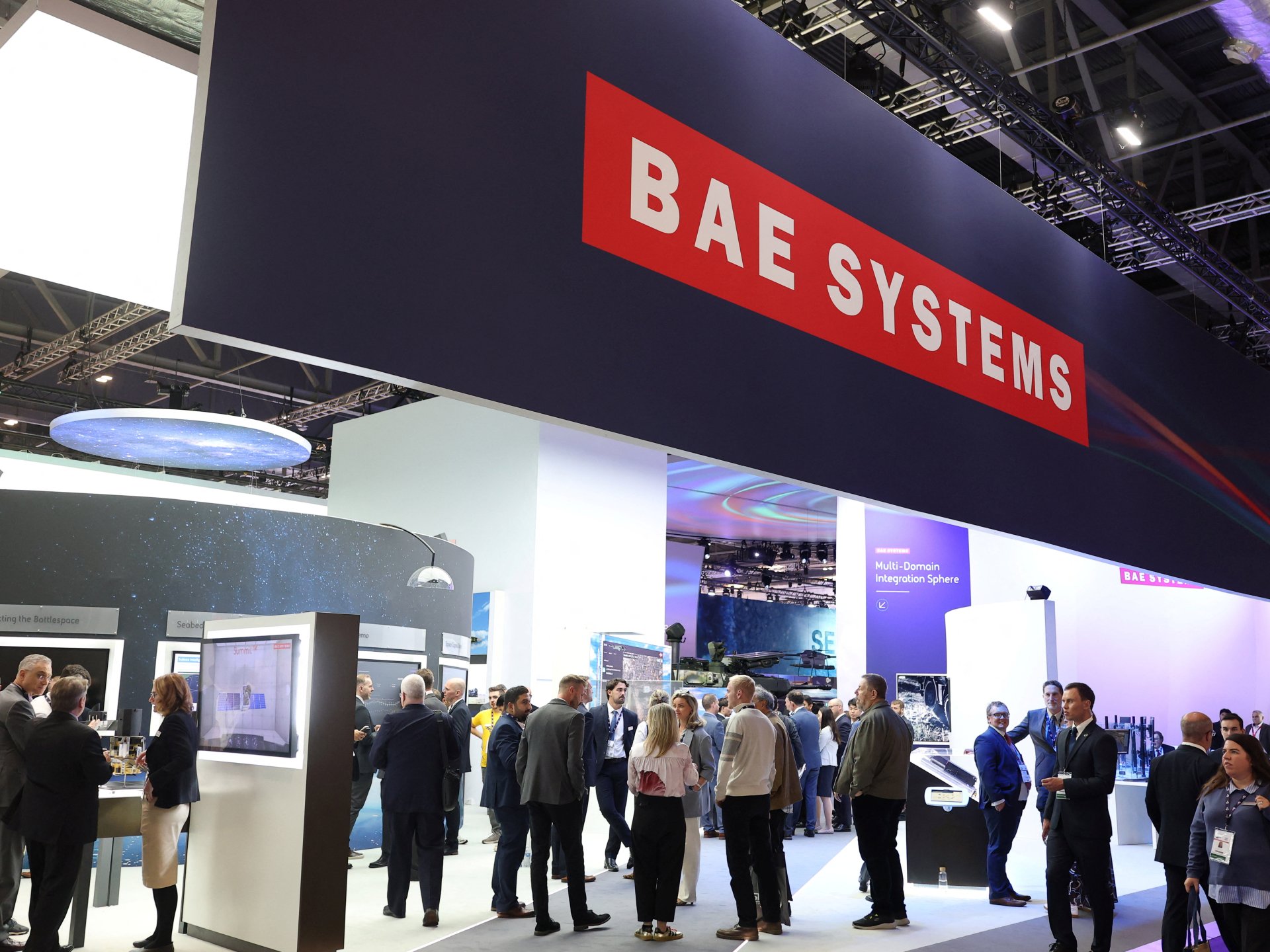

Thirteen British universities have discussed how to handle pro-Palestine campus protests with the United Kingdom’s largest weapons manufacturer, including ramping up security at events and coordinating responses to criticism.
The correspondence between universities and BAE Systems was uncovered in emails and internal documents obtained in a joint investigation by Liberty Investigates and Al Jazeera.
- list 1 of 4Who has profited most from the war on Iran?
- list 2 of 4The AI military complex: Which are the main companies in it?
- list 3 of 4British universities paid security firm to ‘spy’ on pro-Palestine students
- list 4 of 4Inside a UK university’s ‘disturbing’ crackdown on pro-Palestine students
end of list
One United Nations expert said these disclosures suggest a “troubling pattern” of universities taking “operational cues and security strategies from weapons manufacturers to suppress their own students”.
Among the institutions are the University of Manchester, the University of Nottingham, the University of Southampton, the University of Birmingham, the University of Strathclyde, and Cranfield University. Considered “strategic partners” by BAE Systems, they collectively receive up to 15 million pounds ($20m) a year from the company under funding agreements.
In August 2024, BAE Systems appears to have encouraged the group of universities to develop a message “to counteract an often skewed, but prominent narrative from protesters” on their partnerships, according to slides of a presentation titled “On site protests”.
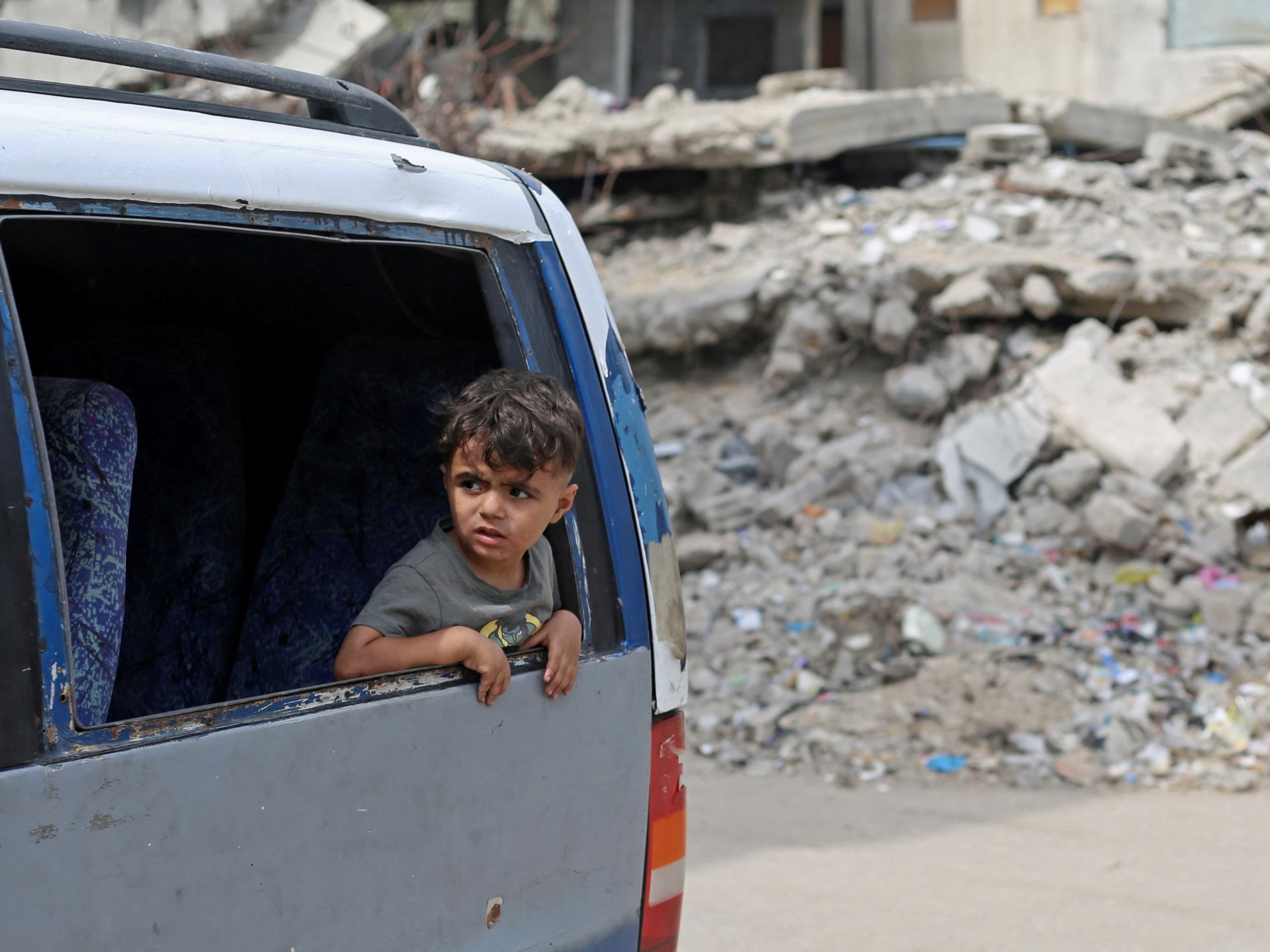
At that time, Israel had slaughtered more than 40,000 Palestinians, including 10,000 children in Gaza since October 2023. A national movement of students had been calling on their institutions to cut ties with the company, which makes equipment used by Israel’s military, among others they deemed complicit.
Advertisement
Following an October 2024 online careers event, during which protesting students posted messages such as “BAE kills kids”, an investigator at the University of Sheffield spoke to BAE Systems before deciding to discipline four people, according to internal correspondence.
The documents that Liberty Investigates and Al Jazeera have reviewed do not detail the content of the discussion, and the university has refused to respond to freedom of information (FOI) requests.
The investigator concluded that the students “may have negatively impacted the reputation of the university with a partner organisation”. They were given the choice of either paying a 75-pound ($100) fine or signing an agreement not to participate in any further unauthorised protests.
One of the disciplined students felt that BAE’s influence was apparent.
“At the end of the day, this comes down to the relationships the university has with these companies and trying to stop them being damaged,” he said.
A University of Sheffield spokesperson rejected those claims, saying its disciplinary procedures “are independent and not influenced by any external partnerships” and that it “consults all parties involved to ensure a fair process”.
The university “spoke with BAE staff to get their account of what happened”, they said, adding that the outcome was determined on whether the “students’ behaviour breached the student code of conduct”.
Gina Romero, the UN special rapporteur for peaceful assembly and association, said, “When public universities take operational cues and security strategies from weapons manufacturers to suppress their own students, the boundary between higher education and corporate defence interests collapses. This investigation reveals a troubling pattern: universities managing protest not as spaces of free inquiry, but as corporate risk to be mitigated for key financial sponsors.”
Lawmaker Jeremy Corbyn, the former Labour Party leader and lifelong supporter of Palestinian rights, said it was “disturbing beyond belief” that universities would “collaborate” with the arms industry to impose a crackdown.
“The student movement has mobilised huge numbers in support of Palestine, often protesting university investment in the arms trade,” he said. “I’ve witnessed a lot of repression against student movements over the years, but it has never been as severe as it is today.”
Liberty Investigates and Al Jazeera have also reviewed emails from 2024 revealing how BAE requested that the University of Lancaster provide “extra security with the ability to remove protesters” and sought a meeting at Queen Mary University of London (QMUL) to discuss security at events amid protests.
Advertisement
Three students were later disciplined after protesting BAE’s presence at a QMUL event. Emails show QMUL staff apparently scoured social media videos to identify them before passing information on to the university misconduct team. QMUL did not respond to a request for comment, while a Lancaster spokesperson said staff and students have “every right to protest on campus” if it is lawfully done in line “policies and processes”.
The disclosures also show that the University of Nottingham and the University of Southampton apparently sought to inform BAE that they monitor social media for signs of protest.
In November 2025, a staff member at Southampton flagged to colleagues they had “spotted some social media posts” highlighting a pro-Palestine group’s “intent to protest” at an engineering careers fair that BAE ultimately pulled out of.
Another staffer replied: “Thanks … I brought it to the attention of our academic liaison at the company and he has forwarded it internally to those who need to know. It remains to be seen if they wish to proceed with any further events.”
Meanwhile, emails show the University of Glasgow apparently reassured BAE it had informed Police Scotland of a planned protest targeting an October 2023 careers fair.
A Glasgow spokesperson said the university was committed to upholding “freedom of speech on campus, including the right to peaceful demonstration”, but that it “also defends the right of companies to attend recruitment fairs”.
Other universities to have discussed security measures with BAE include the University of Lancashire, Sheffield Hallam and Cardiff University.
The revelations come as Britain’s higher education sector grapples with an ongoing financial crisis.
More than a third of UK universities ran financial deficits last year, according to a study by the Office for Students, including six universities named in this article: Sheffield Hallam, Lancashire, Cardiff, Strathclyde, Nottingham and Cranfield.
According to FOI data, Sheffield Hallam, Lancashire, Cardiff and Strathclyde have collectively received 6 million pounds ($8m) from research partnerships with BAE since 2020. Nottingham and Cranfield refused FOI requests.
At the same time, 11 of the 13 universities named in this article are also part of a new UK Ministry of Defence alliance, each having vowed to expand defence research and graduate recruitment for a portion of a 182-million-pound ($241m) government fund.
Several universities defended their conduct. BAE Systems did not respond to a request to comment.
The University of Manchester said its decisions “are made by the university alone”, while the University of Birmingham said it takes “police advice where necessary” but “does not take security direction from other external parties”.
The University of Southampton and University of Nottingham said they had not worked with BAE’s other “strategic partners” on a counternarrative to protesters’ criticism or adopted security strategies from the company. BAE’s “security plans are intended for the protection of their own staff, not university security arrangements”, a Southampton spokesperson added.
Advertisement
A Sheffield Hallam spokesperson said it “respect[s] the right of our students to protest and express their views peacefully and within the law”. Cardiff University rejected the suggestion that “we take operational cues from external organisations”. The university often puts in place “additional and proportionate security measures” based on its own risk assessments, the Welsh university said.
In October 2025, BAE, which makes parts used in Israeli fighter jets, said it did not directly sell weapons to Israel, declining to comment further.
Aaron Walawalkar is an investigative journalist at Liberty Investigates and a 2026 Bertha Challenge Fellow. He produced this work as part of the Bertha Challenge Fellowship.
Related News
Palestinians denounce Israeli minister Ben-Gvir’s threats against prisoner
South Korea to recall Ukraine envoy in diplomatic row over POWs
UAE investigates possible ‘terrorist’ link in attack on flight to Israel