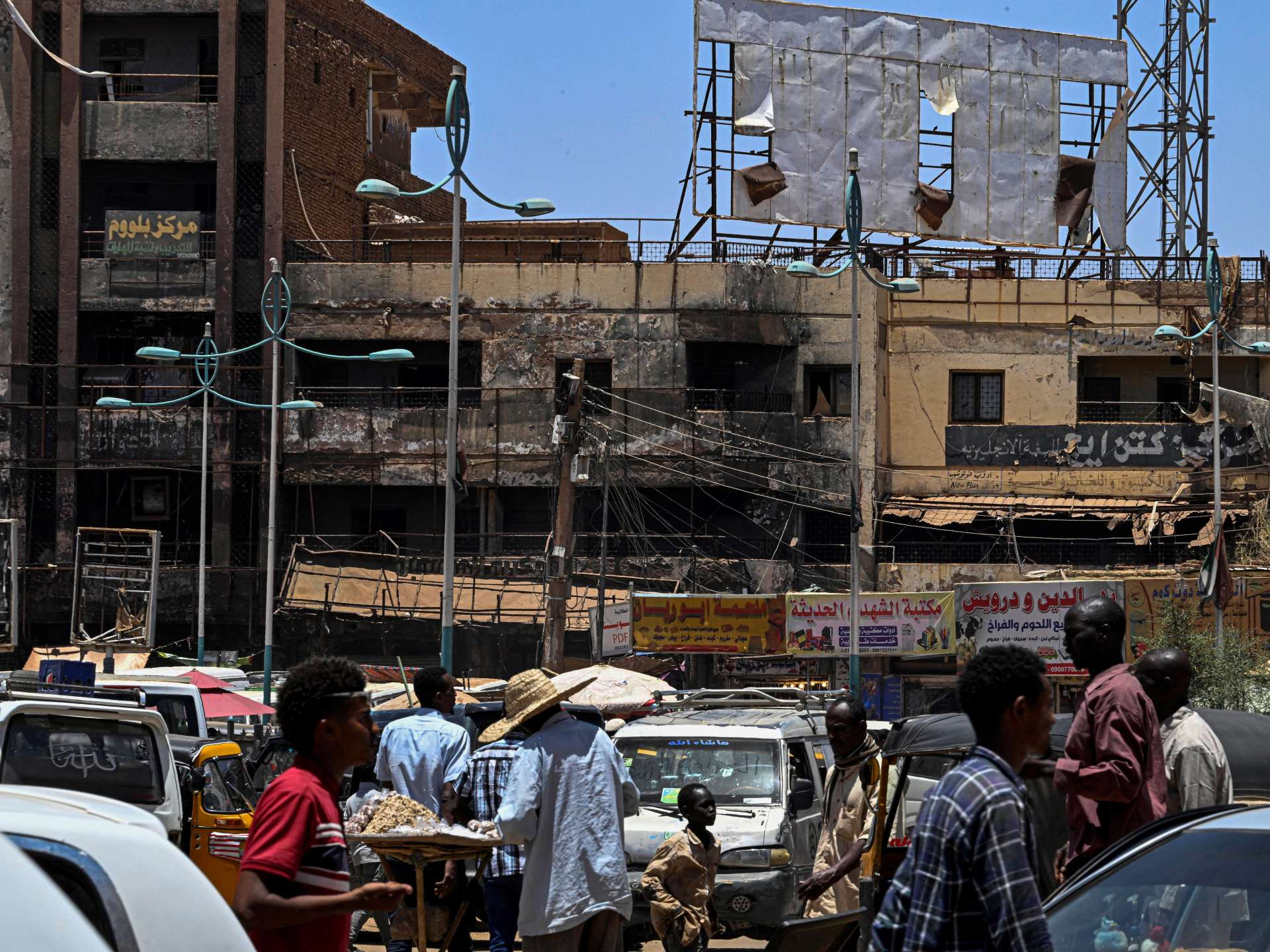

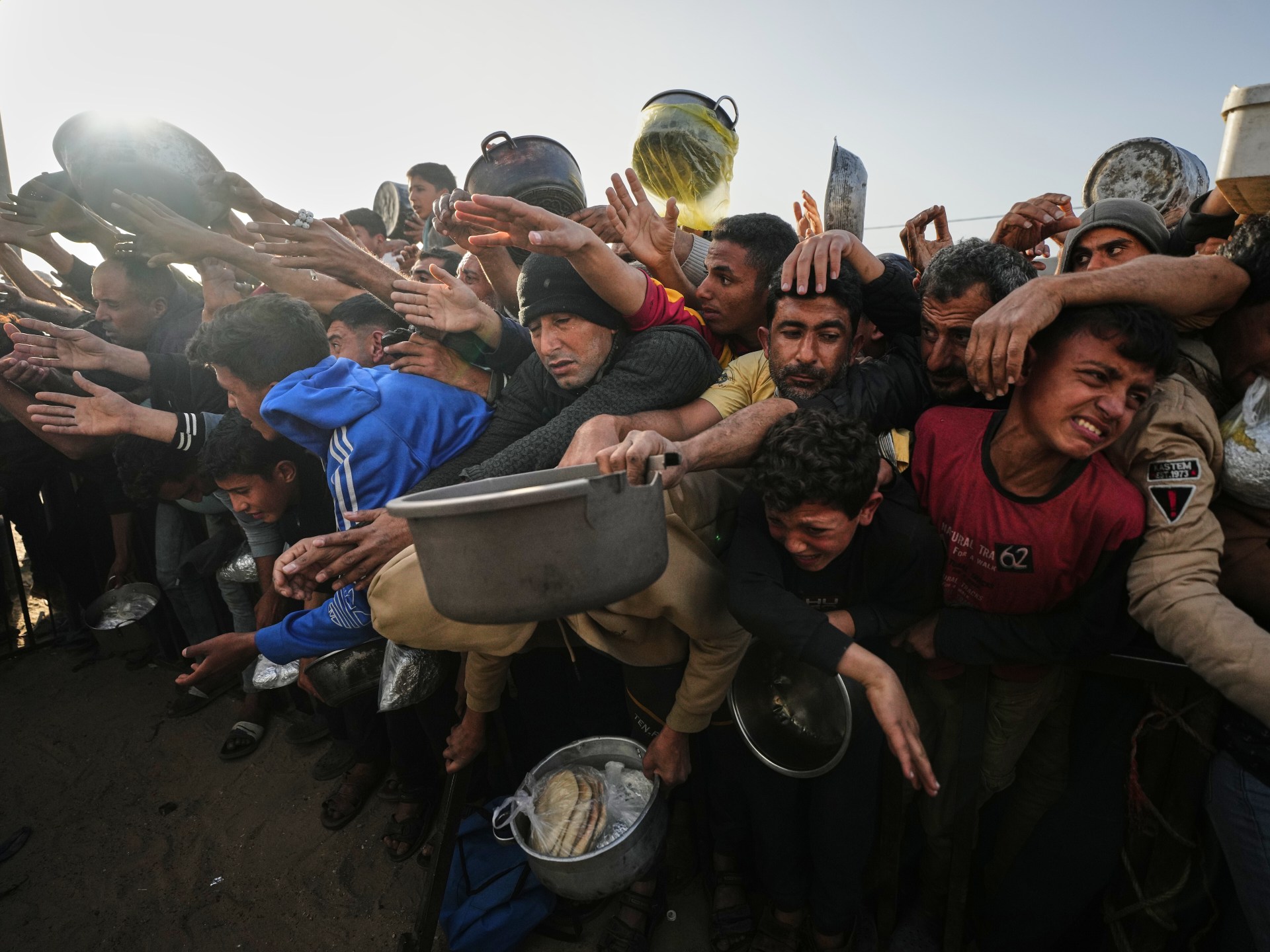

Famine was confirmed in two places in 2025 – areas of the Gaza Strip and Sudan – the first such dual confirmation since formal famine reporting began, according to the Global Report on Food Crises (GRFC) 2026.
The annual report, produced by a coalition of 18 humanitarian and development partners, found that acute food insecurity remained widespread in 2025.
- list 1 of 4‘Waiting without answers’: Gaza mother’s fear for her three imprisoned sons
- list 2 of 4UN warns South Sudan at risk of ‘full-scale famine’ as fighting intensifies
- list 3 of 4As Iran crisis drags on, fears of global food catastrophe grow
- list 4 of 4Gaza’s unseen casualties: A surge in stillbirths and birth defects
end of list
Across 47 countries and territories experiencing food crises, 22.9 percent of their populations – or about 266 million people – experienced acute food insecurity last year, a marginal rise from 22.7 percent in 2024 but nearly double the 11.3 percent recorded in 2016.

The proportion of analysed populations facing acute hunger has now stayed above 20 percent every year since 2020. In absolute terms, the number of people affected has grown from 108 million in 2016 to 265.7 million in 2025, having peaked at 281.6 million in 2023.
The GRFC cautioned that the slightly lower headline figure compared with 2024 mainly reflects a reduction in the number of countries covered – from 53 to 47 – rather than any real decline in needs.
Famine, catastrophe and emergency
Famine – the most extreme classification under the hunger-monitoring Integrated Food Security Phase Classification (IPC) system – was confirmed in parts of the Gaza Strip and Sudan in 2025. The risk of famine remained in other areas of Gaza, Sudan and South Sudan, and those projections extended into 2026.
According to the IPC, famine is when:
- At least 20 percent of households face extreme food shortages.
- Acute malnutrition affects more than 30 percent of the population.
- The death rate due to starvation or hunger-related causes exceeds two deaths per 10,000 people per day.

Six countries and territories had populations facing “catastrophic conditions”, or Phase 5, the highest level in the IPC’s classification of food insecurity. They numbered 1.4 million people, a more-than ninefold increase since 2016.
Advertisement
The Gaza Strip was the worst affected, with 640,700 people facing famine conditions, equivalent to 32 percent of its population, the highest share recorded globally. Sudan followed with 637,200 people, or 1 percent of its population.
Four other countries recorded catastrophic food shortages among specific groups of people: South Sudan – 83,500 (1 percent of the population), Yemen – 41,200 (0.1 percent), Haiti – 8,400 (0.1 percent) and Mali – 2,600 (0.01 percent).
Additionally, more than 39 million people in 32 countries were in Phase 4, or emergency conditions, representing 3.8 percent of the population analysed, a marginal increase from 2024.

Conflict remains the main driver of hunger
Conflict and violence were the primary drivers of acute food insecurity in 19 countries where 147.4 million people were affected. They represented more than half of those facing acute hunger globally.
Weather extremes were the primary driver in 16 countries, affecting 87.5 million people, while economic shocks led in 12 countries, with 29.8 million people affected.
Against that backdrop, humanitarian and development financing for areas facing food crises declined in 2025, falling back to levels last seen in 2016-2017, the report said.
As for 2026, the report said that based on a partial picture as of March, severity levels remain critical in multiple contexts. It added that the escalation of conflict in the Middle East exposes food-crisis countries to direct and indirect risks of global agricultural and food market disruptions.
A generation of malnourished children
An estimated 35.5 million children were acutely malnourished in 2025 across 23 countries experiencing nutrition crises, including just under 10 million with severe acute malnutrition, the most life-threatening form.
A further 25.7 million children suffered from moderate acute malnutrition. About 9.2 million pregnant and breastfeeding women were also acutely malnourished across 21 countries with available data.

Displacement is concentrated in food-crisis countries
The number of forcibly displaced people in the 46 countries covered fell slightly in 2025 to 85.1 million.
About 62.6 million of them were internally displaced across 34 countries, and 22.5 million were refugees and asylum seekers in 44 countries.
Without a sustained push to address the structural drivers of hunger, the world’s most fragile countries will continue to bear a disproportionate share of the global hunger burden well into 2026, the report concluded.
Advertisement
Related News

Bulgaria election: Ex-President Radev’s party leads in early results

Two Palestinians killed by Israeli tank fire in southern Gaza

Magnitude 7.5 earthquake strikes northern Japan; tsunami warning issued