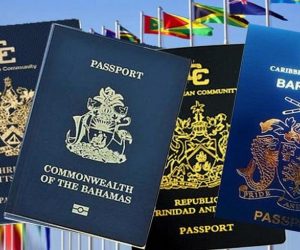
From Common Cause To Collective Strength: The Caribbean Charts Its Future
 05 February 2026

News Americas, TORONTO, Canada, Thurs. Feb. 5, 2026: In 1940, Britain’s survival rested not on isolation but on solidarity. Winston Churchill’s defiance of fascism depended on what he called the “Empire beyond the seas” – allies who shared both the burden and the risk of survival. The Caribbean answered that call.
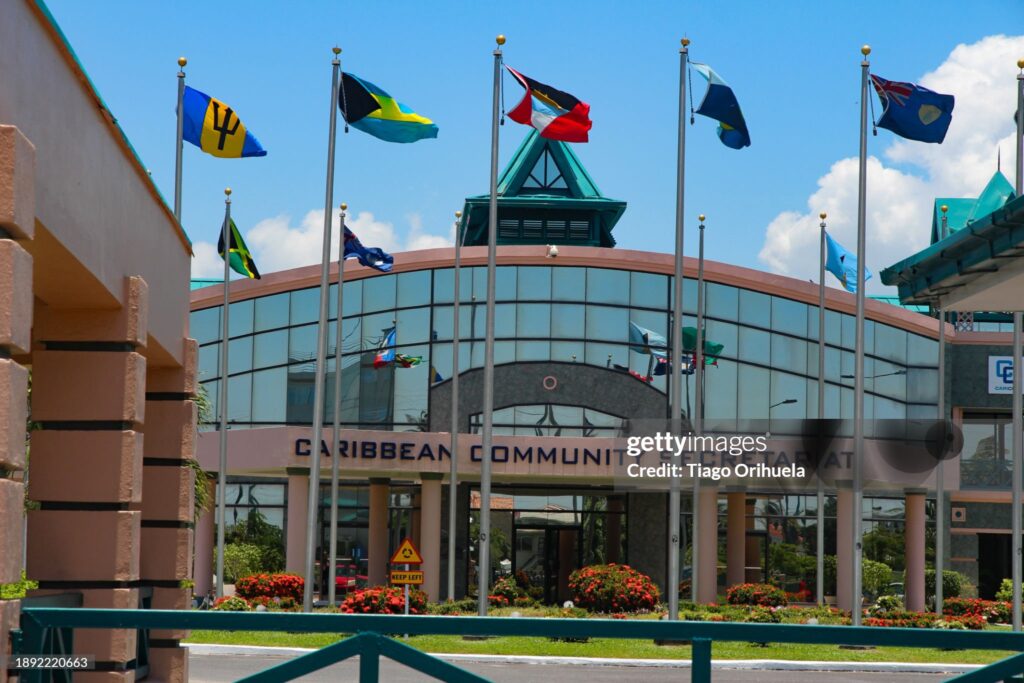
Eighty-five years later, Caribbean leaders have reached a darker conclusion. As St. Kitts and Nevis Prime Minister Dr. Terrance Drew recently put it: “None will come to save us. We must save ourselves.” That shift in mindset reflects a growing concern among West Indians, both in the Caribbean and across the diaspora – that the United Kingdom, under Prime Minister Keir Starmer, is prioritizing a transactional relationship with Donald Trump over the security, dignity, and rights of Commonwealth citizens.
For Caribbean people abroad, Trump’s return to power is not an abstract geopolitical development. It is a direct threat.
“America First” policies include mass deportations, aggressive immigration enforcement, and investigations into Caribbean Citizenship-by-Investment (CBI) programmes – initiatives that many small island economies rely on for survival. Proposed global tariffs and the possibility of a remittance tax pose existential risks to economies deeply dependent on U.S. trade, tourism, and financial flows.

Starmer’s reluctance to confront these policies has reinforced a dangerous perception: that Caribbean nations have become expendable collateral in the pursuit of a UK-U.S. trade deal.
This passivity extends beyond the Caribbean. The UK government failed to forcefully challenge American threats against Denmark and Canada, which stood staunchly with the UK in WW II punching far above its weight.
This approach by the Starmer government has undermined the very principles of sovereignty and mutual respect the Commonwealth claims to uphold: Working together for prosperity, democracy and peace. The reticence even extended to matters of the UK’s own standing – for months Starmer avoided public criticism as Trump attacked the Mayor of London, derided British immigration policy, and launched a US$10 billion lawsuit against the BBC.
While he has recently hardened his tone eventually pushing back on tariffs and on Greenland, and in a rare rebuke denounced Trump’s disparaging comments about NATO’s soldiers who served in Afghanistan: “we never needed them – we have never really asked anything of them – they stayed a little back, a little off the front lines;” critics within his own party and among international allies argue that the damage is already done. Early silence, especially in the face of repeated insults, has compromised Britain’s standing.
Churchill famously warned that appeasement meant “feeding the crocodile, hoping it will eat you last.” Starmer appears to have embraced precisely that logic.
This approach is a sharp departure from the solidarity of the 1940s, when the West Indies played a vital role in resisting authoritarianism. Thousands of Caribbean men and women served in the British armed forces, while the region supplied strategic resources essential to the war effort.
Today, that historical bond appears diminished. The UK’s reluctance to defend Caribbean nations against modern forms of economic coercion – tariffs, financial restrictions, and diplomatic intimidation, feels like a betrayal of shared sacrifice.
By prioritizing the prospect of a UK-U.S. trade agreement over the long-term interests of Commonwealth allies, Starmer risks sacrificing smaller nations in the hope of buying time with Trump. History suggests that crocodiles are rarely satisfied.
CARICOM Charting a New Course
In the absence of clear UK leadership, CARICOM nations are recalibrating.
Many Caribbean leaders now view Britain’s posture toward Washington as subservience rather than solidarity. As a result, the region is pursuing more assertive, independent diplomacy – engaging directly with the United States while diversifying partnerships with Canada and emerging economies in the Global South.
Rather than sheltering behind a weakened Commonwealth, the Caribbean is building its own regional defenses. In late 2025, Barbados, Belize, Dominica, and St. Vincent and the Grenadines launched a landmark agreement allowing full free movement of people – a bold attempt to stem brain drain and build resilience against external economic shocks.
Barbados Prime Minister Mia Mottley has emerged as a moral and strategic leader, insisting that the Caribbean must no longer be treated as a pawn in great-power rivalry. Bypassing London entirely, she has appealed directly to Trump for tariff exemptions and face-to-face talks, reminding him bluntly that the Caribbean “is not the enemy” and poses no threat to the U.S. economy.
This is not the action of isolated states, but a coordinated CARICOM strategy – one born of necessity rather than choice.
The logic behind Starmer’s early caution is familiar: avoid provocation, secure goodwill, and preserve space for negotiation. But experience suggests this strategy is fundamentally flawed when dealing with Trump.
Trump routinely interprets deference as weakness. The White House has reportedly dismissed Starmer’s government as feeble for failing to offer more vocal support on issues such as Venezuela. He has a long record of humiliating allies for domestic political gain, regardless of previous diplomatic courtesies.
Moreover, Trump views international relations through an intensely transactional lens. He assumes allies are exploiting the United States, making long-term goodwill difficult, if not impossible, to secure through politeness alone. His willingness to disregard personally negotiated agreements, including the USMCA, should give pause to anyone banking on appeasement to deliver a stable trade deal.
The Commonwealth was meant to represent continuity – a transformation from empire to partnership, from domination to mutual respect. But partnerships cannot survive on nostalgia alone.
If the UK chooses silence when its allies are threatened, those allies will inevitably seek security elsewhere. The Caribbean’s shift from common cause to self-preservation is not an act of disloyalty; it is a rational response to abandonment.
The UK is in a unique position to stand in strength with others. The Commonwealth of Nations is an association of 56 independent countries, with nearly one-third of the world’s population or 2.7 billion people, that has coverage spanning strategic areas of the globe including Africa, Asia, the Americas, the Artic, the Caribbean, and Oceania; and containing Middle Powers like India, Canada, Australia, South Africa, Malaysia, Nigeria, Singapore and New Zealand.
Starmer still has a choice. He can rediscover the principle that Britain’s strength has always rested on standing with others, not bowing to bullies. Or he can continue feeding the crocodile and hope the teeth close last.
The Caribbean, having learned the lesson early, cannot wait around to find out.
EDITOR’S NOTE: Ron Cheong, born in Guyana, is a community activist and dedicated volunteer with an extensive international background in banking. Now residing in Toronto, Canada, he is a fellow of the Institute of Canadian Bankers and holds a Bachelor of Science degree from the University of Toronto. His comments are his own and do not reflect those of News Americas or its parent company, ICN.
Related News
Families Sue U.S. Government Over Caribbean Killings — Arguing There Was No War
Taking The Sign Out Of The Window – Mark Carney’s Illuminating Leadership: The Path Fo...
Rethinking Foreign Policy – The Case for Tech Diplomacy