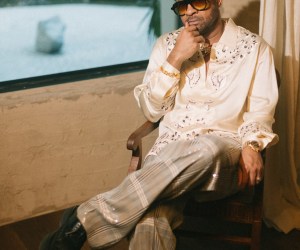
Fantan Mojah’s Passing Marks The Loss Of More Than A Reggae Artist; It Is the Loss Of A Soul of Rastafari
 15 July 2026



News Americas, NEW YORK, NY, Weds. July 15, 2026: The reggae community is mourning the passing of Jamaican roots reggae artist Fantan Mojah, born Owen Moncrieffe, who according to multiple reports, died on July 14, 2026, at the age of 49 after complications related to a heart condition. His death represents a tremendous loss for reggae music and the global Rastafari community. Throughout his career, Fantan Mojah became known for spiritually driven songs such as Hail the King, Thanks & Praise, and perhaps one of his most defining recordings, Rasta Got Soul.
For many listeners, Rasta Got Soul was simply another conscious reggae anthem. For those of us who grew up around Rastafari, it was much more. It was an affirmation of an identity, a way of life, and a spiritual philosophy that cannot be understood simply by listening to the music. It must be lived.
When I was a young boy growing up in Kingston, Jamaica, my father was a Rastaman. My mother was a Rasta lady. They considered themselves Rasta. I grew up among men and women who had a certain vibe, a certain aura to them. They considered themselves lions and lioness. Even though many people associate those animals with something aggressive, something raw, something vicious, as you often find the lion portrayed on the Rasta flag, what I experienced was something entirely different. I saw the beauty in the way they viewed the world. I would say, in many ways, that is the soul Fantan Mojah was singing about.
To understand Rasta Got Soul is to understand that having soul, in the Rastafari tradition, has little to do with appearance and everything to do with spirit.
First, it is spiritual consciousness. A Rastaman understands that life extends beyond material possessions and worldly status. His identity is rooted in Jah, not in the standards established by Babylon. That spiritual awareness shapes how he walks, speaks, and lives.
Second, it is compassion. Sit and talk to any true Rasta, one who lives, breathes, and embodies Rastafari, and they will tell you the world itself is a place of love and light. They carry within themselves a sense of peace that they try to give to the world. They are never interested in becoming hardened by struggle. Instead, they choose to remain compassionate, even when life has given them every reason not to be.
Third, it is authenticity. Rastafari has never been about wearing locks or wrapping yourself in red, gold, and green. It is reflected in what Rastas call livity, the way a person lives every day. Integrity, humility, righteousness, and consistency become the evidence of the faith.
Finally, it is resilience. Throughout reggae music, suffering has always been present, but so has hope. A Rasta with soul refuses to surrender his humanity. Even through poverty, oppression, or hardship, he continues to believe in love, peace, and righteousness. That enduring spirit is heard throughout Fantan Mojah’s music.
That was the Rastafari I grew up around.
They were never the loudest people in the room. They were spiritually connected to the world around them and to the earth from which they came. Their eyes were always turned toward Ethiopia, the homeland of His Imperial Majesty Haile Selassie I, not simply as a place on a map but as the spiritual center of their identity.
Listen closely to Rasta Got Soul. Listen to the respect Fantan Mojah speaks about for elders. Listen to the humility in his voice. Listen to the reverence with which he speaks. That is the heart and soul of Rastafari.
It is respect.
It is love.
It is light.
It is connection.
It is relationship.
It is community.
It is looking forward to making the man better. And when I say the man, I am talking about your brothers and your sisters to your right and to your left.
That is the heart and soul I saw growing up.
As Fantan Mojah passed away on July 14, 2026, he took with him a part of the culture. He took with him an essence of Rastafari. Yet he also leaves behind something perhaps even greater. He leaves behind a truer version of Rastafari because his music reminds us what genuine Rastafari has always been.
Today, many embrace Rastafari as a cultural trend. They wear the colors. They wear the locks. They speak the language. But I do not believe many truly understand what Rastafari means or what it means to be a Rasta.
My own connection to that heritage is personal. My name comes from Nyabinghi, one of the oldest spiritual traditions within Rastafari. Because of that upbringing, when many of us say we have a Rasta soul, we are not talking about appearance or music. We are speaking about a heart of love, a commitment to peace, respect for others, and the responsibility to leave people better than we found them.
That is what Fantan Mojah represented.
His music carried messages of faith, justice, African consciousness, and hope, but more importantly, it carried the spirit behind those messages. His voice reminded listeners that strength does not have to be loud, that conviction does not require hatred, and that righteousness begins within. That legacy will continue long after the music stops.
Today, we celebrate the music. We celebrate the musician. More importantly, we celebrate a man who reminded the world that the greatest expression of Rastafari is not found in outward appearance, but in the condition of the soul.
Rest in power, Fantan Mojah.
Rastafari.
Related News

New Caribbean Music – DJ GQ And Mr. Vegas Team Up, Plus New Heat From Sean Paul, Fay-Ann...
Soca’s Biggest Star Machel Montano Gets A Shrine In Brooklyn, Right As Carnival Season K...

New Caribbean Music You Should Know: Ky-Mani Marley, Queen Ifrica, Sean Paul & Anthony...