

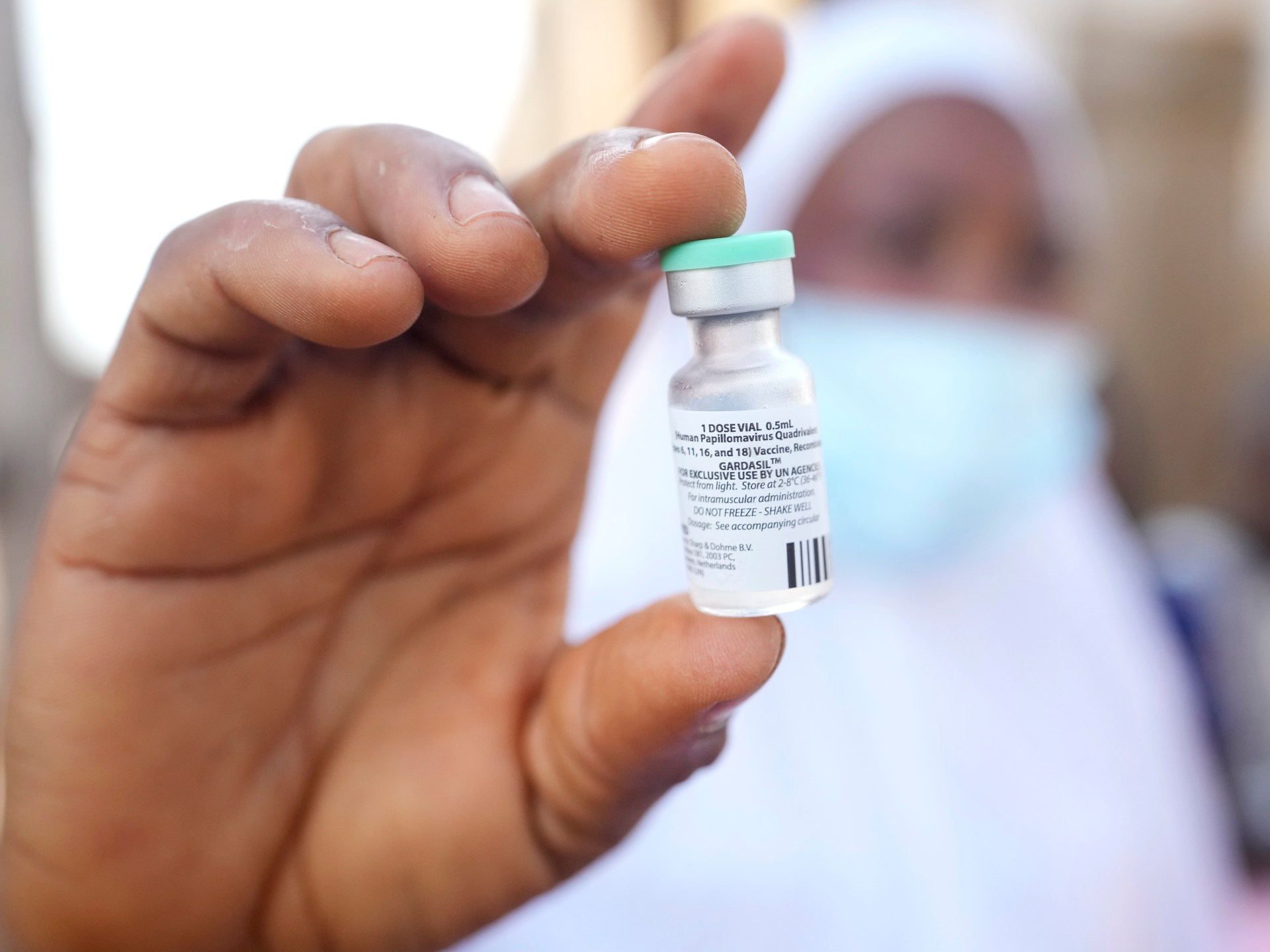

One of the first reviews of the human papillomavirus (HPV) vaccine has shown that it has reduced the risk of cervical cancer death before age 30 to effectively zero in the United Kingdom.
The study, published by The Lancet medical journal on Wednesday this week, has shown remarkable results, experts say, raising hopes in other countries where the vaccine is also being rolled out.
Cervical cancer is a particularly aggressive form of the disease with a poor prognosis for those diagnosed with it. It often affects young women under the age of 30.
HPV, which can be transmitted through sexual contact, is the primary cause of cervical cancer and routine vaccinations of teenage girls and boys in the UK began in 2008.
What does the latest study show?
The study, led by researchers at Queen Mary University of London and funded by Cancer Research UK, shows that in the five years from 2020 to 2024, no women aged 20 to 24 died from cervical cancer in the UK. Without the vaccine, 23 deaths would have been expected during this time.
Between 2000 and 2004, 25 women in that age bracket died of cervical cancer. The death toll was 16 between 2005 and 2009; 27 from 2010 to 2014; and five for 2015 to 2019.
“This is an incredible milestone and major progress in our mission to beat cancer,” said Michelle Mitchell, chief executive of Cancer Research UK. “We know the HPV vaccine is extremely effective at stopping cervical cancer before it starts and for the first time, these findings show it is saving lives.”
Advertisement
What is HPV?
According to the World Health Organization (WHO):
- HPV is a common group of viruses which enter the body via skin-to-skin contact, typically through a cut or abrasion. HPV is a group of more than 200 related viruses, and they are often spread through sexual contact.
- HPV is one of the most common sexually transmitted infections. Most sexually active people are infected at least once, often without any symptoms. When symptoms do appear, they usually take the form of genital warts, which are caused by low‑risk HPV types.
- In about 90 percent of people, the immune system clears the infection naturally within about two years.
Does HPV cause cancer?
Persistent infection with certain high‑risk HPV strains can cause several cancers, including cervical cancer, as well as cancers of the vulva, vagina, penis, anus and the mouth or throat.
Vaccination is the most effective way to prevent infection with high‑risk HPV types and the cancers they cause, medical practitioners say.
There is no treatment which can eliminate the virus itself, but treatments are available for symptoms such as genital warts, cervical precancerous lesions and HPV‑related cancers.
Here is what we know about the prevalence of HPV and the cancers it causes:
- In 2019, HPV was estimated to cause about 620,000 new cancer cases in women and 70,000 in men worldwide.
- More than 95 percent of the 660,000 cervical cancer cases recorded each year worldwide are caused by HPV, according to the WHO.
- Cervical cancer is the fourth most common cancer in women globally, with about 660,000 new cases and 350,000 deaths in 2022.
- Cervical cancer has an average five-year survival rate of about 67 percent following diagnosis, according to the WHO. If it is caught at stage 1 (where the cancer is localised and hasn’t spread), the survival rate is much higher, but most of these cases are caught at stages 2-3, where it has spread to other tissue or even lymph nodes, in which case the five-year survival rate is only 40 percent, according to the National Cancer Institute in the United States. However, as sufferers do not experience symptoms for several years, it is difficult to detect without routine examinations.
- About 94 percent of these deaths took place in low and middle-income countries.
How does HPV cause cervical cancer?
Cervical cancer typically develops several years after the onset of an HPV infection.
When the body’s immune system is unable to fight off the more persistent HPV strains, the virus interferes with normal cell growth, causing cells to become abnormal and potentially leading to a pre-cancerous state. If this is left untreated, cancer can develop.
Advertisement
Hence, women aged 30 to 65 are advised to have a “pap smear” – a medical examination of the cervix – every three years, according to the Mayo Clinic.

Which countries have the highest rates of cervical cancer deaths?
Cervical cancer deaths are overwhelmingly highest in low and middle-income countries, particularly across sub-Saharan Africa, Central America and Southeast Asia.
According to the World Cancer Research Fund, 79,906 women died of cervical cancer in India in 2022. In the same year, 55,694 people died of cervical cancer in China and 20,708 people died of cervical cancer in Indonesia.
More than half of Africa’s 54 nations – 28 – now include the vaccine in their national immunisation programmes, but only five had reached the 90 percent coverage that the continent hopes to achieve by 2030, The Associated Press news agency reported in 2024.
In February this year, India launched a free nationwide HPV vaccination for 11.5 million girls aged 14 with the US-manufactured Gardasil HPV vaccine, which was first developed in Australia.
In October 2025, China introduced the HPV vaccine to the national immunisation programme, providing two free doses for girls born on or after 10 November 2011 who had reached 13 years of age. It rolled out Cecolin, a vaccine developed in China.
A month before this, Pakistan launched its first-ever national HPV vaccine campaign, aiming to immunise more than 13 million girls aged nine to 14 in its first phase, with Cecolin for free. HPV kills eight Pakistani women daily, according to Dr Luo Dapeng, the head of WHO in Pakistan.
Indonesia launched the National Cervical Cancer Elimination Plan (NCCEP) in 2023, under which it offers HPV vaccination free of charge to girls as part of the national immunisation schedule. Its primary target group is girls in grade five and six.

What obstacles have HPV vaccine programmes faced?
Like other vaccines, the HPV jab is subject to “vaccine hesitancy” worldwide.
In the West, suspicion that vaccines can cause neurodivergent conditions such as autism prevails despite there being no evidence linking them.
In many countries, critics of the vaccine argue that, as HPV is a sexually transmitted infection, it is not required in conservative societies, where consensual sex before marriage is culturally frowned upon, or even illegal.
In 2025, one X platform user wrote: “Cerv. Cancer is spread via Sexual contact which is NOT IN PAKISTAN for 9-14 year old – only in west.”
Disinformation and conspiracy theories have also circulated on social media that the HPV vaccine causes infertility. There is no evidence to support this claim.
Advertisement
In May 2020, a peer-reviewed US study found no evidence of increased infertility among women who received the Gardasil vaccine.
In Pakistan, the vaccine programme was failing to hit its targets by October 2025, authorities said. While vaccine hesitancy is a global phenomenon, in Pakistan it was aggravated by the CIA’s use of a fake hepatitis B vaccination campaign in Pakistan’s Abbottabad in 2010-2011 as cover for a manhunt for fugitive al-Qaeda leader Osama bin Laden.
Related News
Israeli attacks in Lebanon kill 10 people, including high-ranking soldiers

US Air Force B-52 bomber crashes after takeoff, Edwards Air Force Base says

US judge upholds conviction of ex-judge who helped man evade federal agents