
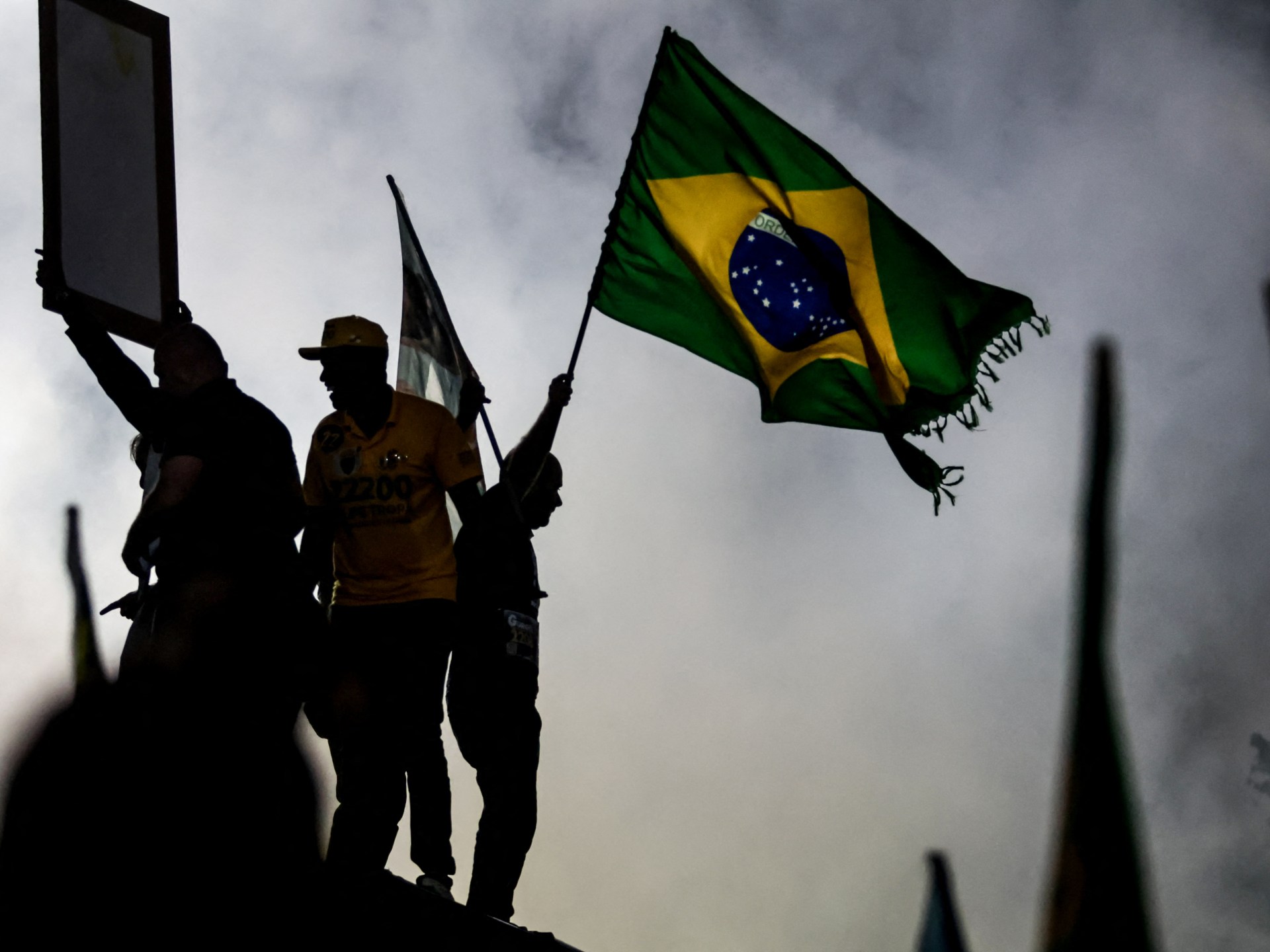

Polls have opened in Brazil’s presidential election, once again pitting left-wing incumbent Luiz Inacio Lula da Silva against a right-wing candidate from the Bolsonaro family – Senator Flavio Bolsonaro, the eldest son of former President Jair Bolsonaro.
Some 160 million registered voters are eligible to cast ballots in Sunday’s elections, which will elect lawmakers, governors and senators.
- list 1 of 4Latin America sees China as more positive global influence than US: Poll
- list 2 of 4US and Australia suspend diplomatic operations in Brazil before election
- list 3 of 4What to know about Brazil’s 2026 presidential election
- list 4 of 4Brazil’s Lula and Bolsonaro close campaigns ahead of critical election
end of list
If no presidential candidate wins more than 50 percent of valid votes, the top two contenders will proceed to a run-off on October 25.
Most opinion polls ahead of the vote showed a close contest, with Lula holding a marginal advantage over Bolsonaro that tightens further in a potential second round.
Lula, of the Workers’ Party, is seeking a fourth nonconsecutive term. The 80-year-old, who previously served as president from 2003 to 2010, wants to continue his series of social programmes aimed at addressing inequality.
Bolsonaro, of the Liberal Party, has promised a hard stance on crime and insecurity. The 45-year-old has also pledged close collaboration with the United States under President Donald Trump.
His father is currently serving a 27-year prison sentence over his role in a coup plot following his election loss to Lula by 1.8 percentage points in 2022. The far-right leader’s conviction and that of several military officers raised questions about the strength of Brazilian democracy, reviving past traumas of the 21-year-long period during which Brazil was ruled by a US-backed military dictatorship.
The presidential election has been dominated by issues such as crime, insecurity and the high cost of living. Corruption and concerns about US intervention in the country’s domestic affairs have also loomed over the campaign.
Advertisement
A recent survey by Quaest says violence was cited as the biggest concern by 31 percent of respondents, followed by corruption (20 percent), economy (19 percent) and healthcare (12 percent).
“The stakes of this election are incredibly stark because the candidates stand for such opposing visions about what Brazil’s recent history means,” Andre Pagliarini, an assistant professor of history and international studies at Louisiana State University and the author of a book on Lula, told Al Jazeera.
He added that while Lula embodies the “consolidation of Brazilian democracy since the end of the dictatorship”, the Bolsonaro family argues that “the institutions that Brazilian democracy has erected since the end of dictatorship are either rotten and unresponsive”.
With reporting by Brian Osgood
Related News
Paris court finds Swiftair guilty over 2014 Mali crash that killed 116
Canada’s retaliatory tariffs on $20bn of US goods take effect
Pakistan-administered Kashmir votes for president amid unrest