
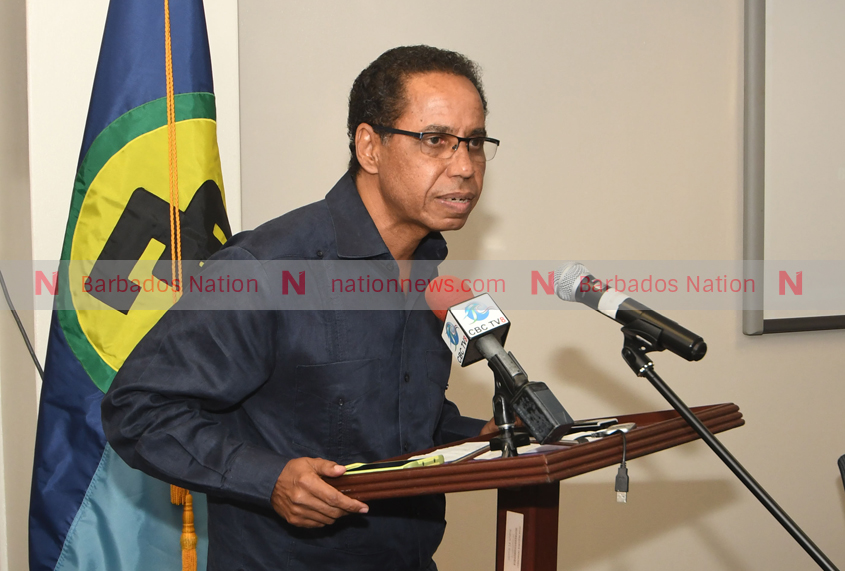

Reparations for the transatlantic slave trade must be understood as far more than a financial settlement, Barbados’ Ambassador to CARICOM David Commissiong told delegates at the third CARICOM Reparations Conference Friday, instead describing the movement as a 21st Century campaign for the full redemption of African people worldwide.
Reflecting on why 12 years had passed since the last such conference in 2014, Commissiong said the region’s thinking on the issue had simply outgrown its earlier form.
“When we started in 2013, we had a proper concept,” he said, “but over the years, we have evolved that concept and it has become a much more comprehensive concept”, one now reflected in an updated ten-point plan he called “the Manifesto for the Coming Enlightenment”.
He said the conference had arrived at an opportune moment, pointing to “tremendous developments in our reparations movement over the past year”, including a new partnership between the African Union and CARICOM, the naming of an AU reparations champion, and the European Union’s move to set up bodies to match CARICOM’s own Reparations Commission. He urged that these efforts be “properly synchronised”, so the various bodies are “not tripping over each other’s foot”.
Drawing a parallel to Marcus Garvey’s mass movement a century ago, Commissiong said today’s campaign must capture the same spirit that once drew millions of African people to become, in his words, “passionate believers” rather than passive members. He reminded delegates of the legal definition of reparations set out by the Permanent Court of International Justice, which holds that reparations must “wipe out all the consequences of the illegal act and re-establish a situation which would, in all probability, have existed if that act had not been committed”.
Evolved
From that foundation, Commissiong laid out what he sees as the evolved components of reparations. The first, he said, is “a correcting of the historical record and narrative”, dismantling what he called “the intertwined myths of white supremacy and Western civilisation” and confronting former colonial powers with the truth of their history rather than what he termed a “mythical record”.
The second component, he said, was reclaiming “our nationhood, sovereignty, and self-determination”, arguing that Caribbean nations already possess the legal standing to act without waiting on outside permission.
Sovereign
“Independent, paramount countries don’t have to still maintain the British monarchy as our head of state,” he said, “nor do we have to still maintain the [Privy Council] as our highest national court.” He described this as a form of “self-help remedy” available to nations ready to use it.
He also pointed to economic and structural demands rooted in “centuries of criminal and native genocide”, including calls for education, technology transfer and climate justice, crediting Prime Minister Mia Amor Mottley’s Bridgetown Initiative with advancing that agenda even though it “isn’t branded” as reparations. The ultimate aim, he said, was “unifying the black or African family globally” and securing “the delegitimisation and the destruction and abandonment” of anti-Black racism.
Commissiong cited the United Nations’ General Assembly resolution passed on March 25 with 123 nations in support, saying it should “embolden us” to press for reparations in other forums, and he noted an August 25 United Nations committee ruling affirming ongoing obligations tied to slavery’s present-day harms.
Still, he cautioned that legal and diplomatic gains mean little without popular support. “We are not there yet,” he told delegates, insisting reparations must become, as with Garvey’s movement, “a mass participatory movement”. (BA)