
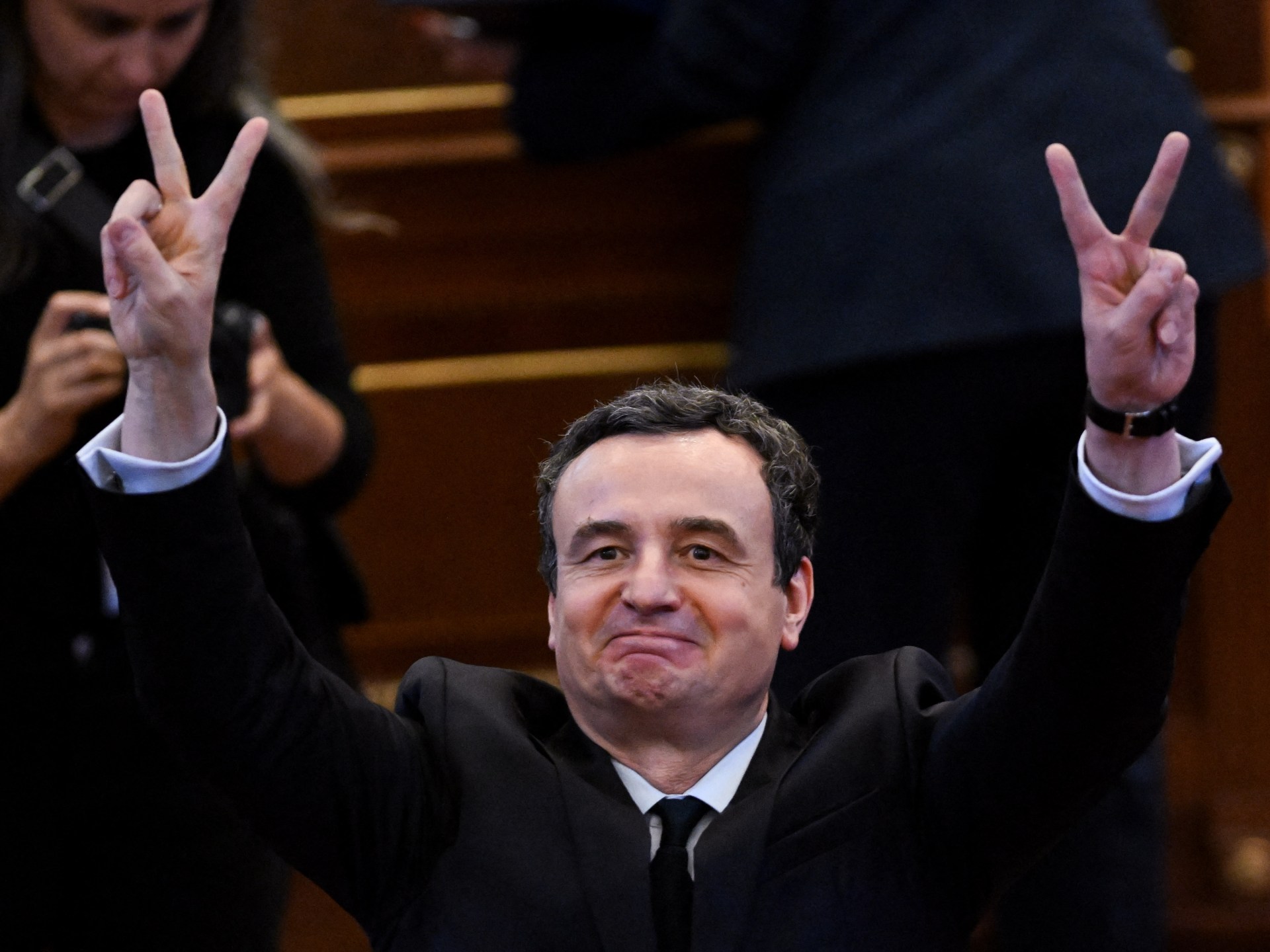

Kosovo’s parliament has approved a new government led by acting Prime Minister Albin Kurti, breaking three months of government paralysis while setting the stage for a constitutional showdown over the presidency.
The new government was backed by 62 lawmakers out of the country’s 120-seat assembly, Parliamentary Speaker Albulena Haxhiu said Sunday.
- list 1 of 3Kosovo votes again amid political deadlock, seeking EU and NATO progress
- list 2 of 3Kosovo finds third wartime mass grave site as officials widen search
- list 3 of 3Serbia and Ukraine pledge closer economic ties, eye free trade deal
end of list
Kosovo has faced months of political instability because Kurti’s Vetevendosje (Self-determination) party needs opposition support to secure the two-thirds majority required to elect a president.
If parliament fails to elect a new president, Kosovo will have to hold another snap election, the fourth in only two years.
It is currently unclear when a presidential vote will take place.
Kurti’s party has come on top in three legislative elections held since February 2025, including two snap polls in December 2025 and June 2026, but it has failed to garner enough support to install the largely symbolic president.
The political crisis over electing a head of state is expected to persist.
In late August, Kurti reached a deal with the opposition Democratic League of Kosovo (LDK), which has 18 MPs, to back law professor Bekim Sejdiu as the country’s new president. A day later, six LDK lawmakers said they would not respect their leader’s decision.
The deepening domestic deadlock is closely linked to Kurti’s hardline approach towards neighbouring Serbia, which has severely strained his standing at home and abroad. Opposition parties have repeatedly blamed Kurti for alienating Kosovo’s traditional Western backers through unilateral measures in the Serb-dominated north, making them reluctant to cooperate with his government.
Advertisement
The United States and the EU previously urged Kurti to take action to de-escalate political tensions in Kosovo’s north, following deadly clashes between Kosovar police and armed Serbian “paramilitary formations”.
Beyond the diplomatic rift, the fallout has carried direct economic consequences. Months of paralysis have stalled legislative reforms required for European Union integration, threatening Kosovo’s access to some pre-accession funds.
Related News
Trump floats renaming Lake Ontario to Lake America during Canada trade war
Yemen’s drone war: Rivals flex growing aerial muscle
UK bans goods from Israeli West Bank settlements: What that really means