
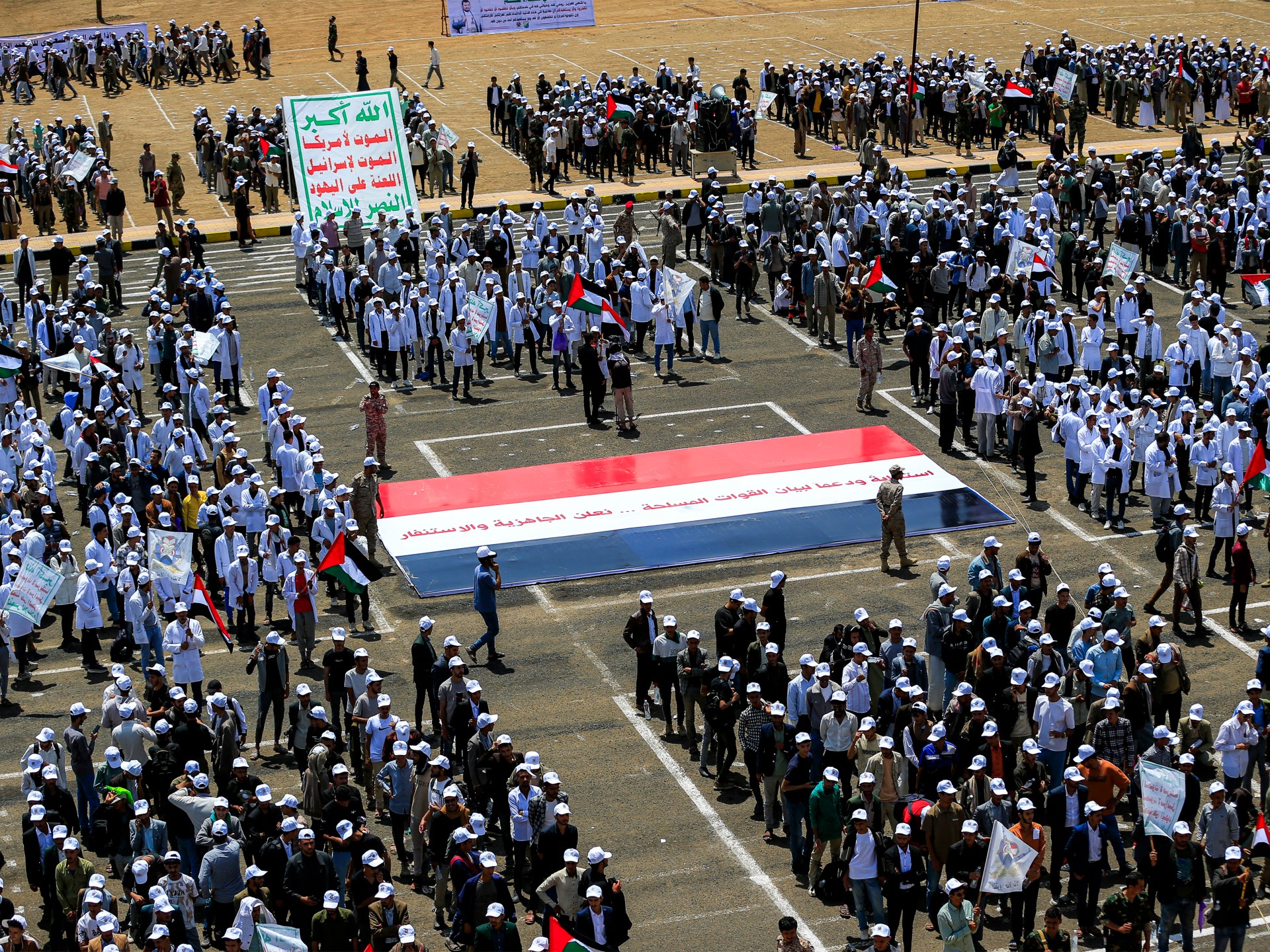

The United Nations envoy for Yemen has warned that renewed attacks by the Houthis on Red Sea shipping risk dragging the country back into full-scale war.
Hans Grundberg said in a statement on Thursday that he was “alarmed” by the resumption of attacks by the Houthis, known as Ansar Allah, on commercial vessels, and called for talks to resolve the country’s crisis.
- list 1 of 3Yemen faces a new challenge amid prospects of confrontation
- list 2 of 3US-Saudi nuclear deal hinges on normalisation with Israel
- list 3 of 3How the Houthi Red Sea blockade will impact the world
end of list
“Escalatory actions risk putting Yemen on a path toward further confrontation, drawing the country deeper into an already volatile regional environment, and deepening the suffering of the Yemeni people,” Grundberg said.
“It is still possible to change course and move towards negotiations that address Yemen’s political, economic and security challenges and put the interests of its people at the centre. A negotiated political settlement in Yemen would also contribute to greater stability in the region.”
The war in Yemen has been largely paused since 2022, but the political deadlock between the Houthis, who control the capital, Sanaa, and the internationally recognised government continue.
The Houthis said on Wednesday that they struck two Saudi oil tankers, the Encelia and the Layla, with missiles and drones, their first attack since announcing a blockade of Saudi-linked shipping on July 20.
Houthi military spokesman Yahya Saree said the vessels were hit “for their violation of the blockade decision issued by the armed forces”.
The Houthis had imposed the blockade in retaliation for the July 13 bombing of Sanaa airport’s runway, which Yemen’s internationally recognised government said it carried out to stop an Iranian aircraft landing. The Houthis blamed Saudi Arabia, the government’s main backer.
Advertisement
The Houthis, who are allied with Iran, also fired missiles into Saudi Arabia, targeting an airport.
The maritime campaign has caused at least five tankers to change course to avoid the Bab al-Mandeb Strait off Yemen’s coast. The disruption has helped push the price of Brent crude oil above $100 a barrel.
Yemen’s civil war has ground on for nearly 12 years since the Houthis seized Sanaa in 2014, driving the internationally recognised government to Aden and drawing in a Saudi-led coalition.
The US-Israel war on Iran has threatened to reactivate ground fighting between the two sides, plunging the country into deeper strife.
The UN estimates that 22 million Yemenis need aid this year, with 18.3 million suffering acute food insecurity – not having enough to eat.
The UN warning on Thursday came as the United States carried out its 12th consecutive night of strikes on Iran in a war that has already disrupted shipping through another global chokepoint, the Strait of Hormuz.
US President Donald Trump said on Wednesday that Washington would hold Iran responsible for further Houthi attacks on shipping, calling the group a proxy of Tehran and threatening retaliation against both.
“Major military punishment will be inflicted upon Iran and, of course, the Houthis,” he wrote on Truth Social.
Related News
US-Iran war: Will peace talks resume, and when?
At UN, Cuba rallies support against ‘ruthless’ US blockade
European MPs call for probe of FIFA boss Infantino over red card suspension