
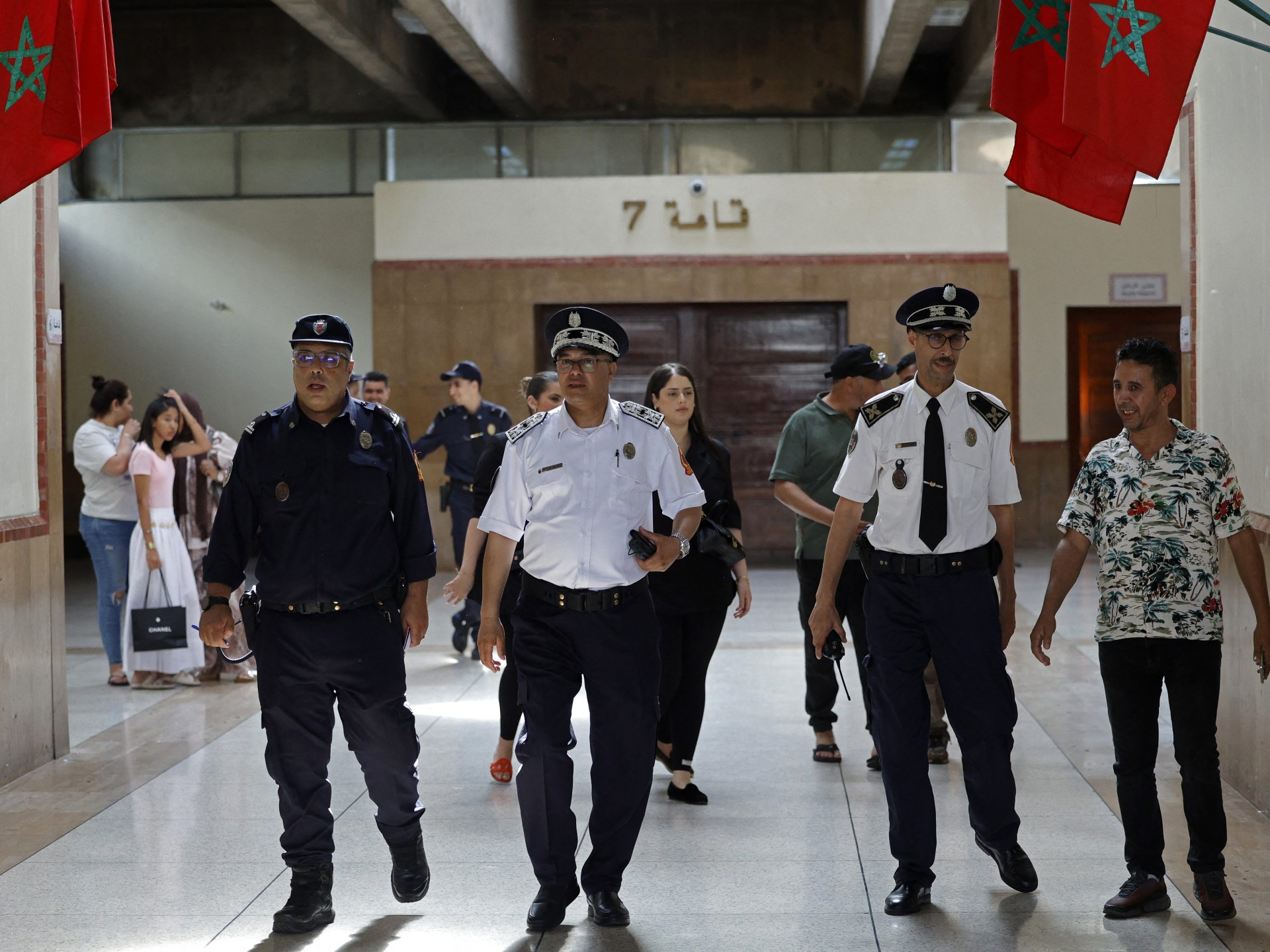

A Moroccan court has handed prison sentences of up to 12 years to 29 individuals – including prominent politicians and sports figures – concluding a major international drug trafficking and corruption trial.
The verdicts, delivered late on Thursday in Casablanca following a two-year trial, mark one of the largest anti-corruption operations in Morocco’s history.
- list 1 of 3Morocco king calls for social reforms amid youth-led protests
- list 2 of 3How Epstein tried to buy a Moroccan palace months before his death
- list 3 of 3‘Outlaws’: Morocco’s Rif provides refuge for cannabis farmers
end of list
Among those convicted were Abdennebi Bioui, a construction tycoon and former regional council president, Said Naciri, former president of Casablanca’s Wydad AC football and sports club and former MP Belkacem Mir – all senior members of the governing PAM party. Naciri received 10 years, Bioui 12 and Mir 10.
Besides the three main defendants, sentences for the remaining ranged from two to nine years, depending on their individual role in the network.
The wide-ranging case was triggered by courtroom testimony from El Hadj Ahmed Ben Brahim, a notorious Malian drug trafficker nicknamed the “Pablo Escobar of the Sahara”.
Currently serving a 10-year sentence in Morocco, Ben Brahim told judicial investigators that his former Moroccan political and business associates had betrayed him, seizing millions of dollars worth of his luxury real estate and vehicles following his arrest in 2019.
The trial involved more than 20 defendants, 18 witnesses and two civil parties which centred on a sophisticated network that transported tonnes of Moroccan cannabis resin across North Africa to Europe, alongside Latin American cocaine shipments.

Defendants were convicted on charges including drug and gold trafficking, corruption, forgery and money laundering.
Advertisement
The court also ordered the seizure of assets and levied hundreds of millions of dollars in customs and exchange fines against the principal ringleaders.
Moroccan media reported that families of the convicted, present without legal representation due to a lawyers’ strike, were left in shock, with some collapsing in the courthouse.
The scandal reached the highest levels of state, prompting King Mohammed VI to demand a legally binding code of ethics aimed at “moralising” parliamentary life.
Related News
JD Vance tells Israel ‘you can’t kill your way out’ of security problems
Iran war day 109: Tehran, Washington, sign MoU electronically
British lawyers’ body suspends ICC Prosecutor Khan over misconduct claim