
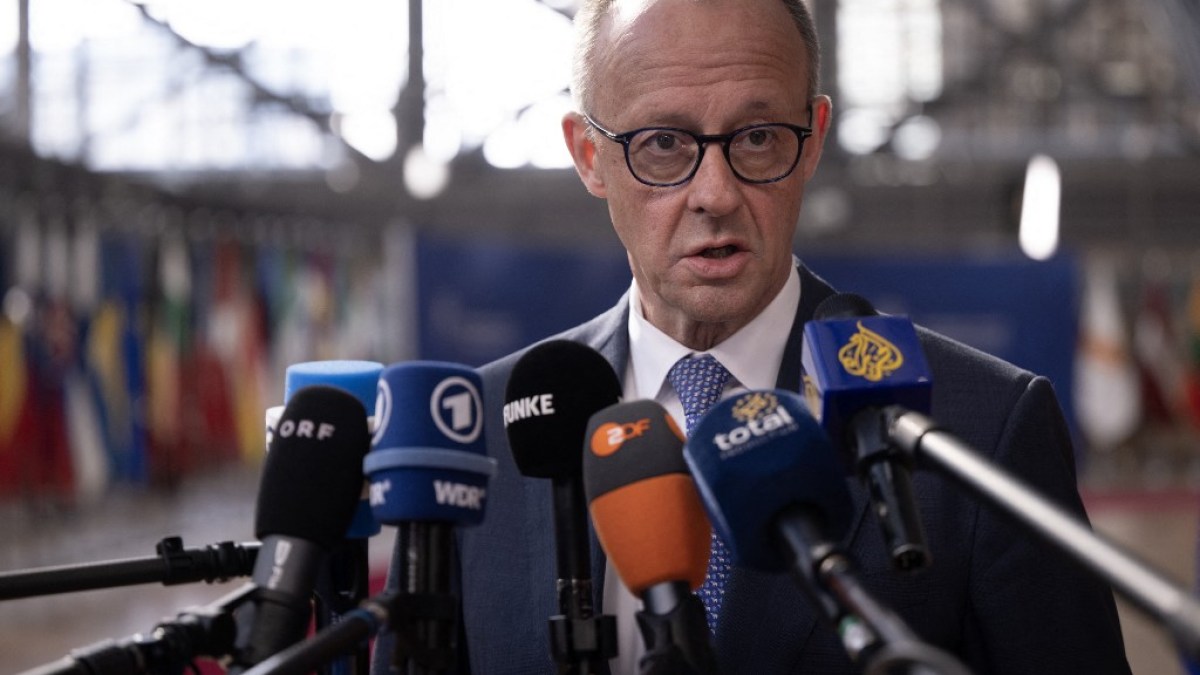

German Chancellor Friedrich Merz says the United States is being “humiliated” in its war with Iran, warning that Washington lacks a clear path out of the conflict as Tehran gains the upper hand.
Speaking to students in the German town of Marsberg on Monday, Merz said the situation has exposed a deeper strategic problem for the US as he drew comparisons with past military debacles.
- list 1 of 3Iran’s top diplomat visits Russia as part of efforts to end the war
- list 2 of 3The war on Iran is eroding nuclear non-proliferation
- list 3 of 3Iran’s foreign minister in Russia for talks
end of list
“The problem with conflicts like this is always you don’t just have to get in – you have to get out again. We saw that very painfully in Afghanistan for 20 years. We saw it in Iraq,” he said.
Merz said Iranian officials were “obviously negotiating very skilfully” and appeared “clearly stronger than one thought”, adding that “an entire nation is being humiliated by the Iranian leadership”, particularly by the Islamic Revolutionary Guard Corps.
Merz urged a rapid end to the war, warning that the fallout was already hitting Germany’s economy.
“It is, at the moment, a pretty tangled situation,” he said. “And it is costing us a great deal of money. This conflict, this war against Iran, has a direct impact on our economic output.”
The German leader said Berlin remains ready to deploy minesweepers to help secure shipping routes through the Strait of Hormuz, a vital artery for global petroleum supplies, but stressed that such steps depend on a cessation of hostilities.
Merz made the comments as concerns are growing across Europe over the wider impact of the conflict, including energy disruptions and economic instability.
Advertisement
Earlier, German Foreign Minister Johann Wadephul warned that nuclear threats continue to shape the security environment, even as Berlin reaffirmed its commitment to nonproliferation.
“As long as nuclear threats against us and our partners continue, we will need a credible deterrent,” he said before meetings at the United Nations on the Treaty on the Non-Proliferation of Nuclear Weapons.
France and Germany have recently moved to deepen cooperation on nuclear deterrence, reflecting mounting anxiety in Europe over both the Iran war and broader regional instability.
Related News

China dismisses Vice Minister of Foreign Affairs Sun Weidong
Bulgaria’s former President Radev wins election: All you need to know

Will another film star be able to sway the election in India’s Tamil Nadu?