
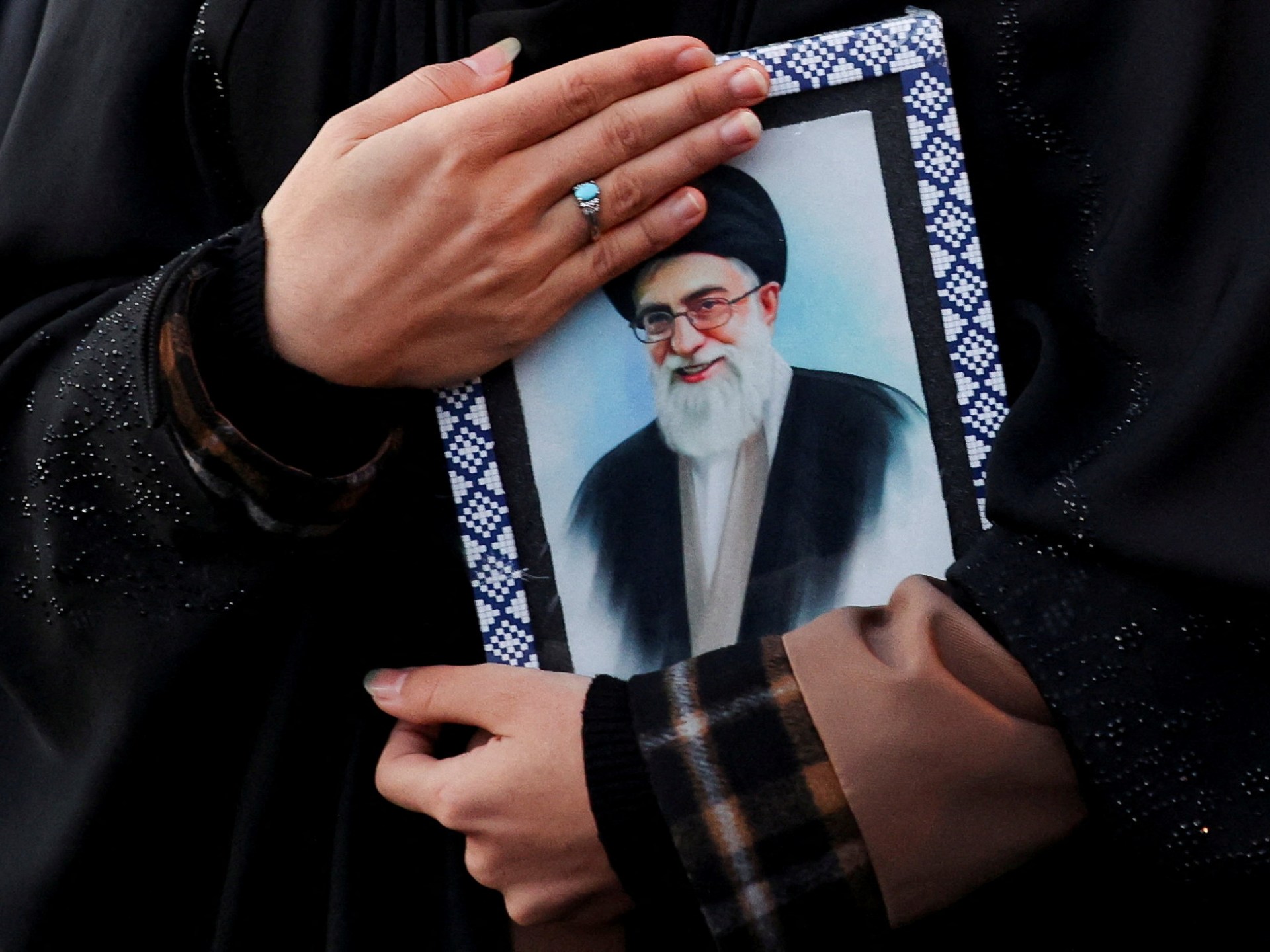

Grieving Iranians will bid farewell to late Supreme Leader Ayatollah Ali Khamenei at a ceremony in Tehran, a senior Iranian official told state media, days after he was assassinated along with family members in joint air strikes by Israel and the United States.
Hojjatoleslam Mahmoudi, head of Iran’s Islamic Propagation Council, said the farewell ceremony would start at 10pm (18:30 GMT) on Wednesday at Tehran’s Imam Khomeini Prayer Hall and continue for three days.
- list 1 of 3US and Israel step up attacks as war with Iran engulfs region
- list 2 of 3Destruction seen after attack on Iran’s Assembly of Experts building
- list 3 of 3How long can Israel sustain a military conflict with Iran?
end of list
“The prayer hall will be receiving visitors and the dear people can attend and take part in the farewell ceremony and mark a strong presence once again,” Mahmoudi said in comments carried by Iranian media.
Funeral arrangements are ongoing and are expected to draw huge crowds, and, with them, the potential threat of US-Israeli attacks on a gathering of mass mourning. Some 10 million people attended Ayatollah Ruhollah Khomeini’s funeral in 1989.
Khamenei was killed on Saturday, aged 86. He had been Iran’s supreme leader since 1989, succeeding Khomeini, the founder of the post-shah Iran, who steered the country’s 1979 revolution.
The supreme leader holds ultimate authority over all branches of government, the military and the judiciary, while also acting as the country’s spiritual leader.
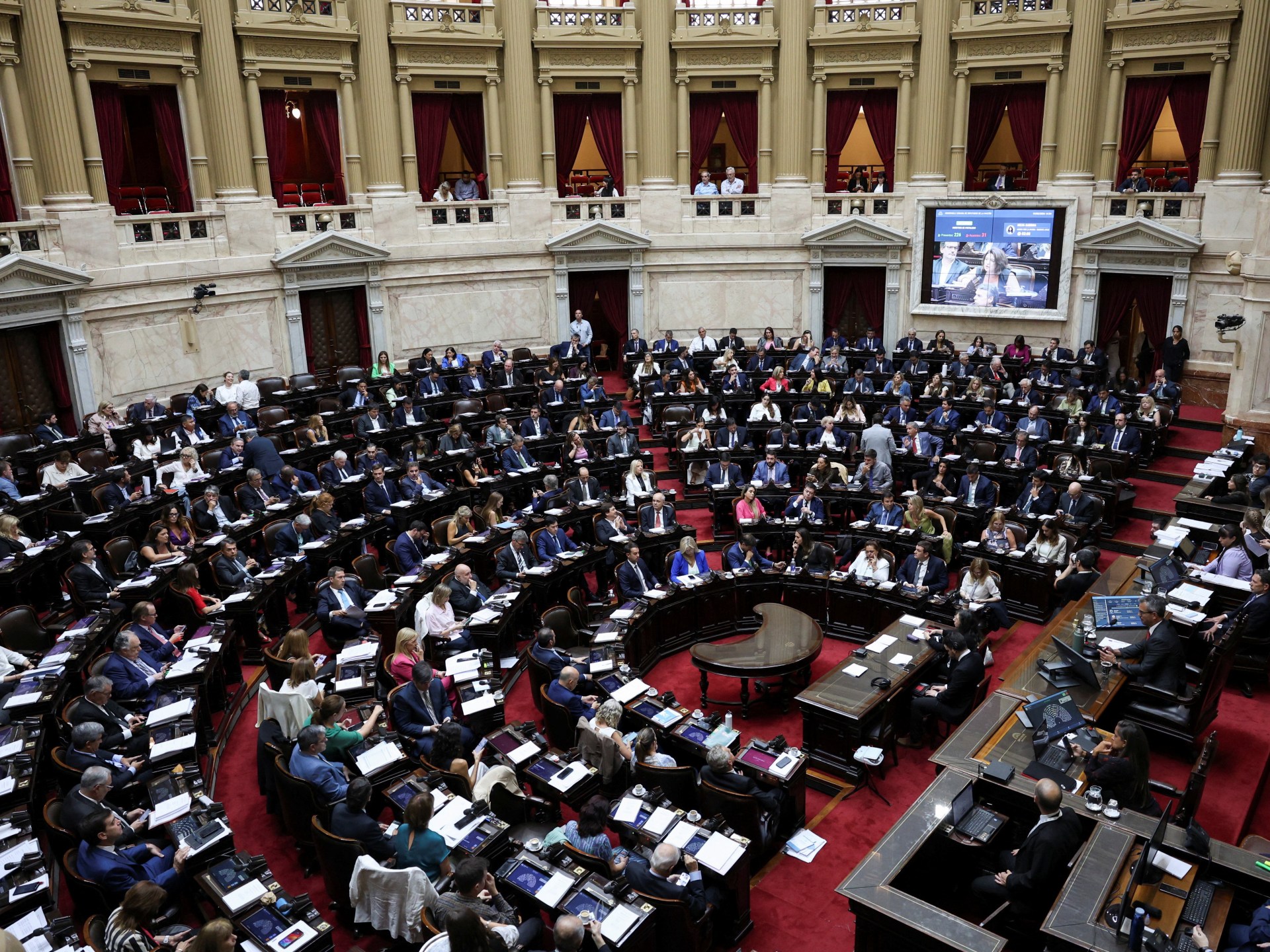
Iran’s ISNA news agency reported on Tuesday that a member of Iran’s Assembly of Experts, charged with choosing a new supreme leader, said picking Khamenei’s successor “won’t take long”.
The 88-member clerical body is elected by the public every eight years. Candidates who run for the Assembly must first be vetted and approved by the Guardian Council, a powerful oversight body whose members are partly appointed by the supreme leader himself.
Advertisement
A simple majority is sufficient to appoint the new supreme leader. As per Iran’s constitution, the candidate must be a senior jurist with deep knowledge of jurisprudence in Shia Islam, as well as qualities such as political judgement, courage, and administrative capability.
Khamenei’s second son, Mojtaba Khamenei, is among the top contenders to succeed his father.
Israel’s Defense Minister Israel Katz threatened on Wednesday to assassinate any Iranian leader picked to succeed Khamenei.
“Any leader selected by the Iranian terror regime to continue leading the plan for Israel’s destruction, threatening the United States, the free world and countries in the region, and suppressing the Iranian people, will be a certain target for assassination, no matter his name or where he hides,” Katz said in a post on X.
US President Donald Trump on Tuesday publicly mused about the leadership he would like to see in Iran following Khamenei’s assassination. During an Oval Office appearance, he said the “worst-case scenario” in Iran would be another leader unfriendly to US priorities.
Luciano Zaccara, a research associate professor in Gulf politics at Qatar University, told Al Jazeera that Iran’s political system has been prepared for the current situation, knowing that Khamenei’s killing was a real possibility.
“The structures remain, the line of power [and] the line of command remain in place,” he said.
Related News
Iranian students rally as universities reopen after nationwide protests
Hong Kong appeals court overturns Jimmy Lai’s fraud conviction
Man with shotgun running towards US Capitol building arrested by police