

Families of Kenyans allegedly tricked into fighting for Russia in Ukraine are demanding their return as an official intelligence report revealed that more than 1,000 citizens had been lured onto the front line.
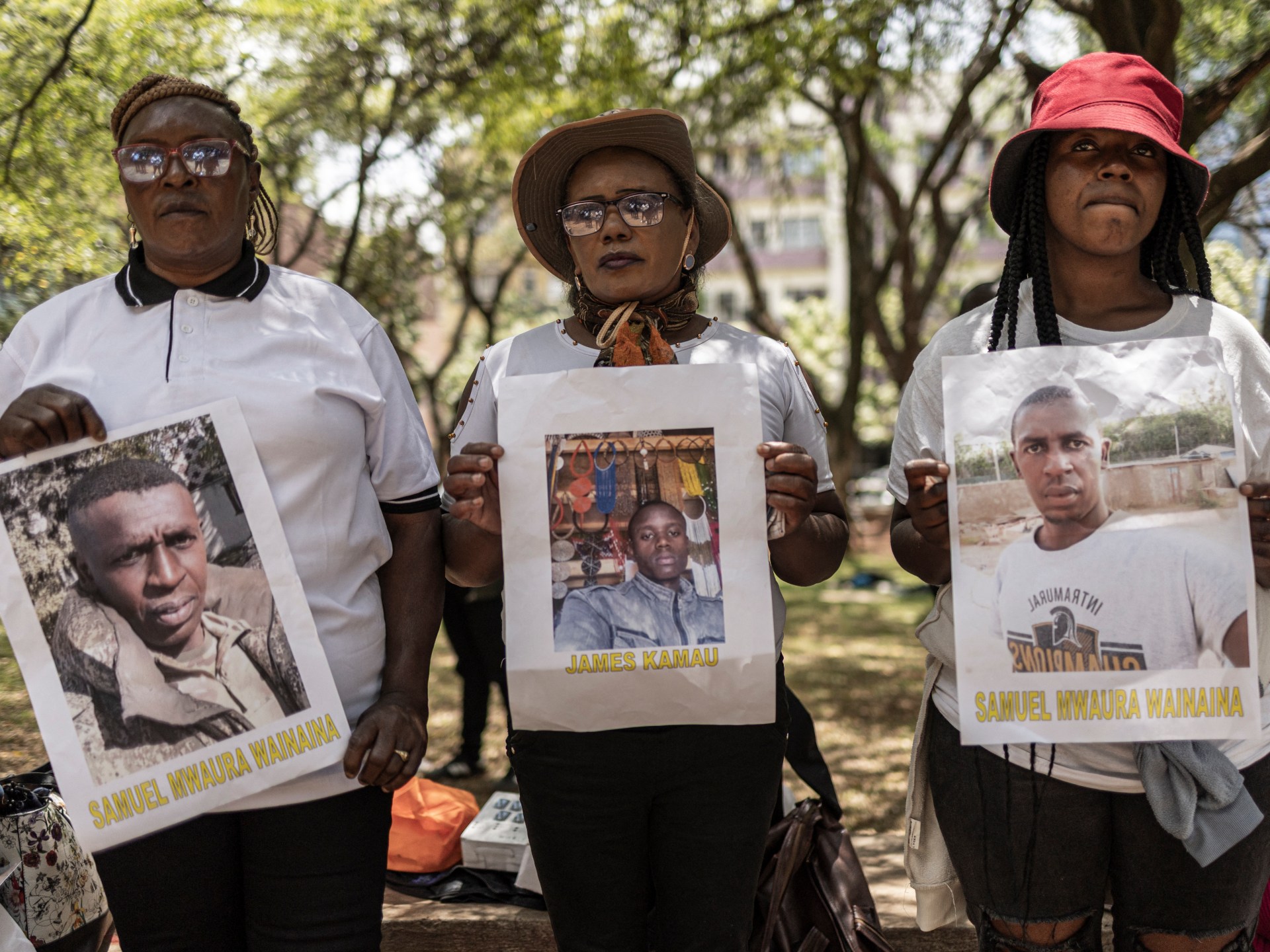
Dozens of families protested in Nairobi on Thursday to demand the government take action, one day after the country’s National Intelligence Service unveiled a report on the scam, which allegedly involved a network of rogue state officials colluding with trafficking syndicates to dupe locals.
- list 1 of 3Kenya’s Mau Mau History
- list 2 of 3Kenyan court charges cult leader Paul Mackenzie over 52 more deaths
- list 3 of 3Photos: More than two million people face hunger as drought grips Kenya
end of list
Winnie Rose Wambui said she hoped to get information about her brother, Samuel Maina, who went to Russia believing he had a job as a security guard at a mall. She last heard from him in October when he sent a “distress voice note” from a forest, she told news agency AFP.
Parliament Majority Leader Kimani Ichung’wah presented the intelligence report to the Parliament of Kenya on Wednesday, saying that more than 1,000 Kenyans had been recruited “to fight in the Russia-Ukraine war”, with 89 currently on the front line, 39 hospitalised and 28 missing in action.
The families plan to present petitions to several government offices, including the Foreign Ministry, and to the Russian embassy, according to their coordinator Peter Kamau, whose brother, Gerald Gitau, is missing.
“The Ministry of Foreign Affairs is not helping us,” said Wambui at Thursday’s protests, which called for the return of 35 recruits. “They told us if we have questions, we have go to the Kenyan embassy in Moscow.”
The Russian embassy in Kenya posted a statement on X, saying the government had “never engaged in illegal recruitment of Kenyan citizens in the Armed Forces”, dubbing the allegations a “dangerous and misleading propaganda campaign”.
Advertisement
However, the statement added: “the Russian Federation does not preclude citizens of foreign countries from voluntarily enlisting in the armed forces”.
Reports of African men being lured into Russia with promises of jobs as bodyguards and ending up on Ukraine’s front line have become more frequent in recent months.
The number of Kenyan recruits is far higher than the figure of “around 200” given by authorities in December.
The intelligence report said recruitment agencies colluded with rogue Kenyan airport staff, immigration and other state officials, and with staff at the Russian embassy in Nairobi and at the Kenyan embassy in Moscow to facilitate travel.
Those enlisted initially left Kenya on tourist visas and travelled to Russia via Turkiye or the United Arab Emirates. The recruits started travelling via Uganda, South Africa and the Democratic Republic of Congo after Kenya tightened surveillance at Nairobi airport.
While some were ex-soldiers leaving to become mercenaries, many were said to have been tricked by recruitment agencies targeting former soldiers, police officers and the unemployed with promises of monthly earnings of some 350,000 shillings ($2,715), along with bonuses of up to 1.2 million shillings ($9,309).
Kenya’s Foreign Ministry said last week that 27 Kenyans had been rescued after being stranded in Russia.
Kenya’s Foreign Minister Musalia Mudavadi has said he plans to visit Russia next month for talks on the issue.