
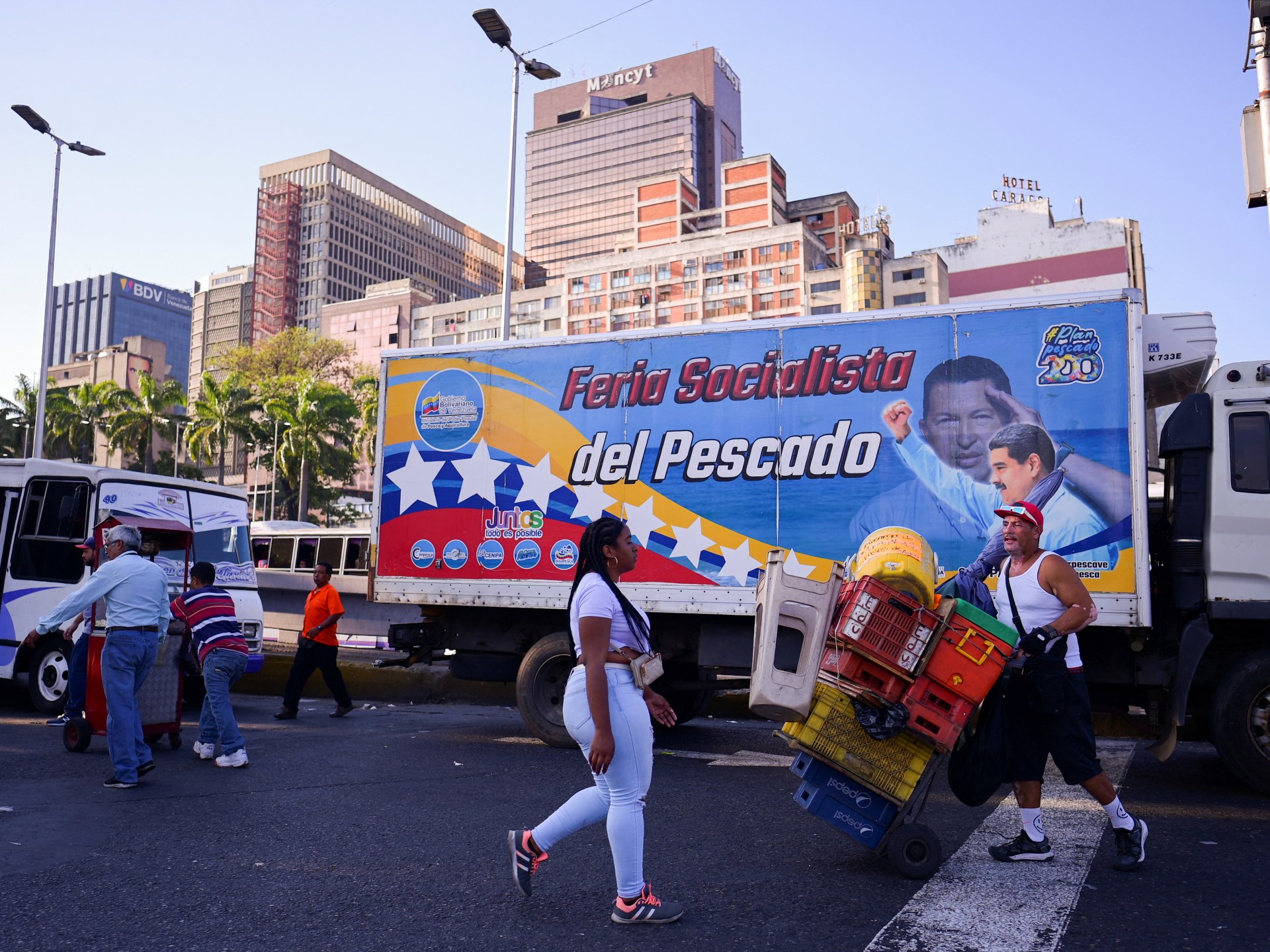

Venezuela’s government has lashed out at the European Council over its decision to renew sanctions against the South American country until 2027, calling the measures “a complete failure”.
The sanctions, first introduced in 2017, include an embargo on arms shipments to Venezuela, as well as travel bans and asset freezes on individuals linked to state repression.
- list 1 of 3Venezuela oil exports fall steeply after US forces seize tanker off coast
- list 2 of 3US slaps sanctions on Maduro family, Venezuelan tankers: What we know
- list 3 of 3‘Maduro will leave power’: Machado vows Venezuela leadership change
end of list
In a statement shared by Minister of Foreign Affairs Yvan Gil Pinto, Caracas said the sanctions are coercive and contrary to international law, adding that they underscore the European Union’s lack of autonomy on the global stage.
On Monday morning, the European Council announced its plans to renew sanctions on Venezuela until January 10, 2027, citing “persistent actions undermining democracy and the rule of law” and human rights violations under the administration of President Nicolas Maduro.
The punitive measures include an embargo on weapons and military equipment, a ban on exporting equipment to Venezuela that could be used for internal repression – such as light weapons, ammunition, and surveillance technology – and travel bans affecting government officials, military personnel, and judges linked to human rights violations.
According to the European Union, 69 people were subject to asset freezes and travel bans under the sanctions as of January this year.
The European Council said the sanctions will remain in place until the Venezuelan government makes “tangible progress on human rights” and the rule of law and takes steps towards genuine dialogue and a “democratic transition”.
Advertisement
But the Venezuelan government rejected the sanctions as “futile”, describing them as part of “an erratic foreign policy lacking autonomy” and slamming “the European Union’s growing irrelevance as an international actor”.
The EU’s sanctions renewal comes amid a mounting military threat by the administration of US President Donald Trump, which has massed forces off the Venezuelan coast and threatened land attacks on the country. The White House also announced financial sanctions on three of Maduro’s nephews and six oil tankers and shipping firms linked to them last week.
Experts say the EU’s sanctions differ from those of the US, as they have a political focus rather than targeting the vital oil sector.
“The European Union sanctions have a specific, stated political objective: to pressure people in the regime, not the population of Venezuela, and to preserve humanitarian and diplomatic channels and signal disapproval of human rights violations and the weakening of democracy,” Vitelio Brustolin, adjunct professor at Columbia University’s School of International and Public Affairs, told Al Jazeera.
Related News
Last foreign carriers halt flights to Venezuela after Trump’s airspace ban
Thailand PM moves to dissolve parliament, paving way for election
Flavio Bolsonaro enters Brazil’s 2026 presidential race with father’s nod