
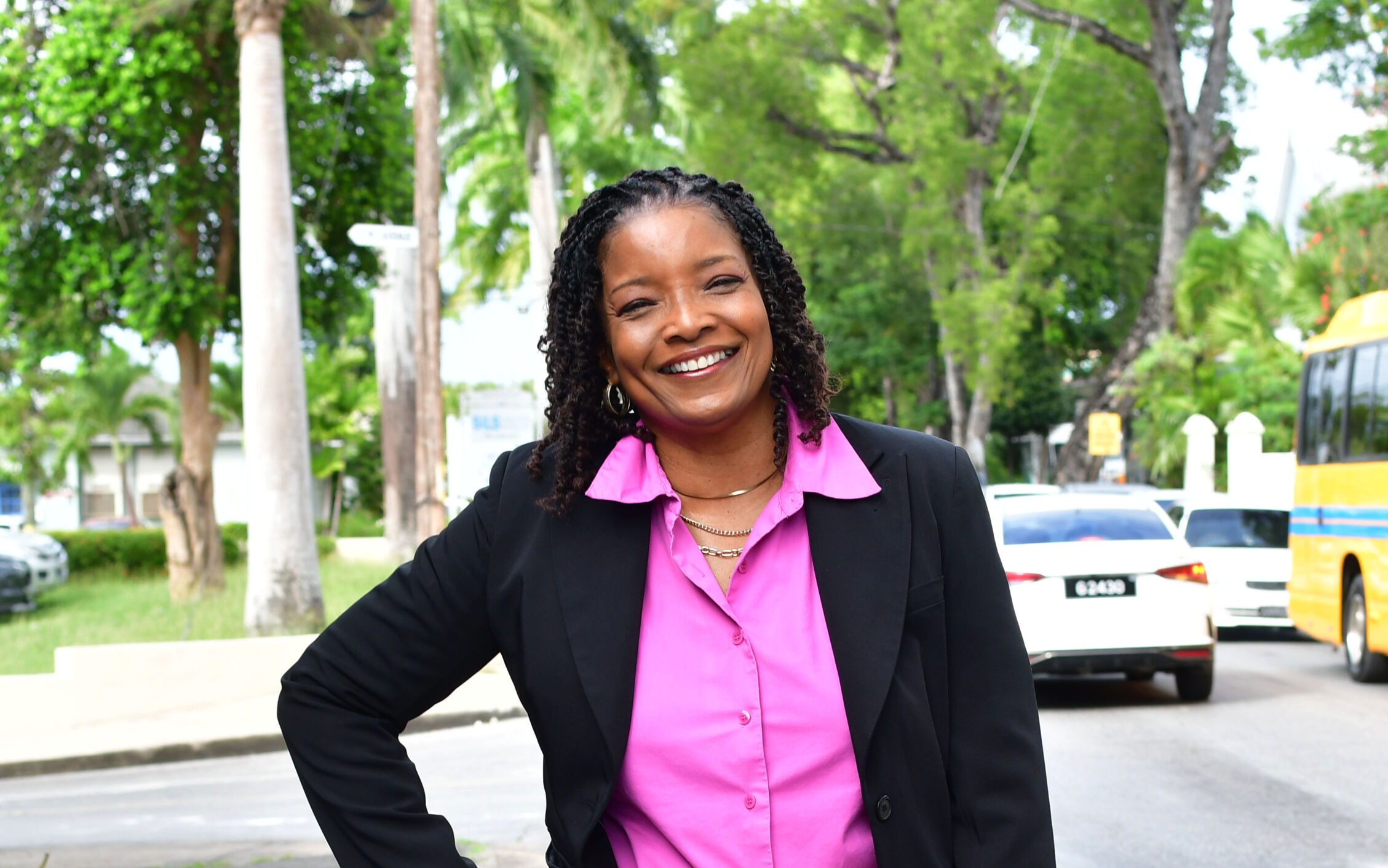

With a background in social sciences and human resources, a willing spirit to assist others, and dedication to her job, Betty Hunte continues on her mission to help those who are impacted by problematic substance use.
She is also resolute in her desire to see a reduction in the number of people struggling with substance abuse issues of any kind, as she carries out the mandate of the National Council on Substance Abuse (NCSA).
Betty has spent the past 22 years as a team member of the NCSA, having joined in 2003 as an administrative officer. Today she holds the post of manager, a position she has held since 2014. It is a role she does not take for granted, as she oversees the dayto- day operations of the NCSA and its team of 17 employees. She also serves as liaison between the Ministry of Home Affairs and Information and the NCSA’s board of directors.
She recalled that as a teenager she was always drawn to issues that mattered to people.
Positive impact
“I have always seen myself working where I could help and have a positive impact on the lives of others. I, therefore, thought I was very privileged when the opportunity presented itself to join the NCSA.”
She makes it clear that there is no normal day when it comes to her duties and the time she spends on the job.
“Office hours begin at 8:30 a.m. [and run] until 4:30 p.m., but I am usually in office from 7:30 a.m.,” she quipped.
“The NCSA is vibrant. It is a body of people who come together to do what we have to do. Personally, it has allowed me to grow and to meet many people across all demographics. It has touched me in many ways.
“I can walk my walk because I have the support that is necessary to make an impact in the lives of others. The support from the team at NCSA has given me lots of comfort to go on from one day to the next.”
Betty has witnessed firsthand the many challenges the organisation has faced over the years, and the positive changes she and her team have been able to make.
“First, let me say that the response to drug use has changed and keeps changing.
This means that on-going training is always a must. We must keep up-to-date with internal systems. One of the things I am keen on is that I have been able to introduce internal systems to respond to the various external drug situations, which have gotten very diverse,” she said.
Quicker intervention
“There was a time when our challenges meant dealing with tobacco, alcohol and marijuana usage. At that time, we were coming out of the “just say no” era, and things were not as complex as they are now. Our response now calls for quicker intervention, and our interventions have to be varied. We must tailor messages to suit the different dynamics, even within the same demographics. This puts pressure on the organisation to remain relevant.”
There are a host of other things that Betty and her dynamic team now need to consider. Among them are how drugs are categorised.
“The change in how drugs are used and the type of drugs being used has also spurred staff members to remain up-todate as they seek to balance the emerging knowledge of drug use.
Relevant but honest
“In addition, we cannot keep using the slogan “just say no” when the science has shown that there are some benefits to be derived from various substances. This is also reflected in policy approaches and changes in legislation.
“Take for instance, cannabis. In Barbados, the use of this substance has been decriminalised for medicinal and sacramental uses only. And the legal frameworks sets out the how, when and where of use for these circumstances. So we keep our drug prevention outreach, relevant but honest, knowing that there is a wealth of sources from which people draw information.”
Describing her role at the 29-year-old organisation as challenging yet rewarding, Betty is quick to point out that there is never enough funding to do what must be done, but through proper training, along with technical and financial support from the Inter-American Drug Abuse Control Commission, much continues to be accomplished.
Not wanting to leave anyone behind and recognising the role the family plays when a family member is categorised as a substance abuser, Betty works closely not just with the abuser but with entire families.
“I am trying to involve and pay more attention to the families of persons who experience problematic drug abuse. This is one of our hidden challenges. We often see the person who is a drug abuser, and focus on the triggers – people, places and things; but we sometimes forget the impact on those closest to that person.”
To this end, another area which the NCSA is focused on is providing practical charitable, emotional and social support to family members. This is made possible mainly through the personal sacrifices of Betty and the NCSA team.
Family interventions
“Family members often need assistance. The emotional toll they bear impacts their lives, so we provide a lot of family interventions. We have been doing this coming out of COVID-19. We recognised back then that families were experiencing difficulty seeing after their basic needs.
“We began providing subsistence support for such families and this has grown since 2020 from assisting nine families to assisting 50 families. We recognised [that] as much as we want persons to embrace our message that if they are struggling to meet basic needs, they won’t be in the place to listen to our message.”
This staff-led outreach is dear to Betty, who believes that every substance abuser must be treated fairly, and never dehumanised or stigmatised.
She sees the NCSA going from strength to strength, even as efforts are made to encourage more online programmes to reach a wider audience. Increased emphasis will also be placed on education via traditional mass-media channels; as well as via social media.
“We just commissioned and funded a documentary which is very topical, called A Rock and a Hard Place, and I really look forward to collaborating to have similar local stories produced which strike at the heart of how drug use has impacted and continues to impact people.”
Betty’s heart is in the right place and she is determined to bring positive change – impacting the lives of each substance abuser one person at a time. (CH)